

Towing a trailer for the first time can feel intimidating, but most of it comes down to three things: matching the trailer to the tow vehicle, hitching everything correctly and giving yourself more time and space on the road.
Whether you are pulling a horse trailer, livestock trailer or equipment trailer, the basic towing process is similar. Start with the right ratings and hitch setup, inspect the connection before moving, load the trailer correctly and change the way you drive to account for the extra length and weight behind you.
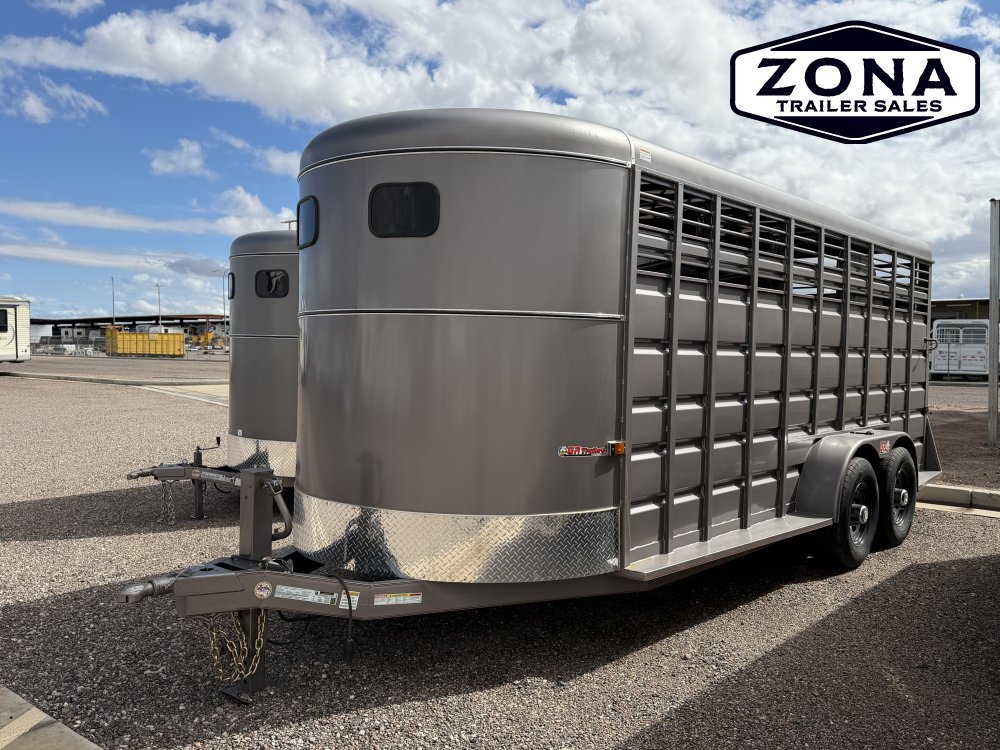
Start with a trailer that matches your truck, horses and hauling needs. Compare horse trailers available through Zona Trailer Sales.
Browse Horse TrailersBefore You Tow: Make Sure the Truck and Trailer Match
Before connecting anything, confirm that the tow vehicle is actually rated for the trailer you plan to pull.
Check the truck's:
- Towing capacity
- Payload capacity
- Gross Combined Weight Rating, or GCWR
- Axle ratings
- Tire ratings
- Hitch or receiver rating
Then compare those limits with the trailer's actual loaded weight and the amount of weight it will place on the truck.
This last part matters because tongue weight or gooseneck pin weight uses part of the tow vehicle's available payload.
Do not assume that a truck is a safe match simply because its advertised maximum towing capacity is higher than the trailer's empty weight.
Match the Hitch to the Trailer
The hitch system has to match both the trailer and the truck.
For a bumper-pull trailer, check the receiver, hitch, ball mount and hitch ball. Each component must be properly rated for the load.
The hitch-ball size must also match the trailer coupler. Never connect a trailer to a ball that is smaller or larger than the coupler requires.
For a gooseneck, verify that the truck's gooseneck hitch is properly rated and that the coupler is compatible with the hitch ball.
If you are still deciding which style fits your needs, Zona's guide to bumper pull or gooseneck horse trailers explains the major differences.
How to Hitch a Trailer Step by Step
The exact procedure depends on the trailer and hitch system, so always follow the instructions for your equipment. For a typical bumper-pull trailer, the basic process looks like this.
1. Line Up the Tow Vehicle and Coupler
Back the tow vehicle toward the trailer slowly and keep the hitch ball centered under the coupler.
A second person can help guide you, but make sure that person stays visible and never stands between the truck and trailer while the vehicle is moving.
2. Lower the Coupler Onto the Hitch Ball
Lower the trailer using the tongue jack until the coupler is fully seated on the correct hitch ball.
Close and secure the coupler latch according to the manufacturer's instructions.
Do not assume it is locked just because the coupler appears to be sitting on the ball.
3. Raise the Jack
After the trailer is securely coupled, raise the jack completely into its travel position.
Secure any handle, foot or removable component so it cannot drag or come loose on the road.
4. Connect the Safety Chains
Attach the trailer's safety chains to the tow vehicle's approved attachment points.
For a typical bumper-pull setup, the chains are commonly crossed underneath the coupler so they can help support the tongue if the primary connection fails.
There should be enough slack for normal turns without allowing the chains to drag on the pavement.
5. Connect the Breakaway Cable
If the trailer has electric brakes and a breakaway system, connect the breakaway cable to the tow vehicle according to the system manufacturer's instructions.
The cable should be attached independently of components that could separate with the trailer.
6. Connect the Trailer Plug
Connect the electrical plug and make sure it is fully seated.
Many larger trailers use a 7-way connection for lights, electric brakes and auxiliary circuits.
If you are troubleshooting the connection, Zona's guide to check your lights and wiring explains the common circuits and problems.
7. Test the Lights and Brakes
Before moving onto the road, verify that the trailer lights operate correctly.
Check:
- Running lights
- Brake lights
- Left turn signal
- Right turn signal
- Trailer brakes, if equipped
Do not begin a trip with a known electrical or braking problem.
Loading and Balance Matter Before You Start Driving
How you load a trailer changes the way it tows.
Too much weight toward the rear can reduce tongue weight and make the trailer less stable. Too much weight forward can put excessive load on the tow vehicle, hitch or rear axle.
Secure cargo so it cannot shift during braking, cornering or rough-road conditions.
For horse and livestock trailers, remember that the load itself can move. Tack, feed, water and other gear also change the trailer's weight and balance.
Equipment needs to be positioned and secured according to the trailer and equipment manufacturers' requirements. If you are comparing loading styles, Zona's guide to loading equipment covers tilt and ramp trailer differences.
How to Drive With a Trailer
A tow vehicle with a trailer behind it does not accelerate, turn or stop the same way it does when empty.
The safest adjustment for a new trailer driver is to slow everything down and give yourself more room.
Leave More Following Distance
A loaded trailer adds weight to the combination and can increase the distance needed to slow down or stop.
Leave substantially more space between you and the vehicle ahead than you normally would without a trailer.
This gives you more time to brake gradually instead of making sudden stops.
Brake Earlier
Watch traffic farther ahead and begin slowing sooner.
If your trailer uses electric brakes, the brake controller should be set up according to the controller and trailer manufacturer's instructions.
The trailer brakes should assist the tow vehicle without locking the trailer wheels or allowing the trailer to push heavily against the truck.
Take Wider Turns
The trailer wheels track inside the path taken by the tow vehicle.
That means a turn that easily clears a curb with the truck may cause the trailer tire to hit the curb, signpost or another object.
Give yourself extra space and watch the trailer wheels through the mirrors.
Make Lane Changes Slowly
Use your mirrors, signal early and leave enough room for the entire trailer to clear the vehicle you are passing.
Do not move back into the lane as soon as the truck clears another vehicle. Remember how much trailer is still behind you.
Watch Your Mirrors
Good mirror use is essential when towing.
Check frequently for traffic beside the trailer, tire problems, unusual trailer movement or cargo issues that may become visible while driving.
What Should You Do on Hills and Mountain Grades?
Long grades require more planning because both the engine and brakes work harder.
Use the tow vehicle manufacturer's recommended transmission, tow/haul and grade-driving procedures.
On descents, control speed early rather than allowing the combination to accelerate and then relying heavily on the brakes.
Arizona routes can move quickly from desert highways to significant grades, so the truck needs to be properly matched to the trailer before the trip begins.
If you are unsure whether the truck has enough capacity, review Zona's guide to payload vs towing capacity.
Compare horse trailers available through Zona Trailer Sales and narrow down the size, hitch style and configuration that fit your needs.
View Horse TrailersWhat if the Trailer Starts to Sway?
Trailer sway is side-to-side movement that can become dangerous if it increases.
Wind, speed, load placement, tire problems and improper hitch setup can all contribute.
If the trailer begins moving side to side, remain calm, avoid sudden steering input and reduce speed in a controlled manner. Follow the tow vehicle, trailer and brake-controller manufacturers' instructions for handling sway with your particular setup.
If sway occurs repeatedly, do not treat it as normal. Check the trailer's loading, tongue weight, tires, hitch setup and mechanical condition before continuing to tow at highway speeds.
How to Back Up a Trailer
Backing is usually the part new trailer owners worry about most.
The trailer moves opposite the initial direction of the tow vehicle's rear end, which can feel backwards until you get used to it.
Use the Bottom-of-the-Wheel Method
One simple method is to place one hand at the bottom of the steering wheel.
Move your hand in the direction you want the rear of the trailer to go.
Want the trailer to move left? Move your hand left.
Want the trailer to move right? Move your hand right.
This can make the steering input easier to visualize for a new trailer driver.
Make Small Corrections
Large steering movements can make the trailer turn sharply before you have time to correct it.
Use small inputs, move slowly and give yourself time to see what the trailer is doing.
Pull Forward and Reset
There is nothing wrong with stopping, pulling forward and straightening the combination before trying again.
Experienced trailer drivers do this too.
Trying to rescue a bad angle with increasingly aggressive steering usually makes backing harder.
Use a Spotter Carefully
A spotter can help when backing into a tight area.
Agree on hand signals before you start, keep the spotter where you can see them and stop immediately if you lose sight of them.
Never allow someone to stand directly behind the trailer or between the truck and trailer while the combination is moving.
If you are new to towing, practice turns, stops and backing in a large empty lot before attempting a tight barn, jobsite, campground or parking area.
Parking and Unhitching a Trailer
Choose a firm, stable location and straighten the trailer as much as practical before unhitching.
Before disconnecting:
- Set the tow vehicle's parking brake
- Chock the trailer wheels
- Make sure the trailer is stable
- Lower the trailer jack according to its instructions
- Disconnect electrical and breakaway connections
- Disconnect safety chains
- Release the coupler only after the trailer is properly supported
On a slope, wheel chocking and trailer stability become especially important.
Pre-Trip Trailer Checklist
Before every trip, take a few minutes to walk around the truck and trailer.
- Coupler or gooseneck connection is fully secured
- Safety chains are properly connected
- Breakaway cable is connected correctly
- Electrical plug is secure
- Running lights, brake lights and turn signals work
- Trailer brakes are functioning when required
- Tires are properly inflated and show no obvious damage
- Wheel fasteners have been checked according to manufacturer guidance
- Jack is fully raised and secured
- Doors, gates and ramps are latched
- Cargo or equipment is properly secured
- Mirrors provide a clear view along both sides of the trailer
Arizona Heat, Wind and Monsoon Conditions
Arizona adds a few conditions that new trailer owners should take seriously.
Heat and Tire Pressure
Check tire pressure before towing, using the tire and trailer manufacturer's guidance.
Do not ignore tire condition simply because the tread still looks usable. Age, cracking, damage and proper inflation all matter on a trailer that may spend long periods parked in Arizona heat.
Crosswinds
Strong crosswinds can move a tall or enclosed trailer sideways and make steering corrections more noticeable.
Reduce speed when conditions require it and avoid abrupt steering movements.
Monsoon Weather
Heavy rain, wind and rapidly changing visibility can make towing substantially more difficult.
If conditions exceed what you are comfortable handling, find a safe place to stop rather than forcing the trip.
Do You Need Trailer Brakes in Arizona?
Arizona law requires a trailer or semitrailer with a gross weight of 3,000 pounds or more to have brakes adequate to control, stop and hold the trailer when it is operated on a highway. The law also requires qualifying trailer brakes to be designed so they automatically apply if the trailer accidentally breaks away from the tow vehicle.
You can review the current requirement in Arizona Revised Statutes § 28-952.
Laws can change, and requirements may differ when traveling into another state, so verify the rules that apply to your trailer and route before towing.
Find the Right Trailer for Your Tow Vehicle
Start with the truck you own, what you need to haul and where you plan to go. Browse horse trailers available through Zona Trailer Sales and compare the configurations that fit your needs.
Browse Horse TrailersHow to Tow a Trailer FAQs
Can I tow a trailer with an SUV?
Possibly. It depends on the specific SUV, trailer and load. Check the vehicle's towing capacity, payload, GCWR, hitch rating, axle ratings and manufacturer's towing instructions. Do not assume an SUV can safely tow a trailer based only on engine size or vehicle appearance.
Do I need trailer brakes?
Brake requirements depend on trailer weight and applicable law. In Arizona, trailers or semitrailers with a gross weight of 3,000 pounds or more are required to have qualifying brakes when operated on a highway. Other states may have different requirements.
How fast can you drive with a trailer?
Follow the posted speed limit, state law and any lower speed limitations specified by the tow vehicle, trailer, tire or equipment manufacturer. Road, weather, traffic and trailer stability may require driving slower than the maximum legal speed.
How do I back up a trailer?
Move slowly and make small steering corrections. A common beginner method is to place one hand at the bottom of the steering wheel and move that hand in the direction you want the rear of the trailer to go. Practice in a large empty area before attempting a tight space.
Should safety chains be crossed?
On a typical bumper-pull setup, safety chains are commonly crossed beneath the trailer tongue. Always follow the trailer and hitch manufacturer's instructions for attachment points, chain routing and required slack.
Should I practice towing before getting on the highway?
Yes. If you are new to towing, an empty parking area gives you room to practice starting, stopping, turning and backing before dealing with traffic or tight spaces.
Compare horse trailers available through Zona Trailer Sales and find the size and configuration that fit your tow vehicle and hauling needs.
View Horse TrailersThis article provides general towing guidance. Always follow the ratings, instructions and procedures provided by the tow vehicle, trailer, hitch, brake-controller and tire manufacturers. Verify current state laws for the roads where you will be towing.