If you're shopping for a horse trailer, one of the first decisions you'll face is gooseneck vs. bumper pull. Both can be excellent choices, but the right answer depends on your tow vehicle, how many horses you haul, how much storage you need, and how you plan to use the trailer.
A bigger trailer is not automatically a better trailer. For some horse owners, a bumper pull is simpler and makes more sense. For others, the added space and configuration of a gooseneck are worth it. Understanding what each trailer type is and how they differ makes the decision much easier.
Browse Zona Trailer Sales' current horse trailer inventory and compare bumper-pull and gooseneck configurations, sizes, manufacturers, and features.
Browse Horse TrailersWhat Is a Bumper Pull Trailer?
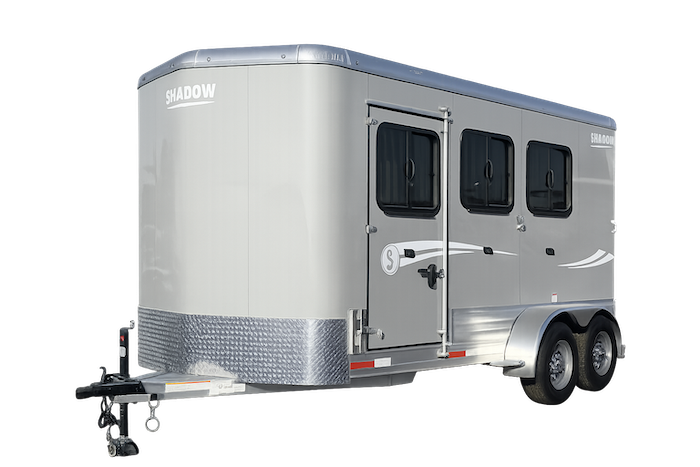
A bumper pull trailer is a trailer that connects to a hitch at the rear of the tow vehicle. Despite the name, modern bumper pull trailers are generally attached to a frame-mounted receiver hitch rather than directly to the vehicle's bumper.
Bumper pull trailers are also sometimes called tag-along trailers.
For horse owners, bumper pulls are commonly used for smaller 2- and 3-horse configurations. They can also include front tack rooms, rear tack areas, dressing space, and other equipment depending on the trailer.
One practical advantage is that the truck bed remains available for hay, tack, feed, tools, coolers, or other cargo because the trailer connects behind the truck.
- Connects to a receiver hitch behind the tow vehicle.
- Leaves the pickup bed available.
- Is common in smaller horse-trailer configurations.
- Can be easier to fit into a more compact hauling setup.
- Still requires the truck, receiver, hitch, tires, and trailer to be properly rated for the loaded weight.
What Is a Gooseneck Trailer?
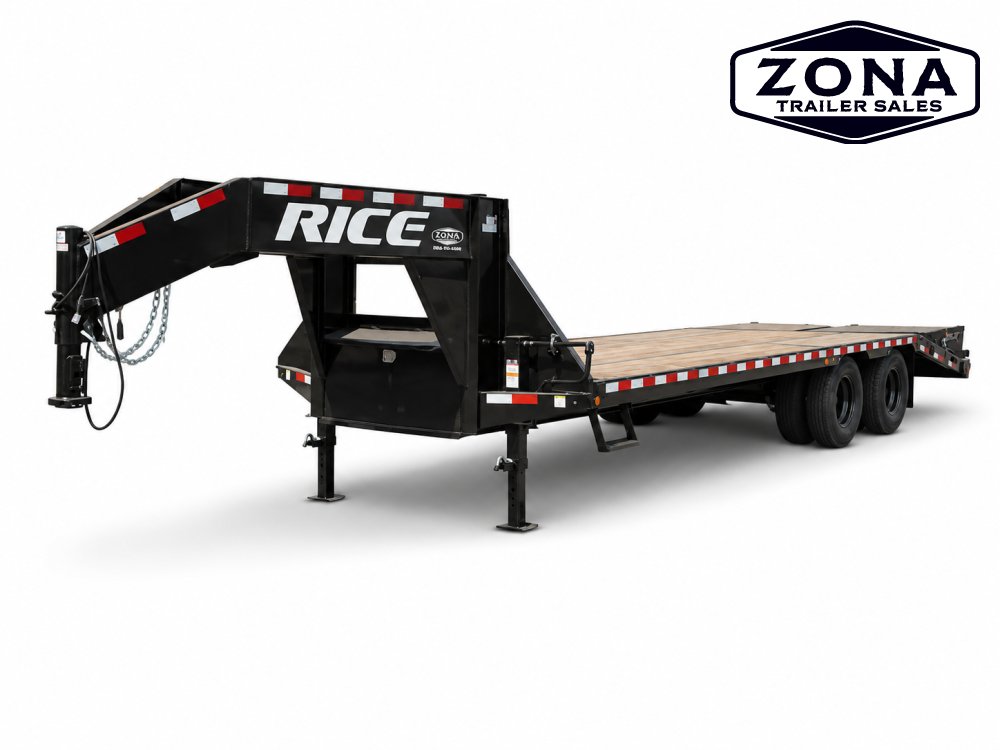
A gooseneck trailer is a trailer with a forward section that extends over the pickup bed and connects to a hitch mounted in or above the truck bed.
The hitch connection is positioned near the truck's rear axle rather than behind the bumper.
Gooseneck trailers are commonly used when buyers need larger horse capacities, more tack storage, dressing rooms, living quarters, or other configurations that require more trailer space.
The tradeoff is that the hitch and trailer neck occupy part of the truck bed, and the tow vehicle must be properly equipped for a gooseneck connection.
- Connects to a hitch mounted in the pickup bed.
- Extends forward over part of the truck bed.
- Is commonly available in larger horse capacities.
- Can provide more room for tack, dressing areas, and living quarters.
- Requires adequate truck-bed clearance and a properly rated gooseneck hitch.
Compare Zona's current gooseneck horse trailers by horse capacity, size, tack setup, manufacturer, and available equipment.
Shop Gooseneck Horse TrailersWhat's the Difference Between a Gooseneck and Bumper Pull Horse Trailer?
The biggest difference is where the trailer connects to the tow vehicle.
A bumper pull horse trailer connects to a receiver hitch at the rear of the tow vehicle.
A gooseneck horse trailer extends over the truck bed and connects to a hitch mounted in or above the bed.
That difference affects much more than the hitch. It influences trailer size, maneuverability, truck requirements, storage capacity, and the configurations available to you.
| Consideration | Bumper Pull | Gooseneck |
|---|---|---|
| Hitch Location | Rear receiver hitch | Truck bed |
| Typical Trailer Size | Often smaller and more compact | Often available in larger configurations |
| Truck Bed | Remains open for cargo | Hitch and trailer neck occupy bed space |
| Horse Capacity | Common for smaller horse counts | Common for larger configurations |
| Storage | Can be simpler and more compact | More room for tack, dressing areas and larger layouts |
| Truck Requirements | Properly rated rear receiver setup | Pickup with properly rated in-bed gooseneck hitch |
| Initial Cost | Often lower for comparable basic configurations | Often higher as size and features increase |
When Is a Bumper Pull Horse Trailer the Better Choice?
A bumper pull can be exactly the right trailer for someone who regularly hauls one, two, or a few horses and doesn't need the additional size of a larger gooseneck.
Bumper pulls can also make sense when you want to preserve the bed of your truck for hay, tack, feed, tools, or other cargo.
- You normally haul a smaller number of horses.
- You want a simpler, more compact trailer.
- You don't need extensive tack or living space.
- You want to keep your truck bed available.
- Your tow vehicle and hitch are properly rated for the trailer.
- You want to keep the overall trailer purchase simpler.
Don't treat a bumper pull as the "beginner" option or automatically assume it is inferior to a gooseneck. For the right hauling situation, it can be the more practical choice.
When Is a Gooseneck Horse Trailer the Better Choice?
Gooseneck horse trailers become especially useful as your hauling requirements grow.
The configuration allows manufacturers to build larger trailers while placing the hitch connection over the truck's rear axle area. Goosenecks are commonly chosen when buyers need more horse capacity, tack storage, dressing space, or larger trailer layouts.
- You regularly haul multiple horses.
- You need more tack and equipment storage.
- You want a larger dressing room or additional usable space.
- You're considering a larger horse trailer configuration.
- You already have a properly equipped pickup with a gooseneck hitch.
- You may eventually move into a living quarters horse trailer.
Is a Gooseneck More Stable Than a Bumper Pull?
A gooseneck hitch places the trailer connection near the truck's rear axle area rather than behind the vehicle, which changes how the trailer and truck interact.
That configuration is one reason goosenecks are commonly used for larger and heavier trailers.
However, hitch type alone does not guarantee good handling.
Proper trailer loading, tongue or pin weight, tire condition, suspension, hitch setup, trailer brakes, truck ratings, and driving conditions all affect stability.
A properly matched and correctly loaded bumper pull can be an excellent towing setup, while an improperly loaded or mismatched gooseneck can still handle poorly.
Which Is Easier to Maneuver?
Bumper pulls and goosenecks turn differently because their pivot points are in different locations.
A bumper pull pivots behind the tow vehicle. A gooseneck pivots farther forward, near the rear axle area of the truck.
This changes how each trailer tracks through turns and how it responds when backing.
Drivers who are accustomed to one hitch style may need time to adjust to the other. Trailer length also matters. A compact bumper pull and a long multi-horse gooseneck will naturally require very different amounts of space regardless of hitch design.
Compare Zona's current gooseneck horse trailers to see how horse count, tack configuration, and overall trailer size change as you move into larger setups.
Compare Gooseneck TrailersYour Tow Vehicle Should Help Make the Decision
Before deciding between a gooseneck or bumper pull, determine what your tow vehicle is actually rated to handle.
Trailer weight is only part of the equation. Buyers should consider the tow vehicle's ratings, trailer GVWR, actual loaded weight, payload, hitch rating, and axle ratings. Horses, tack, feed, water, and other cargo can add significant weight after the trailer is loaded.
Never choose a trailer simply because the truck can physically pull it down the road. The truck, hitch, and trailer combination needs to remain within the applicable ratings when loaded for actual use.
Always verify the ratings for your specific truck, hitch, and trailer before towing. For additional information about vehicle weight ratings and towing considerations, visit the National Highway Traffic Safety Administration.
What About Truck Bed Length and Clearance?
Truck-bed configuration becomes especially important with a gooseneck.
Because the trailer extends over the bed, you need adequate clearance between the trailer and truck during turns and when traveling over uneven ground. Bed length, hitch placement, and the shape of the trailer nose can all affect clearance.
If you're using a short-bed truck, don't assume every gooseneck will work correctly just because a hitch can be installed. Check the specific truck and trailer combination before buying.
A bumper pull does not occupy the truck bed, which can make it attractive for owners who regularly use the bed for hay, tack, feed, or other equipment.
How Many Horses Do You Regularly Haul?
Think about your normal hauling needs rather than the maximum number of horses you might haul once or twice.
If most trips involve one or two horses, a well-configured bumper pull may provide everything you need without adding unnecessary trailer size.
If you routinely haul three or four horses, travel to competitions, carry significant tack and equipment, or need additional usable space, a gooseneck may become the more practical configuration.
Also consider the horses themselves. Stall dimensions, trailer height, width, and layout matter, particularly when hauling larger horses or warmbloods.
Tack and Storage Can Change the Answer
Storage needs are easy to underestimate when shopping for a horse trailer.
Saddles, bridles, blankets, feed, water, grooming equipment, and show gear can consume space quickly. If you travel frequently, additional storage can become nearly as important as the horse area itself.
Both bumper pull and gooseneck trailers can offer tack and dressing-room configurations, but larger goosenecks generally provide manufacturers with more room to incorporate additional storage and usable space.
Is a Gooseneck Horse Trailer More Expensive?
Often, but it isn't an apples-to-apples comparison based on hitch type alone.
Goosenecks are frequently larger and may include more stalls, larger tack areas, dressing rooms, or additional equipment. Those differences can increase the purchase price.
Material also matters. Steel and aluminum trailers can have very different prices, weights, and configurations. Brand, age, condition, axle package, and options all influence the final price.
Instead of asking only which hitch type costs less, compare trailers that actually satisfy the same hauling requirements.
Compare Gooseneck Horse Trailers at Zona
Browse Zona's current gooseneck horse trailer inventory and compare sizes, materials, manufacturers, and configurations.
Browse Gooseneck Horse Trailers Explore FinancingGooseneck or Bumper Pull: Which Should You Buy?
Choose based on how you actually haul.
A bumper pull horse trailer can be an excellent choice when you haul fewer horses, want a more compact setup, need to keep your truck bed available, and don't require extensive additional space.
A gooseneck horse trailer may make more sense when you need more horse capacity, tack and storage space, or a larger overall trailer configuration.
Whichever direction you choose, start with your horses, your towing setup, and your normal use. Then compare trailers that fit those requirements.
Gooseneck vs. Bumper Pull FAQs
What is a bumper pull trailer?
A bumper pull trailer connects to a receiver hitch mounted at the rear of the tow vehicle. Although the term "bumper pull" is commonly used, modern trailers are typically connected to a frame-mounted receiver rather than directly to the bumper.
What's a gooseneck trailer?
A gooseneck trailer extends over the bed of a pickup and connects to a hitch mounted in or above the truck bed near the rear axle area. This configuration is commonly used for larger horse trailers, equipment trailers, stock trailers, and living quarters trailers.
What is the main difference between a bumper pull and a gooseneck?
The main difference is hitch location. A bumper pull connects behind the tow vehicle, while a gooseneck connects inside the pickup bed. That difference affects truck-bed use, trailer size, turning characteristics, storage possibilities, and the types of configurations available.
Is a bumper pull horse trailer good for two horses?
A properly sized bumper pull can be a practical option for hauling two horses. The trailer, tow vehicle, and hitch still need to be correctly rated for the loaded weight, and the trailer should provide appropriate space for the horses being hauled.
Why choose a gooseneck horse trailer?
Horse owners commonly choose goosenecks when they need a larger trailer, additional horse capacity, more tack or dressing-room space, or configurations that are not practical in a smaller bumper pull.
Is a gooseneck horse trailer better than a bumper pull?
Not automatically. The better choice depends on your truck, the number and size of horses you haul, storage needs, budget, and how frequently you travel. A smaller bumper pull can be the more practical trailer for some owners, while others genuinely need the additional space of a gooseneck.
Is a gooseneck more stable than a bumper pull?
The gooseneck connection is positioned near the truck's rear axle area, which changes how the trailer load is transferred and how the combination behaves. However, safe handling still depends on proper loading, truck and hitch ratings, tires, brakes, suspension, and driving conditions.
Does a gooseneck horse trailer cost more?
Goosenecks often cost more because they are frequently larger and may include more stalls, storage, or other features. Price also varies by manufacturer, material, age, condition, and equipment, so compare similarly equipped trailers whenever possible.
Can I finance a horse trailer?
Financing options are available for qualified buyers through Zona Trailer Sales. Rates, terms, down payment requirements, and approvals vary by buyer, trailer, and lender.
Can I buy a horse trailer from Zona if I live outside Arizona?
Zona Trailer Sales works with buyers outside Arizona, so you do not need to live near the dealership to shop the available horse trailer inventory.
See Zona's current gooseneck horse trailers and compare configurations based on the horses you haul and the truck you use.
View Gooseneck Horse Trailers for SaleTowing capacities and requirements vary by vehicle, hitch, trailer, and load. Always verify the manufacturer's ratings and requirements for your specific tow vehicle and trailer before towing.