
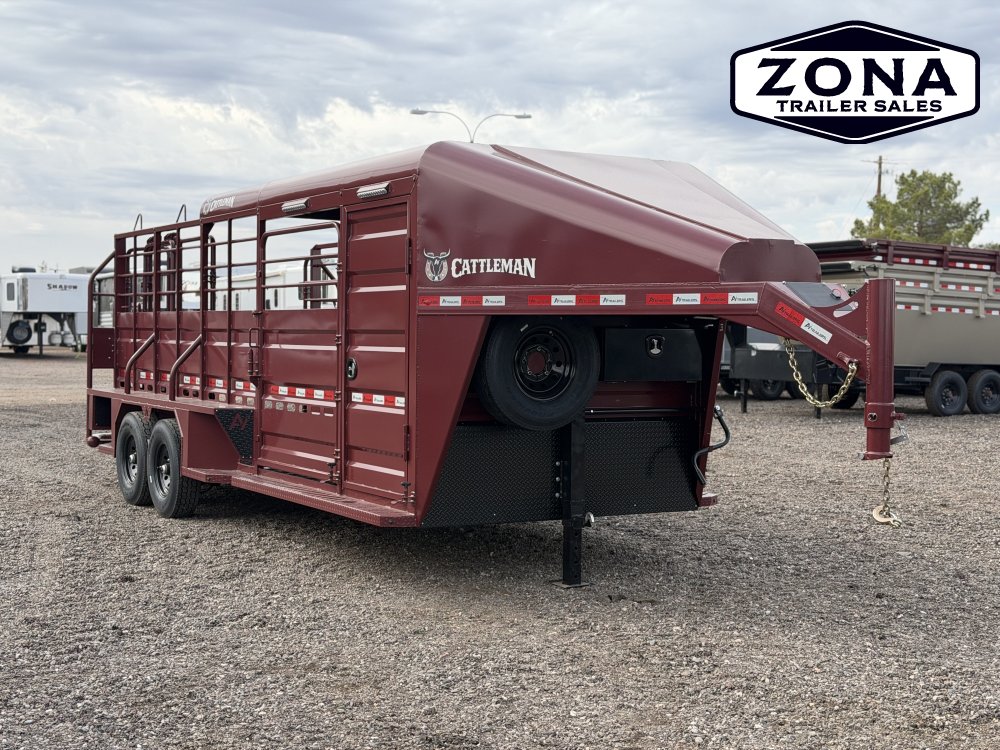
Tongue weight is the downward force a trailer places on the hitch of the tow vehicle. It is one of the most important numbers to understand when matching a trailer to a truck because too little tongue weight can contribute to trailer instability, while too much can overload the hitch or tow vehicle.
The right tongue weight depends on the trailer, hitch, load placement and tow vehicle. General percentage guidelines can help you understand the concept, but the actual ratings for the truck, hitch and trailer always take priority.
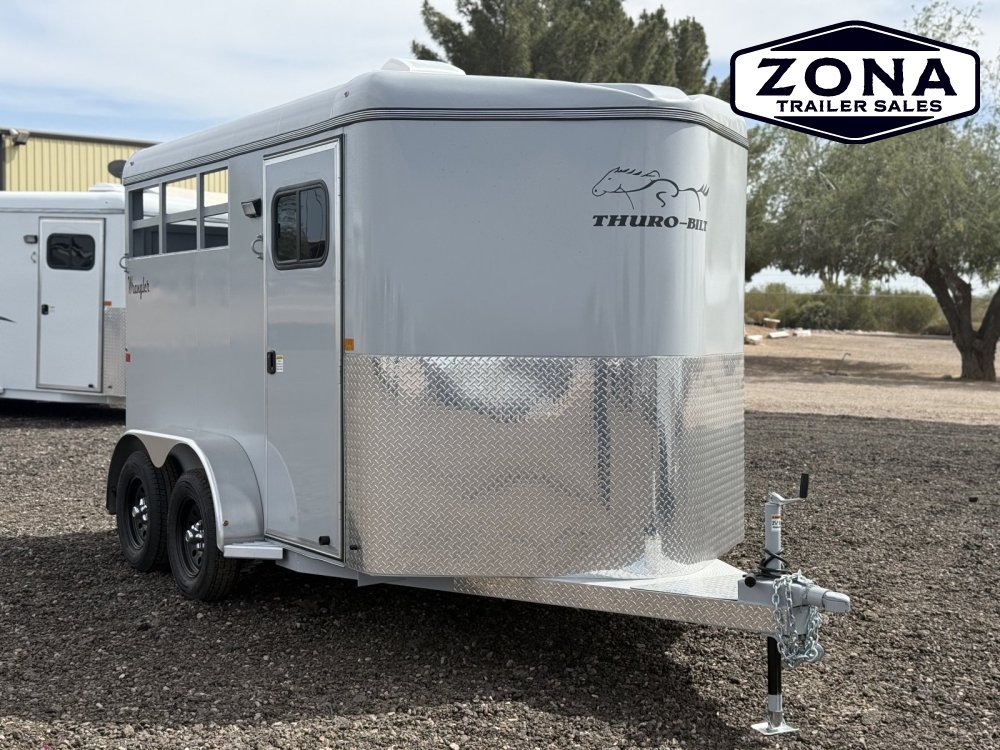
Compare trailer size, GVWR, payload and hitch requirements before you buy. Zona Trailer Sales can help you narrow down the right equipment trailer for your towing setup.
Browse Equipment TrailersWhat Is Tongue Weight?
Tongue weight is the amount of the loaded trailer's weight that presses downward on the tow vehicle's hitch.
For a bumper-pull trailer, that force is applied through the coupler onto the hitch ball.
For a gooseneck or fifth-wheel trailer, the same basic idea applies, but the load is transferred farther forward into the truck bed. You may hear that force described as pin weight or hitch weight depending on the setup.
Tongue weight is not the same as the trailer's total weight. It is only the portion of that weight being carried by the tow vehicle at the hitch connection.
Why Tongue Weight Matters
A trailer needs enough weight on the hitch to remain stable, but the tow vehicle and hitch also have limits on how much downward load they can safely carry.
If tongue weight is too low, the trailer can become less stable because too much of the load is positioned behind the axle group.
If tongue weight is too high, the rear of the tow vehicle can be overloaded or pushed down excessively, which can affect steering, braking, suspension and tire loading.
The goal is not simply to hit a percentage. The goal is to load the trailer so the combination remains within every applicable rating and handles properly.
What Is a Good Tongue Weight?
For many conventional bumper-pull trailers, a common general guideline is for tongue weight to fall around 10% to 15% of the fully loaded trailer weight.
Gooseneck and fifth-wheel trailers generally place a larger share of the loaded trailer weight on the tow vehicle.
These percentages are guidelines only.
Never increase tongue or pin weight just to reach a percentage if doing so exceeds the trailer, hitch, truck, axle or tire ratings. Check the tow vehicle owner's manual, hitch rating and the trailer's VIN/compliance plate for the limits that apply to your setup.
Ford's current towing guidance, for example, uses approximately 10% to 15% as a general conventional-trailer tongue-weight range and a higher percentage for fifth-wheel and gooseneck towing. The same guidance stresses that the vehicle and hitch limits must not be exceeded. Review Ford's towing guidance for additional towing and weight-distribution information.
How to Calculate Tongue Weight
You can estimate tongue weight if you know the trailer's actual loaded weight and the percentage of that weight carried by the hitch.
The basic calculation is:
Example: Bumper-Pull Equipment Trailer
Suppose a loaded equipment trailer weighs 8,000 pounds.
If you use 12% as an example tongue-weight percentage:
8,000 × 0.12 = 960 pounds
That would give an estimated tongue weight of 960 pounds.
But 960 pounds is not automatically safe just because it falls inside a general percentage range. The tow vehicle's payload, hitch rating, receiver rating, rear axle rating and other limits still need to support that load.
For a deeper explanation of trailer weight ratings, read Zona's guide to GVWR.
Tongue Weight Calculator: What Numbers Do You Need?
A tongue-weight calculator is only as useful as the numbers entered into it.
You need:
- The trailer's actual loaded weight
- The percentage of that loaded weight being carried at the hitch
- The maximum hitch or pin-weight rating
- The tow vehicle's available payload
- The rear axle rating
- Any applicable tire or suspension limits
Do not calculate tongue weight using the trailer's empty weight if you will be towing it loaded. Cargo, horses, equipment, water, feed, tools and other items can substantially change the final hitch load.
How to Measure Tongue Weight
Calculating tongue weight gives you an estimate. Measuring the loaded trailer tells you what the trailer is actually placing on the hitch.
Common measurement methods include:
1. Tongue Weight Scale
A purpose-built tongue-weight scale can measure the downward force at the coupler.
The trailer should be loaded as it will be for travel and positioned according to the scale manufacturer's instructions.
This is often one of the simplest options for bumper-pull trailers when the scale's capacity is appropriate for the expected tongue weight.
2. Bathroom Scale Method for Light Trailers
For relatively light trailers, some owners use a bathroom scale with a lever arrangement to measure tongue weight.
This method requires careful setup and should only be used when the scale and supporting materials are appropriate for the expected load.
If the tongue weight is too high for the equipment you have, use a proper tongue-weight scale or commercial scale instead.
3. Commercial or CAT Scale
A certified commercial vehicle scale can be used to determine axle weights and help calculate how much additional weight the trailer places on the tow vehicle.
This approach is especially useful for larger trailers and goosenecks because you can evaluate the loaded combination rather than looking at only one number.
Weigh the setup in the configuration required by the scale method you are using and follow the tow vehicle or scale provider's instructions for calculating the hitch or pin load.
What Happens if Tongue Weight Is Too Low?
Too little tongue weight generally means too much of the trailer's load is sitting behind the axle group.
That can reduce stability and contribute to trailer sway.
Possible signs include:
- Trailer feels unstable at highway speed
- Trailer begins moving side to side
- Steering corrections seem to make the movement worse
- Handling changes dramatically with wind or passing vehicles
If a trailer feels unstable, do not simply keep driving faster or try to correct the problem with aggressive steering. Slow down safely and check the load placement, tire pressures, hitch setup and trailer condition before continuing.
What Happens if Tongue Weight Is Too High?
Excessive tongue weight can overload the back of the tow vehicle.
Possible signs include:
- Rear of the truck sits noticeably lower
- Front end feels light
- Steering response changes
- Rear axle or tires are overloaded
- Hitch components exceed their rated capacity
Adding suspension helpers does not increase the legal or manufacturer-rated payload, axle or hitch limits of the truck.
How Load Placement Changes Tongue Weight
Tongue weight changes when cargo moves forward or backward relative to the trailer's axle group.
Moving weight forward generally increases tongue weight.
Moving weight rearward generally decreases tongue weight.
That is why loading position matters so much with different trailer types.
Equipment Trailers
A skid steer, tractor or piece of machinery can shift hundreds of pounds of hitch load depending on where it sits on the deck.
Moving the machine only a short distance may noticeably change the truck's rear-axle loading and the way the combination handles.
Horse Trailers
Horse position, tack, feed, water and other gear all affect the final loaded weight and its distribution.
A trailer loaded differently for one trip may not have exactly the same hitch load as it did on the previous trip.
Dump Trailers
Material can shift or be loaded unevenly inside a dump body.
Dense material placed too far forward can increase tongue weight quickly, while material concentrated too far rearward can reduce hitch load and affect stability.
Stock Trailers
Livestock can move while being transported, so the load is not always perfectly static.
That makes it especially important to start with a properly rated truck and trailer and avoid operating near the edge of the combination's limits.
Consider the weight and position of the equipment you actually plan to haul, not just whether it physically fits on the deck.
Compare Equipment TrailersTongue Weight vs. Hitch Weight
For conventional bumper-pull trailers, tongue weight and hitch weight are often used to describe the same basic downward force placed on the tow vehicle.
With fifth-wheel and gooseneck trailers, you may also hear terms such as pin weight.
The terminology changes with the hitch system, but the practical question remains the same: how much of the loaded trailer's weight is being carried by the tow vehicle at the hitch connection?
If you are comparing hitch styles, see Zona's guide to gooseneck and fifth-wheel hitches.
Tongue Weight vs. GVWR
GVWR is the maximum allowable loaded weight of the trailer as specified by the manufacturer.
Tongue weight is the portion of the trailer's actual loaded weight that presses down on the tow vehicle.
They are related, but they are not interchangeable.
A trailer can remain under its GVWR and still create too much tongue weight for the truck or hitch if the load is positioned incorrectly or the tow vehicle is not properly matched.
Does Tongue Weight Count Toward Truck Payload?
Yes. The downward load placed on the tow vehicle by the trailer uses part of the truck's available payload capacity.
Passengers, cargo, tools, aftermarket accessories and other weight carried by the truck also use that payload.
This is one of the most important towing checks because a truck may appear to have enough advertised towing capacity while running out of payload first.
Always check the specific truck's door-jamb labels and owner's manual rather than relying only on a model's advertised maximum towing figure.
Does a Weight Distribution Hitch Reduce Tongue Weight?
No. A weight distribution hitch does not make the trailer's actual tongue weight disappear.
Instead, it uses spring bars or another mechanism to redistribute some of the load acting through the hitch across the tow vehicle and trailer axles.
The actual loaded trailer and hitch still need to remain within all applicable ratings.
Use a weight distribution system only when it is compatible with the tow vehicle, receiver, trailer and hitch setup, and follow the manufacturer's setup instructions.
How Do I Lower Tongue Weight?
If measured tongue weight is too high, the solution may involve changing how the trailer is loaded.
Depending on the trailer, that can mean moving some cargo rearward.
But do not move so much weight behind the axle that tongue weight becomes too low and the trailer becomes unstable.
You also cannot fix an undersized truck or hitch simply by moving cargo around.
If the trailer requires more tongue or pin weight than the tow vehicle can safely carry, the correct solution may be a different truck, trailer or towing setup.
Bumper Pull vs. Gooseneck Tongue Weight
Bumper-pull and gooseneck trailers transfer load to the truck differently.
A bumper-pull places the hitch load behind the rear axle through the receiver and hitch ball.
A gooseneck connects inside the truck bed, generally near or ahead of the rear axle.
Goosenecks commonly carry a larger percentage of their loaded weight on the truck than conventional bumper-pull trailers.
If you are deciding between the two trailer styles, read Zona's guide to bumper pull vs gooseneck horse trailers.
A Quick Tongue Weight Checklist Before You Tow
- Load the trailer the way it will actually be towed
- Know the trailer's actual loaded weight
- Measure or calculate the tongue or pin weight
- Check the hitch and receiver ratings
- Check the truck's available payload
- Check rear axle and tire ratings
- Make sure cargo is secured and positioned appropriately
- Recheck the setup when the load changes
- Do not rely on a general percentage if the manufacturer's ratings require something different
Tongue Weight on Arizona Roads
Arizona hauling can involve long highway runs, high temperatures and significant elevation changes.
Routes such as I-10 and I-17 can expose a tow vehicle and trailer to sustained grades, heat and changing wind conditions.
Proper load placement does not replace adequate truck capacity, brakes, tires or cooling, but starting with the correct hitch load helps the combination handle as intended.
Match the Trailer to Your Truck Before You Buy
Bring your truck's towing, payload and hitch information when comparing trailers. Zona Trailer Sales can help you narrow down equipment trailers that fit the work you need to do.
Browse Equipment TrailersTongue Weight FAQs
What is a good tongue weight?
For many conventional bumper-pull trailers, 10% to 15% of the fully loaded trailer weight is a common general guideline. Gooseneck and fifth-wheel trailers typically place a larger share of their weight on the tow vehicle. Always follow the actual ratings and guidance for the truck, hitch and trailer.
Does a weight distribution hitch reduce tongue weight?
No. A weight distribution hitch redistributes some of the load acting through the hitch, but it does not eliminate the trailer's actual tongue weight. The truck, receiver, hitch and trailer still need to remain within their ratings.
Is tongue weight included in payload?
Yes. The downward load placed on the tow vehicle by the trailer uses part of the truck's available payload, along with passengers, cargo, tools and other weight carried by the vehicle.
How do I lower tongue weight?
Depending on the trailer, moving some cargo rearward can reduce tongue weight. Do not move so much weight behind the axle that the trailer becomes unstable. If the truck or hitch cannot safely carry the required tongue weight, changing the tow vehicle or trailer may be the better solution.
What is the difference between hitch weight and tongue weight?
For bumper-pull trailers, the terms are often used interchangeably to describe the downward force the trailer places on the hitch. Gooseneck and fifth-wheel setups may instead use terms such as pin weight.
Can tongue weight change after I load the trailer?
Yes. Adding cargo or moving it forward or rearward changes how much weight is carried at the hitch. Recheck tongue or pin weight whenever the load changes significantly.
Talk to Zona Trailer Sales before you buy and compare trailers that fit your towing setup.
View Equipment TrailersTongue-weight percentages are general guidelines only. Actual towing limits depend on the specific trailer, hitch, tow vehicle, axle ratings, tires and load. Always verify the ratings in the tow vehicle owner's manual, hitch documentation and trailer VIN/compliance information before towing.