
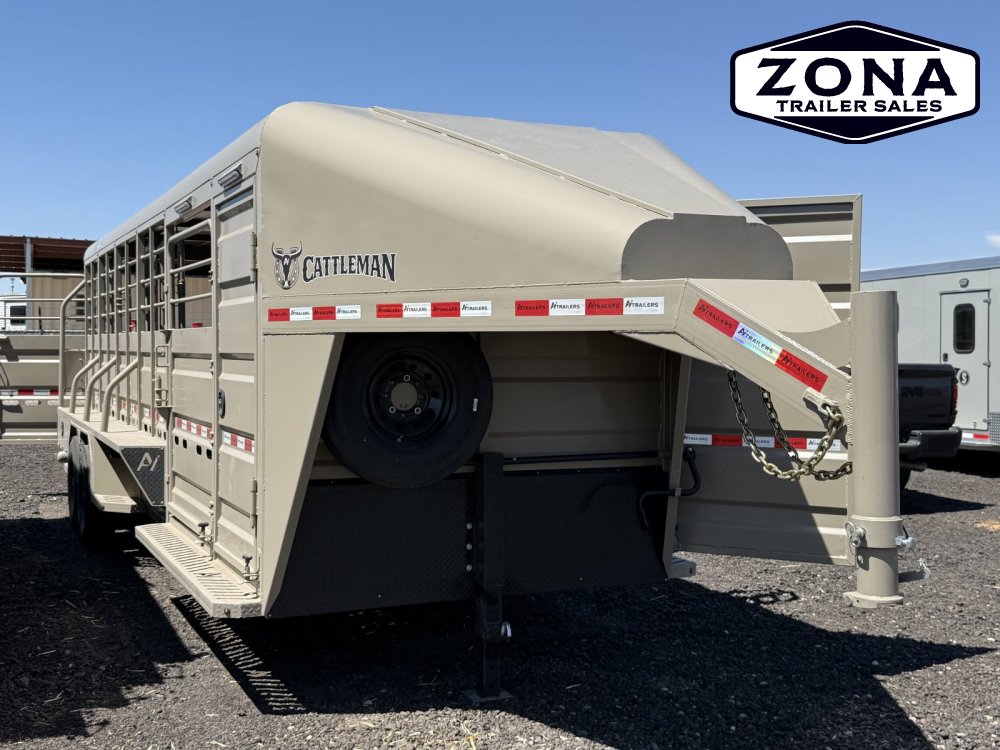
What does GVWR mean on a trailer? GVWR stands for Gross Vehicle Weight Rating, and it tells you the maximum total weight the trailer is designed to handle when fully loaded.
That sounds simple, but GVWR is often confused with empty trailer weight, payload, GAWR, GCWR and tongue weight. Understanding the difference matters when you are choosing a trailer, loading equipment or matching the trailer to your truck.
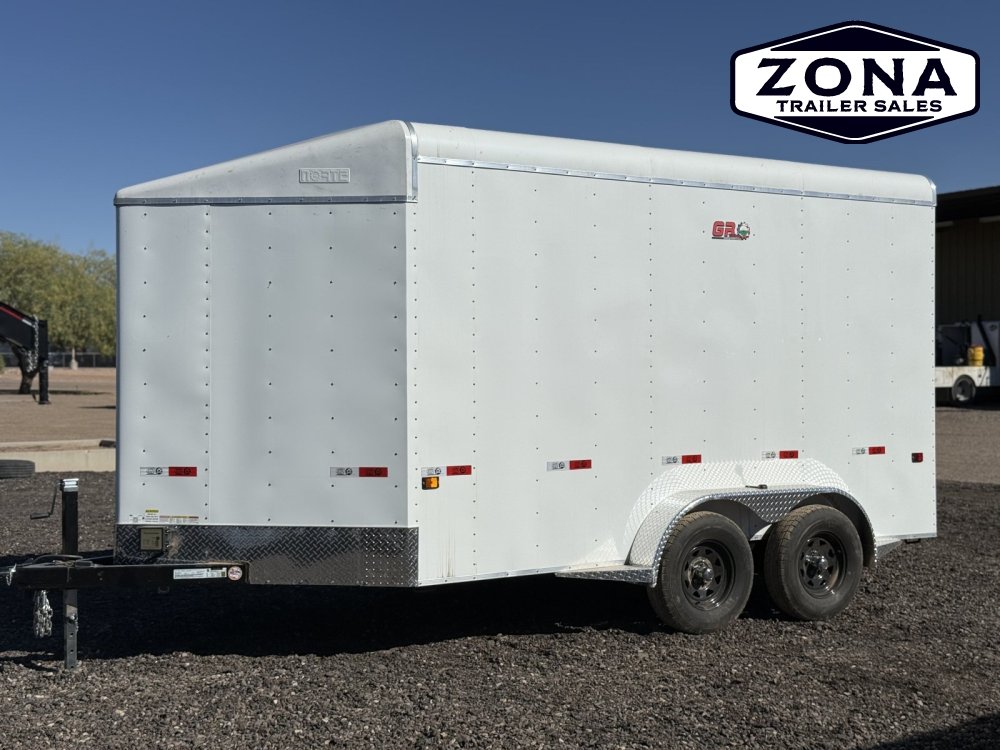
Compare Zona Trailer Sales' current equipment and dump trailers by GVWR, axle configuration, size and intended use.
Browse Equipment Trailers Browse Dump TrailersWhat Does GVWR Mean on a Trailer?
GVWR means Gross Vehicle Weight Rating. It is the maximum rated weight of the trailer and everything loaded into or onto it.
That means GVWR includes:
- The trailer itself
- Equipment or vehicles being hauled
- Horses or livestock
- Tools and supplies
- Tack, feed or water
- Any other cargo carried by the trailer
GVWR is a manufacturer rating. It is not the same thing as the trailer's empty weight, and it does not tell you how much cargo you can automatically add.
Does GVWR Include the Weight of the Trailer?
Yes. GVWR includes the trailer itself plus its cargo.
This is one of the most common misunderstandings when buyers compare trailers.
If a trailer has a 14,000-pound GVWR, that does not mean you can put 14,000 pounds of cargo on it.
The trailer's own empty weight must be subtracted first.
GVWR - Empty Trailer Weight = Approximate Payload Capacity
For example, if a trailer has a 14,000-pound GVWR and weighs 4,000 pounds empty, the basic calculated payload would be approximately 10,000 pounds.
Always verify the manufacturer-listed payload and finished trailer weight because options, accessories and individual configurations can change the actual numbers.
What Does 7,000 GVWR Mean on a Trailer?
A 7,000-pound GVWR means the trailer and everything loaded onto it must remain at or below 7,000 pounds.
It does not mean the trailer can carry 7,000 pounds of cargo.
If a 7,000-GVWR trailer weighs 2,500 pounds empty, a simple estimate would leave about 4,500 pounds for cargo.
7,000 lbs GVWR - 2,500 lbs empty trailer = approximately 4,500 lbs available for payload.
The actual payload should always come from the specific trailer's manufacturer information rather than a generic calculation.
What Does 10,000 GVWR Mean?
A 10,000-pound GVWR means the trailer's maximum rated loaded weight is 10,000 pounds.
Again, the trailer's own weight is part of that total.
If the trailer weighs 3,200 pounds empty, the basic difference between GVWR and empty weight would be 6,800 pounds.
That does not automatically mean every component or loading situation allows exactly 6,800 pounds of usable cargo, so manufacturer specifications should always take priority.
What Does 14,000 GVWR Mean on a Trailer?
A trailer rated at 14,000 pounds GVWR is designed for a maximum total trailer weight of 14,000 pounds when loaded.
This rating is common in heavier equipment, dump and flatbed trailer applications.
Two trailers with the same GVWR can still have different payload capacities because one trailer may weigh more empty than the other.
That is why buyers should compare both GVWR and empty weight rather than judging capacity from GVWR alone.
Real GVWR Examples From Zona Trailer Sales
Current Zona inventory shows how much trailer ratings can vary depending on the trailer's design and intended work.
| Current Zona Example | GVWR | Configuration |
|---|---|---|
| Double A 6x10 Dump | 11,500 lbs | Compact dump trailer |
| Double A LP147 Dump | 15,400 lbs | 14-foot dump trailer |
| Double A LP167 Dump | 17,500 lbs | 14-foot dump with 8K axles |
| Double A GCT207 Split Tilt | 23,000 lbs | 26-foot gooseneck split-tilt trailer |
| Rice 20+5 Gooseneck | 23,990 lbs | 25-foot deckover with mega ramps |
| Double A GHB208 | 25,000 lbs | Heavy-duty gooseneck flatbed / hydraulic dovetail configuration |
| Double A GHB458 | 50,000 lbs | Heavy-duty tri-axle gooseneck configuration |
Those examples show why GVWR is useful when comparing trailers, but it is only one part of the capacity picture.
A 15,400-pound dump trailer and a 15,500-pound equipment trailer may have similar GVWR numbers but completely different empty weights, dimensions and intended uses.
Compare Zona's current equipment trailers by GVWR, axle configuration, deck length and loading setup.
Browse Equipment TrailersGVWR vs. Payload: What's the Difference?
GVWR is the maximum rated weight of the loaded trailer.
Payload is how much weight the trailer can carry.
The simplest way to understand the relationship is:
GVWR - Empty Trailer Weight = Approximate Payload
This is why two trailers with identical GVWR ratings can have different payload capacities.
If one trailer is built with a heavier frame, larger toolbox, hydraulic system or other equipment, that added empty weight reduces the amount left for cargo.
GVWR vs. GAWR: What's the Difference?
GAWR stands for Gross Axle Weight Rating.
GAWR tells you the maximum rated load that can be carried by an axle or axle system.
GVWR applies to the complete trailer.
They are related, but they are not interchangeable.
For example, a trailer with two 7,000-pound axles does not automatically have a 14,000-pound GVWR simply because the axle ratings add up to 14,000 pounds.
The trailer manufacturer determines the GVWR based on the complete trailer and its rated components, including the frame, suspension, tires, wheels, coupler and other structural elements.
Use the manufacturer's stated GVWR rather than calculating your own rating from axle capacity.
GVWR vs. GCWR: What's the Difference?
GVWR applies to one vehicle or trailer.
GCWR means Gross Combination Weight Rating and applies to the tow vehicle and trailer combination.
That distinction becomes important when matching a trailer to a truck and when commercial-driver requirements are involved.
A heavy trailer may be within its own GVWR but still create a truck-and-trailer combination that exceeds the tow vehicle's GCWR.
GVWR: maximum rated weight of the individual vehicle or trailer.
GCWR: maximum rated weight of the entire truck-and-trailer combination.
Does GVWR Determine Whether You Need a CDL?
Not by itself.
Federal CDL classifications look at the vehicle combination, including GCWR and the GVWR of the vehicle being towed.
Under federal Class A CDL rules, a combination generally enters Group A when the GCWR is at least 26,001 pounds and the towed vehicle has a GVWR above 10,000 pounds.
A trailer over 10,000 pounds GVWR does not automatically require a CDL if the overall combination remains below the applicable 26,001-pound threshold. Other requirements can apply depending on commercial use, hazardous materials, passenger transportation and state rules.
For federal commercial-driver classification rules, review the Federal Motor Carrier Safety Administration's CDL guidance.
What Is Tongue Weight?
Tongue weight is the downward force a bumper-pull trailer places on the hitch.
It matters because that force becomes part of the load carried by the tow vehicle.
Too little tongue weight can contribute to trailer instability. Too much can overload the hitch, rear axle, suspension or tires of the tow vehicle.
For conventional ball-mounted trailers, NHTSA materials commonly reference approximately 10% to 15% of loaded trailer weight as a typical tongue-weight range. Always use the specific truck, hitch and trailer manufacturer's requirements for your setup.
Review your truck and trailer manufacturer's loading instructions before towing. NHTSA towing guidance also discusses load placement and proper tongue weight for conventional trailers.
Does Tongue Weight Count Against Truck Payload?
Yes.
The downward force from the trailer hitch uses part of the tow vehicle's available payload capacity.
Passengers, tools, fuel, coolers, cargo in the bed and hitch equipment also use payload.
This is why a truck can have enough advertised towing capacity for a trailer but still run out of available payload first.
What About Gooseneck Pin Weight?
Gooseneck trailers place their hitch load into the truck bed near the rear axle rather than onto a receiver behind the bumper.
The same general principle applies: the truck has to carry part of the trailer's loaded weight.
That means truck payload, rear axle rating, tires and hitch rating become especially important with heavy gooseneck trailers.
Do not compare a large gooseneck only against the truck's advertised maximum towing capacity.
How Much Weight Can You Put on a 7,000 GVWR Trailer?
You cannot answer that from GVWR alone.
You need the trailer's actual empty weight.
For example:
7,000 GVWR - 2,500 lbs empty = approximately 4,500 lbs payload
If the trailer weighs 3,000 pounds empty instead, the same 7,000-pound GVWR would leave approximately 4,000 pounds.
That is why payload should be checked on the exact trailer rather than assumed from GVWR.
How Much Weight Can a 14,000 GVWR Trailer Carry?
Again, subtract the actual empty trailer weight from the 14,000-pound GVWR.
If the trailer weighs 4,500 pounds empty:
14,000 GVWR - 4,500 lbs empty = approximately 9,500 lbs payload
A different 14K trailer could have more or less payload depending on its empty weight and finished configuration.
Why Bigger GVWR Does Not Automatically Mean Better
More capacity is useful only when you actually need it.
A heavier-duty trailer can also mean:
- More empty trailer weight
- Higher tow-vehicle requirements
- Higher purchase cost
- Larger tires, brakes and suspension components
- Different licensing or commercial considerations
- More trailer than your normal load requires
The better goal is to choose enough GVWR and payload for your real load with appropriate capacity remaining, then make sure the truck and hitch are rated for that combination.
Compare current dump trailers by GVWR, size, axle configuration and dump-body setup.
Browse Dump TrailersHow to Choose the Right Trailer GVWR
Start with what you actually plan to haul.
Estimate the heaviest realistic load, then compare that number with the trailer's payload capacity rather than looking only at GVWR.
- Trailer GVWR
- Empty trailer weight
- Available payload
- GAWR
- Tire and wheel ratings
- Hitch or coupler rating
- Expected cargo weight
- Truck payload capacity
- Truck towing capacity
- Truck GCWR and other manufacturer limits
The lowest applicable rating can become the limiting factor.
A higher-rated axle, tire or hitch does not automatically increase the GVWR assigned to the complete trailer.
Find a Trailer With the Capacity Your Load Requires
Compare current Zona trailers by GVWR, payload, axle setup, deck size and intended use. Start with what you need to haul, then choose a trailer and tow vehicle that fit the load.
Browse Equipment Trailers Browse Dump TrailersTrailer GVWR FAQs
What does GVWR mean on a trailer?
GVWR means Gross Vehicle Weight Rating. It is the maximum rated weight of the trailer and everything loaded onto or into it.
Does GVWR include trailer weight?
Yes. GVWR includes the empty trailer plus cargo, equipment, animals, supplies and anything else carried by the trailer.
What does 7,000 GVWR mean on a trailer?
It means the trailer's maximum rated loaded weight is 7,000 pounds. To estimate payload, subtract the trailer's actual empty weight from 7,000 pounds.
How much weight can you put on a 7,000 GVWR trailer?
It depends on the trailer's empty weight. A 7,000-GVWR trailer weighing 2,500 pounds empty would have approximately 4,500 pounds of calculated payload before considering any manufacturer-specific limitations.
What does 10,000 GVWR mean?
A 10,000-pound GVWR means the trailer and its full load must remain at or below 10,000 pounds. It does not mean the trailer can carry 10,000 pounds of cargo.
How much weight can a 14,000 GVWR trailer carry?
Subtract the trailer's actual empty weight from 14,000 pounds. For example, a trailer weighing 4,500 pounds empty would have approximately 9,500 pounds of calculated payload.
Is GVWR the same as payload?
No. GVWR is the trailer's maximum rated loaded weight. Payload is the amount of weight available for cargo after the trailer's own weight is accounted for.
What is GAWR on a trailer?
GAWR means Gross Axle Weight Rating. It is the maximum rated load for an axle or axle system. It is not the same as the trailer's total GVWR.
What is GCWR?
GCWR means Gross Combination Weight Rating. It applies to the combined truck-and-trailer setup rather than only the trailer.
Does tongue weight count toward truck payload?
Yes. Trailer tongue weight places downward load on the tow vehicle and uses part of the truck's available payload capacity.
Does a trailer over 10,000 GVWR automatically require a CDL?
No. Federal CDL requirements depend on the entire vehicle combination and how it is used. Under federal Class A rules, GCWR and the GVWR of the towed vehicle both matter. Verify the rules that apply to your specific operation.
Browse Zona's current trailer inventory and compare GVWR, trailer size, axle configuration and intended use before choosing the trailer that fits your load.
View All TrailersGVWR, GAWR, GCWR, payload, towing capacity and hitch ratings vary by trailer, truck and configuration. Inventory examples in this article were verified against Zona Trailer Sales listings at the time of publication and may change as inventory changes. Always verify the manufacturer's specifications and applicable towing or commercial-driver requirements for your specific setup.