
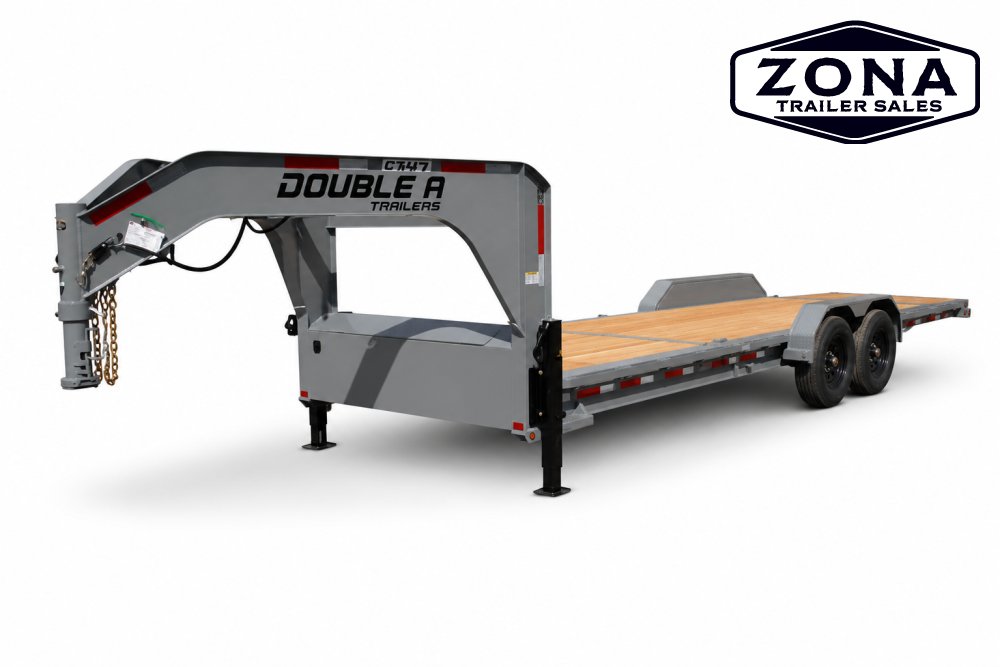
Gooseneck vs. fifth wheel comes down to more than two different names for an in-bed hitch. The connection hardware, trailer coupler, bed space, common applications and everyday usability are different.
Gooseneck hitches are common on horse, livestock, equipment and flatbed trailers, while fifth-wheel systems are especially common with RVs and certain heavy towing applications. This guide explains how each works, what changes inside the truck bed and which setup may make more sense for the way you tow.
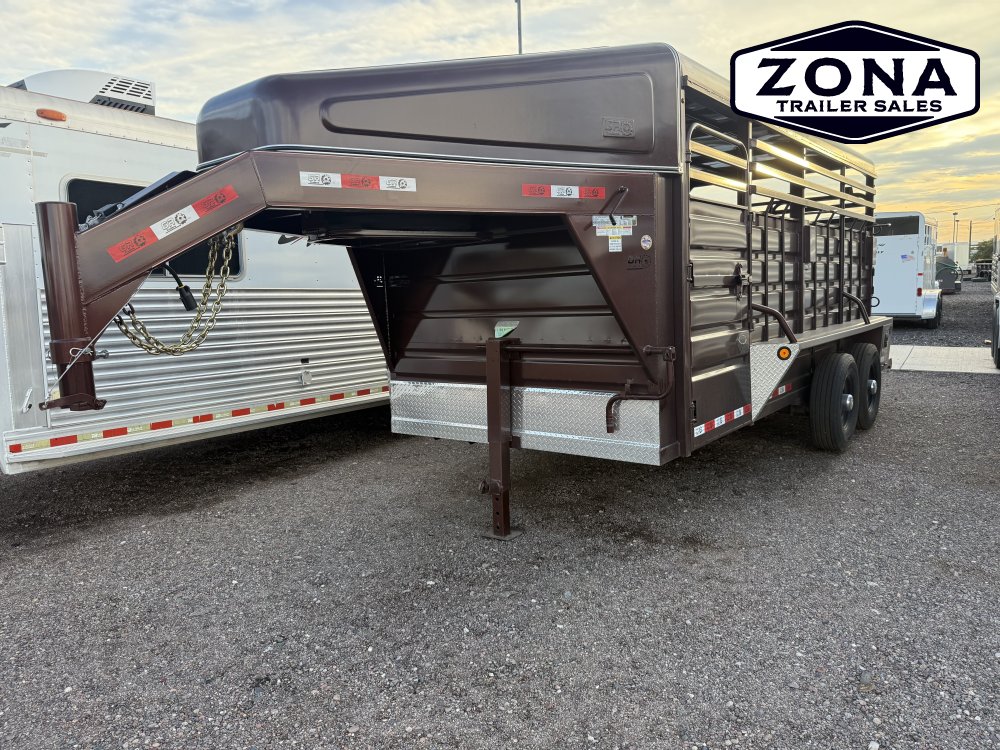
Zona Trailer Sales carries gooseneck configurations across horse, livestock and equipment inventory. Compare the trailer first, then make sure your truck and hitch system are properly matched to it.
Shop Gooseneck Horse Trailers Shop Equipment TrailersGooseneck vs. Fifth Wheel: The Quick Answer
A gooseneck hitch typically uses a ball mounted in the pickup bed. The trailer has a coupler that drops over that ball.
A fifth-wheel hitch uses a larger hitch assembly mounted in the bed with a plate and locking jaws that capture a kingpin on the trailer.
Both move the trailer connection forward over or near the rear axle instead of placing the connection behind the truck like a traditional bumper-pull setup.
| Feature | Gooseneck | Fifth Wheel |
|---|---|---|
| Connection | Trailer coupler fits over a ball in the truck bed | Trailer kingpin locks into a plate and jaw-style hitch |
| Common Trailer Types | Horse, livestock, equipment, flatbed and deckover trailers | Especially common with fifth-wheel RVs and certain heavy towing applications |
| Truck-Bed Hardware | Often relatively compact, depending on the hitch system | Larger hitch assembly occupies more bed space while installed |
| Removing Hitch Hardware | Many systems are designed to leave relatively little hardware above the bed when removed | Hitch assembly can often be removed, but it is typically larger and heavier |
| Trailer Compatibility | Requires a compatible gooseneck coupler and rated ball/hitch system | Requires a fifth-wheel kingpin and compatible rated hitch |
How Does a Gooseneck Hitch Work?
A gooseneck trailer extends forward over the pickup bed and connects to a hitch ball mounted in or above the bed floor.
The trailer's coupler lowers over the ball and locks in place. Safety chains and electrical connections are also used as required for the setup.
Because the connection point sits closer to the truck's rear axle than a conventional bumper-pull connection, goosenecks are widely used for longer and heavier trailers.
That is why you see gooseneck configurations across horse trailers, stock trailers, deckovers and heavy equipment trailers.
How Does a Fifth-Wheel Hitch Work?
A fifth-wheel hitch uses a larger hitch assembly mounted inside the pickup bed.
The trailer has a kingpin that slides into the fifth-wheel hitch plate, where locking jaws secure the connection.
The hitch assembly provides a broad contact surface and articulation point for the trailer.
Fifth-wheel connections are especially familiar to RV buyers, although fifth-wheel designs are also used in other towing applications.
Why Are Goosenecks So Common on Horse and Equipment Trailers?
Goosenecks work particularly well for trailer categories where buyers need longer decks, more horse capacity, larger stock compartments or heavier payload ratings.
The front gooseneck section also creates useful trailer space above the truck bed.
On horse and livestock trailers, manufacturers may use that area for tack storage, dressing rooms or living quarters.
On flatbed and equipment trailers, the gooseneck configuration is common as deck length and GVWR increase.
Which Hitch Uses More Truck-Bed Space?
A traditional fifth-wheel hitch generally occupies more usable truck-bed space while installed because of the size of the hitch assembly.
A gooseneck ball system is typically more compact above the bed floor.
Some gooseneck systems can also be removed or turned over when they are not being used, leaving a relatively open truck bed.
Fifth-wheel hitches can also be removable, but the hitch itself tends to be substantially larger and heavier.
If you use your pickup bed heavily for tools, feed, pallets, equipment or other cargo when you are not towing, this difference can matter.
Gooseneck vs. Fifth Wheel Turning Radius
Both hitch types place the trailer connection inside the truck bed, which changes the turning geometry compared with a bumper-pull trailer.
But turning clearance depends on more than hitch type.
Truck-bed length, cab design, trailer nose shape, hitch location and the specific trailer all affect how sharply the combination can turn without contact.
Short-bed pickups deserve particular attention because there is less distance between the hitch area and the truck cab.
Do not assume a gooseneck or fifth-wheel setup has unlimited turning clearance simply because the hitch is in the bed.
Which One Is Easier to Hitch?
Both systems become straightforward with experience, but the hitching process is different.
A gooseneck requires positioning the trailer coupler directly over the hitch ball, which sits relatively low in the truck bed.
A fifth-wheel hitch gives the driver a larger hitch plate and visible kingpin connection point, which some drivers find easier to line up.
Cameras and modern truck-bed viewing systems can make either setup easier.
Which One Rides Better?
Hitch type is only one part of ride quality.
Trailer suspension, truck suspension, trailer loading, pin or hitch weight, tire pressures, road conditions and the specific truck-and-trailer combination all affect how a trailer feels on the road.
It is too simplistic to say that every fifth-wheel trailer rides better than every gooseneck, or the reverse.
Compare the actual trailer and make sure it is loaded correctly and matched to an appropriate tow vehicle.
Gooseneck vs. Fifth Wheel Weight Capacity
Hitch type alone does not determine towing capacity.
The actual limits come from the rated components in the complete towing system.
- Trailer GVWR
- Trailer actual loaded weight
- Truck GVWR
- Truck GAWR
- Truck payload
- Manufacturer towing capacity
- GCWR where applicable
- Hitch rating
- Ball or fifth-wheel assembly rating
- Tire and wheel ratings
Use the lowest applicable rating as the limit for the setup.
GVWR vs. Payload: Why It Matters
GVWR is the maximum rated weight of the trailer and everything loaded onto it.
Payload is the amount of capacity available for horses, livestock, equipment, freight, tack or other cargo after accounting for the trailer's own weight.
Verify the actual manufacturer's specifications because options and installed equipment can change finished trailer weight.
This matters regardless of whether the trailer connects through a gooseneck ball or a fifth-wheel hitch.
Don't Forget Truck Payload
A truck's advertised towing capacity is not the only number that matters.
Gooseneck and fifth-wheel trailers place a portion of their weight into the truck bed.
That load uses part of the truck's available payload and affects the rear axle, tires and suspension.
Passengers, tools, fuel, equipment and other cargo in the truck also use payload.
A pickup can therefore have enough headline towing capacity for a trailer but still run into a payload or axle-rating limit.
Towing Safety and Weight Ratings
Whatever hitch style you use, the truck, hitch and trailer all need to remain within their applicable manufacturer ratings.
For additional information about safe towing, vehicle ratings and trailer operation, review the National Highway Traffic Safety Administration's vehicle safety resources.
Gooseneck vs. Bumper Pull Is a Different Question
Do not confuse gooseneck vs. fifth wheel with gooseneck vs. bumper pull.
Gooseneck and fifth wheel compare two in-bed hitch systems.
Gooseneck vs. bumper pull compares an in-bed hitch against a trailer connection positioned behind the truck.
If you are choosing a horse trailer and deciding between those two configurations, read Zona's Gooseneck vs. Bumper Pull Horse Trailer Guide.
Goosenecks for Horse and Livestock Trailers
Gooseneck configurations are common as horse and livestock trailers become larger.
They can provide space for additional horses, stock compartments, tack rooms, dressing rooms and living quarters.
For buyers specifically shopping gooseneck horse trailers, Zona has a dedicated inventory page for comparing current configurations.
Browse Gooseneck Horse Trailers
If you want to compare goosenecks against bumper-pull horse trailers as well, browse all horse trailers.
Goosenecks for Equipment and Deckover Trailers
Goosenecks are also widely used on longer and higher-capacity flatbed and deckover trailers.
Buyers hauling equipment, materials or commercial loads may move into gooseneck configurations as deck length, payload and GVWR increase.
If you are comparing deck design and equipment-hauling configurations, read Zona's Deckover Trailer Buying Guide.
Which Should You Buy: Gooseneck or Fifth Wheel?
| Your Situation | Likely Direction | Why |
|---|---|---|
| Horse or livestock trailer | Gooseneck | Gooseneck couplers are extremely common in these trailer categories |
| Equipment or deckover trailer | Gooseneck is common | Widely used on longer and heavier flatbed and equipment configurations |
| Fifth-wheel RV | Fifth-wheel hitch | Trailer is designed around a fifth-wheel kingpin connection |
| Want maximum usable bed space when not towing | Compare removable systems carefully | Many gooseneck systems leave less hardware above the bed, but hitch designs vary |
| Already own the trailer | Use the compatible hitch type | The trailer's coupler or kingpin determines the correct connection unless an appropriate engineered adapter is involved |
In most cases, you are not choosing a hitch style in isolation.
The trailer you need determines much of the answer. If the horse, livestock or equipment trailer you want is built as a gooseneck, install a properly rated gooseneck system that matches the truck and trailer.
Can You Convert a Fifth Wheel to Gooseneck?
Adapters and conversion products exist, but compatibility should never be assumed.
Changing the connection can alter how loads are transferred into the trailer frame and truck.
Before using any adapter, verify that the trailer manufacturer, hitch manufacturer and adapter manufacturer approve the specific combination and that all components are properly rated.
Do not use an adapter simply because the parts physically connect.
How Much Can Your Truck Actually Tow?
Hitch style does not replace towing math.
Before buying a large gooseneck trailer, check the truck's actual ratings against the trailer's expected loaded weight.
Zona's Horse Trailer Weight, GVWR & Tow Vehicle Guide explains GVWR, payload, truck classes and loaded trailer weight in more detail.
Shopping for a Gooseneck Trailer?
Zona Trailer Sales carries gooseneck configurations across horse, livestock and equipment inventory. Compare the trailer's size, GVWR, payload and configuration, then make sure your truck and hitch are properly matched to it.
Shop Gooseneck Horse Trailers Shop Equipment Trailers Explore FinancingGooseneck vs. Fifth Wheel FAQs
What is the main difference between a gooseneck and fifth-wheel hitch?
A gooseneck typically connects to a ball mounted in the pickup bed. A fifth-wheel hitch uses a larger hitch plate and locking jaws that connect to a kingpin on the trailer.
Is a gooseneck the same as a fifth wheel?
No. Both are in-bed trailer connections, but the coupling hardware and trailer connection are different.
Which is stronger, gooseneck or fifth wheel?
Do not judge capacity by hitch type alone. Gooseneck and fifth-wheel systems are available in different ratings. The truck, trailer, hitch and all related components must remain within their individual rated limits.
Which is better for a horse trailer?
Gooseneck connections are extremely common on larger horse trailers. The right configuration depends on horse count, trailer size, loaded weight, storage needs and the tow vehicle.
Which is better for an equipment trailer?
Gooseneck connections are common on longer and higher-capacity equipment and deckover trailers. Compare actual payload, deck dimensions and tow-vehicle requirements rather than choosing solely by hitch type.
Does a fifth-wheel hitch take up more bed space?
A traditional fifth-wheel hitch assembly generally occupies more bed space while installed than a gooseneck ball system. Both types can have removable components, so compare the specific hitch system.
Is a gooseneck better for a short-bed truck?
Not automatically. Short-bed trucks require careful attention to cab-to-trailer clearance regardless of hitch type. Trailer nose design, hitch position and truck-bed length all affect turning clearance.
Can I use a fifth-wheel adapter on a gooseneck?
Adapters exist for certain applications, but compatibility and load ratings must be verified with the trailer, hitch and adapter manufacturers. Do not assume an adapter is appropriate simply because it fits.
Can I finance a gooseneck trailer?
Financing options are available for qualified buyers through Zona Trailer Sales. Rates, terms, down payment requirements and approval depend on the buyer, trailer and lender.
Does Zona deliver gooseneck trailers nationwide?
Yes. Zona Trailer Sales works with buyers across the United States and offers nationwide delivery.
Browse Zona's current gooseneck horse trailers or compare equipment trailers for the configuration that fits the way you haul.
Browse Gooseneck Horse Trailers Browse Equipment TrailersTowing capacity, payload, hitch ratings, trailer ratings and compatibility vary by truck, trailer and hitch system. Always verify manufacturer specifications for the complete towing combination before installing, loading or towing.