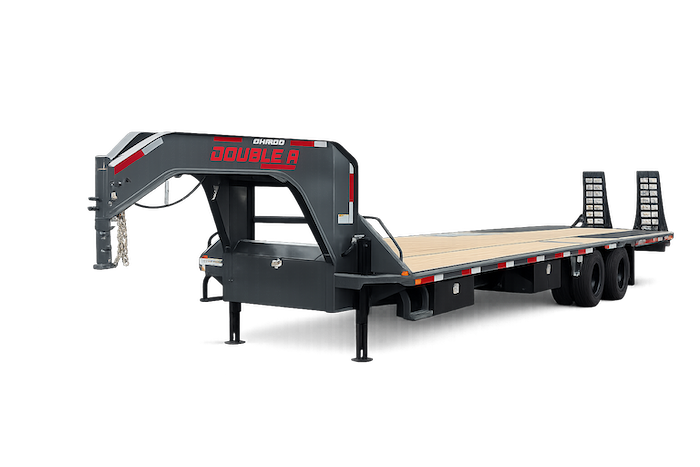
What is a deckover trailer, and how is it different from a flatbed or gooseneck? The terminology can get confusing because these terms do not describe the same thing. A trailer can be a deckover, a flatbed and a gooseneck at the same time.
For equipment operators, contractors, farmers, ranchers and commercial haulers, understanding those differences can make it much easier to choose the right trailer. This guide covers deck design, bumper-pull vs. gooseneck configurations, ramps and hydraulic dovetails, GVWR and payload, and the basics of CDL vs. non-CDL hauling.
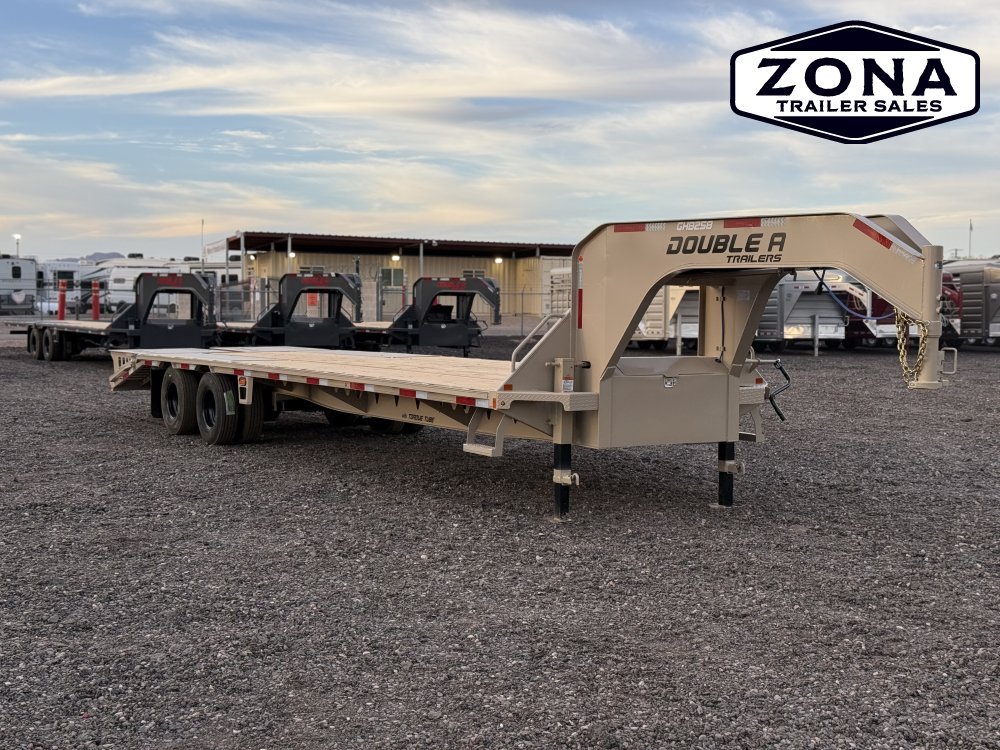
Zona Trailer Sales carries deckover trailers for equipment, commercial hauling, farm and ranch work, construction and other heavy-duty applications, including CDL and Non-CDL configurations.
Shop Deckover TrailersWhat Is a Deckover Trailer?
A deckover trailer has a deck positioned above the trailer's wheels rather than between them. Because the tires do not sit beside the usable deck, the deck can extend across the trailer's width.
That design creates a wide, flat loading surface and eliminates wheel wells from the deck area. It can be especially useful when hauling equipment, pallets, building materials or other loads where usable deck width matters.
The tradeoff is deck height. Because the deck sits above the wheels, a deckover generally has a higher loading surface than a low-profile equipment trailer with a deck positioned between the wheels.
Deckover vs. Flatbed vs. Gooseneck: What's the Difference?
These terms are often used as if they describe three completely different trailer types, but they actually describe different characteristics of a trailer.
| Term | What It Describes | What It Means |
|---|---|---|
| Deckover | Deck position | The deck sits above the wheels, creating a wide loading surface without wheel wells. |
| Flatbed | Cargo area | The trailer has an open, generally flat deck for equipment, materials, vehicles or cargo. |
| Gooseneck | Hitch configuration | The trailer connects to a gooseneck hitch mounted in or over the bed of a pickup truck. |
This means a trailer can legitimately be described as a gooseneck deckover flatbed. "Deckover" tells you where the deck sits, "flatbed" describes the cargo platform, and "gooseneck" tells you how the trailer connects to the tow vehicle.
Why Choose a Deckover Trailer?
The biggest advantage of a deckover is usable deck space.
With the wheels underneath the deck instead of beside it, you get a broad loading platform without fenders or wheel wells interrupting the cargo area.
Depending on the specific trailer and its ratings, deckovers can be useful for:
- Skid steers and compact construction equipment
- Tractors and agricultural equipment
- Building materials and pallets
- Vehicles and machinery
- Farm and ranch equipment
- Commercial freight and general cargo
- Long or wide loads that benefit from an unobstructed deck
- Hot shot and commercial hauling when the trailer and tow vehicle are appropriately configured
If your main goal is moving machinery rather than specifically choosing a deckover, browse Zona's broader equipment trailer inventory to compare additional equipment-hauling configurations.
Deckover vs. Low-Profile Equipment Trailer
One of the most useful comparisons for equipment buyers is not deckover vs. gooseneck. It is deckover vs. low-profile equipment trailer.
A low-profile trailer typically positions the deck lower between the wheels. That can reduce loading height and create a shallower approach angle, but the wheels and fenders occupy space beside the deck.
A deckover moves the deck above those wheels, creating a wider uninterrupted platform at the expense of a higher deck.
| Feature | Deckover Trailer | Low-Profile Trailer |
|---|---|---|
| Deck Position | Above the wheels | Generally between the wheels |
| Usable Deck Width | Wide, unobstructed platform | Wheel wells or fenders may reduce usable width |
| Deck Height | Higher | Lower |
| Loading Angle | Depends heavily on ramps or dovetail design | Often lower because of reduced deck height |
| Best Fit | Wide loads, pallets, materials, equipment and commercial hauling | Equipment where low loading height and approach angle are priorities |
If loading angle is one of your biggest concerns, compare Zona's deckover inventory with its current low-profile tilt trailers.
Browse Low-Profile Tilt Trailers
Bumper-Pull vs. Gooseneck Deckover Trailers
Deckover trailers can be built with different hitch configurations. For heavier and longer deckovers, gooseneck designs are common, but bumper-pull deckover configurations also exist.
Bumper-Pull Deckover
A bumper-pull trailer connects behind the tow vehicle through an appropriately rated receiver and hitch system.
Bumper-pull configurations can make sense when the required trailer size, loaded weight and tongue weight remain within the tow vehicle's ratings and the buyer does not need the additional size or configuration of a gooseneck.
Gooseneck Deckover
A gooseneck connects to a hitch mounted in the truck bed. This configuration is common on longer and heavier deckover trailers used for equipment and commercial hauling.
Goosenecks also place part of the trailer's load over the truck's rear axle area, making truck payload, rear axle ratings, tire ratings and hitch capacity important parts of matching the trailer to the tow vehicle.
Neither hitch style is automatically better. The correct choice depends on the trailer, load, tow vehicle and how the trailer will be used.
Mega Ramps, Slide-In Ramps and Hydraulic Dovetails
The deck is only part of the equation. How you get equipment onto that deck can have a major effect on everyday usability.
Mega Ramps
Large rear ramps provide a broad loading surface and are commonly used on equipment and heavy-duty flatbed trailers. They can be especially useful when regularly loading wheeled or tracked equipment.
Slide-In or Removable Ramps
Removable or slide-in ramps can keep the rear of the trailer open when the ramps are not needed. They can work well for buyers who want a straightforward loading system without a permanent rear ramp structure.
Hydraulic Dovetail
A hydraulic dovetail uses a powered rear section to create the loading transition. For operators loading and unloading equipment frequently, this can reduce the manual work associated with handling traditional ramps.
The right choice depends on what you're loading, equipment ground clearance, loading frequency and how much you value speed and convenience.
GVWR vs. Payload on a Deckover Trailer
GVWR, or Gross Vehicle Weight Rating, is the maximum rated weight of the trailer and everything loaded onto it.
GVWR is not the same thing as payload.
A simple starting calculation is:
Always verify the actual trailer specifications because options, equipment and as-built weight can affect available payload.
For example, choosing a trailer with a higher GVWR does not mean the entire GVWR is available for your machine or cargo. The trailer itself uses part of that rated capacity.
When comparing deckover trailers, look at both GVWR and empty weight rather than comparing GVWR alone.
How Much Deckover Trailer Do You Need?
Start with the load rather than the trailer.
Before shopping, know the approximate weight, length and width of the equipment or cargo you expect to haul. Then account for attachments, tools, fuel, accessories and anything else that will travel on the trailer.
- What is the heaviest machine or load I expect to haul?
- How long and wide is that load?
- How much payload does the trailer actually provide?
- Do I need a completely unobstructed deck?
- How much ground clearance does my equipment have?
- Would ramps, a tilt deck or a hydraulic dovetail work best?
- Can my truck handle the trailer's loaded weight and hitch or pin weight?
- Will my truck and trailer combination affect CDL requirements?
CDL vs. Non-CDL Deckover Trailers
This is one of the most misunderstood parts of shopping for a heavy deckover or gooseneck trailer.
A trailer is not automatically a "CDL trailer" simply because its GVWR is over 10,000 pounds.
Under the federal Class A CDL standard, a combination generally falls into Class A territory when the gross combination weight rating (GCWR) is 26,001 pounds or more and the towed vehicle has a GVWR over 10,000 pounds.
That means the ratings of both the tow vehicle and trailer matter when determining whether a combination requires a CDL under the federal standard.
For the federal rule and an example involving a trailer rated above 10,000 pounds, review the Federal Motor Carrier Safety Administration's CDL guidance .
CDL requirements can also depend on the vehicle's use, cargo and applicable federal or state rules. Certain hazardous-material and passenger operations have separate requirements, and state licensing rules can differ. Verify the requirements that apply to your specific truck, trailer, use and state before operating.
What Does "Non-CDL Gooseneck Trailer" Mean?
Buyers often search for a non-CDL gooseneck trailer, but the trailer alone does not determine whether the driver needs a CDL.
What buyers are generally trying to find is a trailer that can be paired with an appropriate tow vehicle while keeping the combination outside the applicable CDL threshold.
The truck matters just as much as the trailer.
Before purchasing a trailer specifically for Non-CDL hauling, verify the truck's ratings, the trailer's GVWR, the resulting combination ratings and the rules that apply to your operation.
If your goal is commercial or hot shot hauling, compare Zona's dedicated hot shot trailer inventory after you confirm the truck-and-trailer ratings that apply to your operation.
Browse Hot Shot TrailersWhich Deckover Trailer Should You Buy?
| Your Priority | Configuration to Consider | Why |
|---|---|---|
| Wide or palletized cargo | Deckover flatbed | Wide, unobstructed loading platform without wheel wells in the deck. |
| Frequent equipment loading | Deckover with mega ramps or hydraulic dovetail | Loading system becomes a major part of everyday usability. |
| Low-clearance equipment | Low-profile tilt or equipment trailer | Lower deck height can provide a more favorable loading angle. |
| Longer or heavier hauling | Gooseneck deckover | Common configuration for longer and higher-capacity deckover trailers. |
| Non-CDL operation | Properly matched truck and trailer combination | CDL status depends on the combination and applicable rules, not the trailer name alone. |
Deckover Trailer Features Worth Comparing
Once you've narrowed down the basic configuration, compare individual trailers carefully.
- GVWR: How much total loaded weight is the trailer rated to handle?
- Empty weight: How much of that capacity does the trailer itself use?
- Payload: How much capacity remains for equipment and cargo?
- Deck length: Is there enough room for your machine, attachments or cargo?
- Deck width: Does your load fit safely on the usable platform?
- Axles: Compare axle configuration and ratings on the specific trailer.
- Loading system: Ramps, mega ramps, tilt decks and hydraulic dovetails each serve different needs.
- Jacks: Heavier trailers may use different jack configurations.
- Tires and wheels: Verify ratings and specifications for the trailer you're considering.
- Tie-down points: Make sure the trailer provides appropriate cargo-securement options for your intended loads.
Shop Deckover Trailers at Zona
Zona Trailer Sales carries deckover trailers for equipment, construction, farm and ranch work, commercial hauling and other heavy-duty applications. Compare current deck lengths, GVWR ratings, axle configurations, ramps and hydraulic dovetail options.
View Deckover Inventory Explore FinancingDeckover Trailer FAQs
What is a deckover trailer?
A deckover trailer has its deck positioned above the wheels. This creates a wide, flat loading surface without wheel wells interrupting the usable deck.
Is a deckover the same as a flatbed trailer?
Not exactly. "Deckover" describes the position of the deck relative to the wheels, while "flatbed" describes an open, generally flat cargo platform. Many deckover trailers are also flatbeds.
Is a deckover the same as a gooseneck?
No. Deckover describes the deck design, while gooseneck describes the hitch configuration. A trailer can be both a deckover and a gooseneck.
What is a deckover trailer used for?
Deckover trailers are commonly used for equipment, machinery, building materials, pallets, farm and ranch equipment, vehicles and commercial cargo. The appropriate use depends on the individual trailer's dimensions, payload and ratings.
What is the advantage of a deckover trailer?
The primary advantage is a wide, unobstructed loading platform because the wheels sit underneath the deck instead of beside it. The tradeoff is a higher deck and potentially steeper loading angle.
Is a deckover better than a low-profile trailer?
It depends on the load. A deckover can be better when usable width and an unobstructed deck are priorities. A low-profile trailer can be better when lower deck height and loading angle matter more.
Does a 14,000-pound trailer require a CDL?
Not automatically. Under the federal Class A CDL standard, the tow vehicle and trailer combination matters. A combination generally falls into Class A territory when its GCWR is 26,001 pounds or more and the towed vehicle has a GVWR over 10,000 pounds. Other CDL requirements and state rules may also apply.
What is a non-CDL gooseneck trailer?
The phrase usually refers to a gooseneck trailer intended to be paired with an appropriate tow vehicle while keeping the combination outside applicable CDL requirements. The trailer alone does not determine CDL status, so the truck and trailer ratings must be evaluated together.
Are deckover trailers good for skid steers?
They can be, provided the trailer has sufficient payload, dimensions and an appropriate loading system for the specific skid steer. Buyers should compare machine weight, attachments, deck dimensions, GVWR, empty trailer weight and ramp or dovetail design.
Should I choose mega ramps or a hydraulic dovetail?
Mega ramps provide a large physical loading surface, while a hydraulic dovetail uses a powered rear section to create the loading transition. Buyers who load equipment frequently may value the convenience of a hydraulic system, while others may prefer the simplicity of ramps.
Browse Zona's current deckover inventory and compare deck length, GVWR, payload, axle configurations and loading systems.
Browse Deckover TrailersTrailer specifications, capacities, CDL requirements and vehicle ratings vary by trailer, tow vehicle, configuration, cargo, jurisdiction and use. This guide provides general information only. Always verify the specifications of the individual trailer and tow vehicle and confirm applicable federal, state and local licensing and operating requirements before purchasing, loading or towing.