
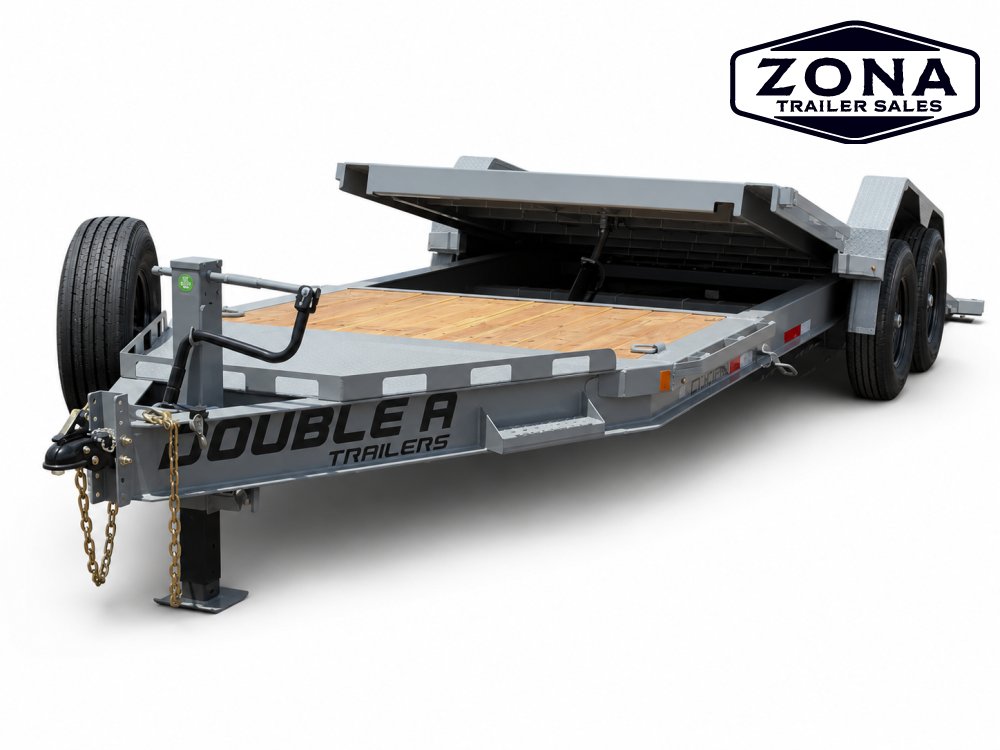
Tilt trailer vs. ramp trailer is one of the most practical decisions equipment buyers make. Both can haul skid steers, excavators, tractors, cars, trucks, scissor lifts and other equipment, but they load very differently.
A tilt trailer uses the trailer deck itself to create the loading angle. A ramp trailer uses separate ramps to bridge the gap between the ground and the deck. The better choice depends on your equipment, ground clearance, loading frequency, trailer capacity and how much convenience matters to you.
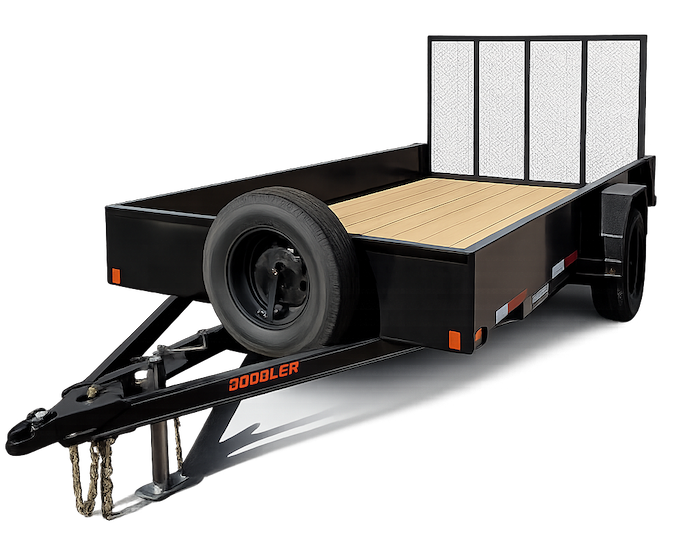
Zona Trailer Sales carries both low-profile tilt trailers and equipment trailers with ramps, so you can compare loading styles based on the machines you actually haul.
Shop Tilt Trailers Shop Ramp TrailersTilt Trailer vs. Ramp Trailer: The Quick Answer
A tilt trailer lowers or tilts part of the deck toward the ground so equipment can drive directly onto the trailer.
A ramp trailer keeps the deck stationary and uses ramps to create the loading path.
Tilt trailers can reduce the amount of ramp handling required and can make frequent loading faster. Ramp trailers are mechanically simpler in many configurations and give buyers flexibility in how the ramps are positioned and stored.
| Consideration | Tilt Trailer | Ramp Trailer |
|---|---|---|
| Loading Method | Deck tilts toward the ground | Separate ramps connect ground to deck |
| Setup Time | Can reduce manual ramp setup | Ramps must be positioned before loading |
| Loading Angle | Depends on tilt geometry and deck length | Depends on deck height and ramp length |
| Mechanical Complexity | Includes tilt mechanism and related components | Typically simpler loading hardware |
| Frequent Loading | Often attractive for frequent equipment moves | Can work well if ramp setup is not a concern |
| Ramp Storage | No separate loading ramps on many tilt designs | Ramps may be spring-assist, slide-in or otherwise stored on the trailer |
How Does a Tilt Trailer Work?
A tilt trailer allows all or part of the trailer deck to pivot toward the ground for loading and unloading.
Depending on the trailer, the tilt may be full-deck or split-deck. A split tilt keeps part of the deck stationary while another section tilts.
Some tilt trailers use hydraulic systems, while others use cushion or gravity-assisted designs. The exact mechanism affects how the trailer behaves during loading and what maintenance it requires.
The main advantage is convenience. Instead of removing, carrying or positioning ramps every time you load, the deck itself becomes the loading surface.
How Does a Ramp Trailer Work?
A ramp trailer uses a fixed deck with ramps extending from the rear or side of the trailer to the ground.
Zona's current ramp-style inventory includes configurations with spring-assist ramps and slide-in ramps.
Spring-assist ramps remain attached to the trailer and use spring assistance to make raising and lowering them easier.
Slide-in ramps can be removed from their storage position and placed where needed for loading, then stored back under or within the trailer after use.
That simplicity can be appealing to buyers who do not need a powered or moving deck and prefer a straightforward loading system.
Which Has the Better Loading Angle?
Neither loading system automatically has the better angle.
On a tilt trailer, loading angle depends on deck height, deck length and how far the deck tilts.
On a ramp trailer, the angle depends on deck height and ramp length. Longer ramps generally create a more gradual transition than shorter ramps on the same deck height.
This matters particularly for vehicles or equipment with limited ground clearance.
- Machine ground clearance
- Wheelbase or track length
- Trailer deck height
- Ramp length or tilt angle
- Breakover angle
- Whether attachments or low-hanging components change the loading clearance
Tilt vs. Ramp Trailer for a Skid Steer
Both styles can work well for skid steers when the trailer is properly rated and sized.
A tilt trailer can be attractive to contractors who load and unload frequently because there are fewer separate loading components to handle.
A ramp trailer can also work extremely well, especially if the ramps are wide enough, properly rated and provide a suitable approach angle for the machine.
Remember to include attachments when calculating weight. Buckets, augers, forks and other equipment can substantially increase the total load.
Tilt vs. Ramp Trailer for a Mini Excavator
Mini excavators introduce additional considerations because track length, machine weight, boom position and ground clearance can all affect loading.
Check the trailer's usable deck length and payload, then make sure the tilt or ramp transition works for the specific excavator.
Do not choose a trailer simply because the machine physically fits between the sides. Weight distribution and securement also need to work correctly.
Tilt vs. Ramp Trailer for a Tractor
Tractors vary widely in size, weight and configuration.
A compact tractor may work well on either type of trailer, while a larger machine or one carrying implements may require significantly more deck length and payload.
Measure the tractor with the equipment you actually transport. A loader, mower, box blade or other attachment can change both weight and overall length.
Tilt vs. Ramp Trailer for Cars and Trucks
Vehicle loading puts extra emphasis on approach angle, breakover clearance and the location of bumpers, exhaust components and bodywork.
A tilt trailer can provide a clean loading path without separate ramps, while a properly designed ramp setup can provide a long gradual approach.
Measure vehicle ground clearance and wheelbase and compare them against the specific trailer rather than assuming one loading system is universally better.
Tilt vs. Ramp Trailer for Scissor Lifts
Scissor lifts can be particularly sensitive to loading angle because many have limited ground clearance and relatively small wheels.
For this application, compare the exact machine dimensions, weight and ground clearance with the trailer's deck height and loading transition.
A low approach angle can be more important than whether the trailer uses a tilt deck or ramps.
Which Is Faster to Load?
For frequent loading, a tilt trailer often has a convenience advantage because there are fewer separate ramps to position and store.
That can matter for contractors or operators moving equipment several times in a single day.
But loading speed should not override equipment fit, payload, deck dimensions or securement. A ramp trailer that better fits the machine can still be the smarter choice.
Which Requires More Maintenance?
Tilt trailers have additional moving components associated with the tilting mechanism.
Depending on the design, that may include pivots, cylinders, hydraulic components, cushion systems or other hardware.
Ramp trailers have fewer moving deck components, but the ramps, hinges, springs, storage mechanisms and attachment points still need inspection and maintenance.
Neither style is maintenance-free. The better question is whether the added convenience of the tilt mechanism is valuable enough for the way you use the trailer.
Don't Forget GVWR and Payload
Loading style should come after capacity.
GVWR is the maximum rated weight of the trailer and everything loaded onto it. Payload is the amount of that rated capacity available for the machine, attachments and cargo after accounting for the trailer itself.
Verify the actual specifications of the trailer because options and equipment can affect finished weight and available payload.
The machine, attachments, buckets, forks, fuel, tools and other cargo all count toward the load.
Equipment Securement Matters Too
Choosing the right loading system gets the equipment onto the trailer. Proper securement keeps it there.
Cargo securement requirements can vary based on equipment weight, type of cargo and commercial use. Heavy vehicles, equipment and machinery have specific federal securement requirements in commercial interstate transportation.
For federal requirements covering tiedowns, working load limits and the transportation of heavy vehicles and machinery, review the Federal Motor Carrier Safety Administration's cargo securement rules .
So, Should You Buy a Tilt Trailer or Ramp Trailer?
| Your Priority | Consider | Why |
|---|---|---|
| Frequent loading and unloading | Tilt trailer | Can reduce the need to handle separate ramps. |
| Simple loading system | Ramp trailer | Straightforward fixed deck with removable or attached ramps. |
| Very low ground clearance | Compare both | Actual deck height and loading angle matter more than the label. |
| Multiple equipment types | Compare both | The best choice depends on the dimensions and clearance of each machine. |
| Minimal moving deck components | Ramp trailer | No tilting deck mechanism to maintain. |
The right answer is not simply "tilt is better" or "ramps are better."
Choose the trailer that gives your equipment the right loading angle, payload, deck dimensions and everyday usability.
Compare Tilt & Ramp Trailers at Zona
Zona Trailer Sales carries both loading styles. Compare current tilt trailers and ramp-equipped trailers based on deck length, GVWR, loading system and the equipment you need to move.
Shop Tilt Trailers Shop Ramp Trailers Explore FinancingTilt Trailer vs. Ramp Trailer FAQs
What is a tilt trailer?
A tilt trailer uses a deck that pivots toward the ground for loading and unloading. Depending on the design, the entire deck may tilt or the trailer may use a split deck with one stationary section and one tilting section.
Are tilt trailers better than ramp trailers?
Not automatically. Tilt trailers can be more convenient for frequent loading, while ramp trailers can offer a simpler loading system. The best choice depends on equipment weight, ground clearance, deck height, loading angle and how often you use the trailer.
Are tilt trailers good for skid steers?
Yes, when the trailer has the appropriate GVWR, payload, deck dimensions and loading angle for the skid steer and its attachments. Always verify the actual machine weight and trailer specifications.
Can you haul a mini excavator on a tilt trailer?
A properly rated tilt trailer can haul many mini excavators. Check the excavator's operating weight, attachments, overall dimensions, track length and ground clearance against the specific trailer's payload and deck configuration.
What is a split tilt trailer?
A split tilt trailer has a stationary portion of deck and a separate section that tilts for loading. This can allow part of the load to remain on a fixed deck while still providing a tilting loading surface.
Are longer ramps better?
Longer ramps can create a more gradual loading angle on a given deck height, but ramp strength, width, storage, trailer design and equipment fit also matter.
Are spring-assist ramps easier to use?
Spring-assist systems are designed to reduce the effort required to raise and lower attached ramps. Actual operation varies by trailer design and ramp size.
Is a tilt trailer more expensive than a ramp trailer?
It can be, but price depends on much more than the loading system. Trailer size, GVWR, axle package, construction, brand, hydraulic or cushion components, deck dimensions and other equipment all affect price.
Can I finance a tilt or equipment trailer?
Financing options are available for qualified buyers through Zona Trailer Sales. Rates, terms, down payment requirements and approval depend on the buyer, trailer and lender.
Compare Zona's current tilt and ramp trailer inventory based on the equipment you haul, the loading angle you need and the capacity required for the job.
View Tilt Trailers View Ramp TrailersTrailer specifications, payload, loading angles, equipment compatibility and cargo securement requirements vary by trailer, machine and use. Always verify the specifications of the individual trailer and equipment and follow applicable manufacturer and regulatory requirements before loading or transporting equipment.