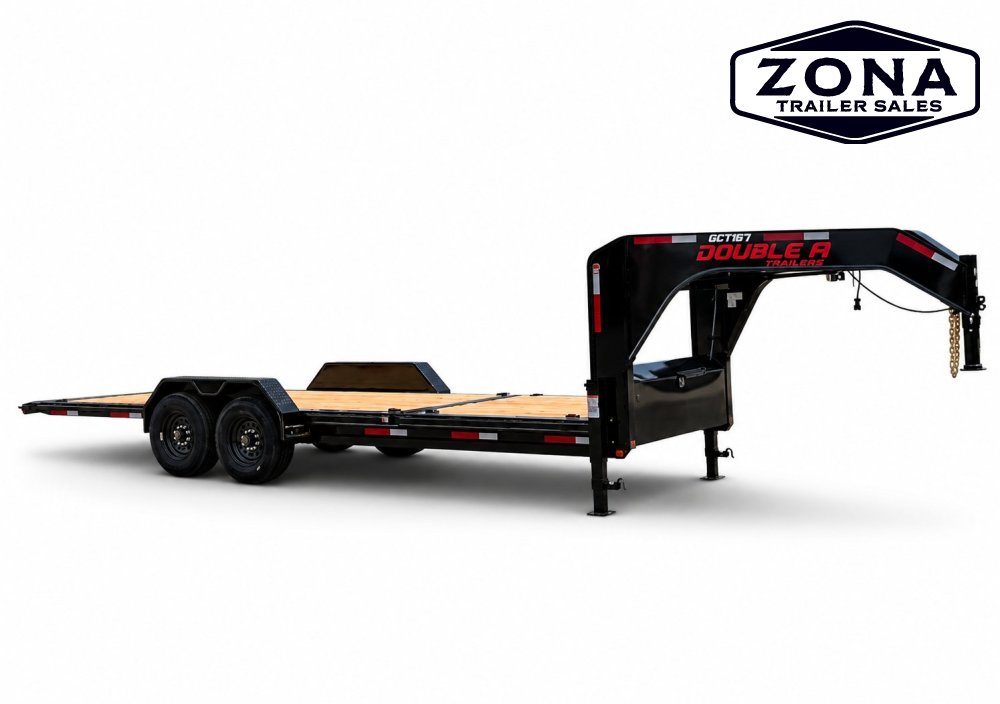
Tilt deck trailers are designed to make loading equipment easier by tilting part or all of the trailer deck toward the ground. But not every tilt trailer works the same way. Split tilt, full tilt, cushion tilt and gooseneck tilt configurations each handle loading, deck space and equipment differently.
The right setup depends on what you haul, how often you load equipment, how much stationary deck space you need and whether you prefer a bumper-pull or gooseneck trailer. This guide compares the main tilt trailer types so you can narrow down which configuration makes the most sense.
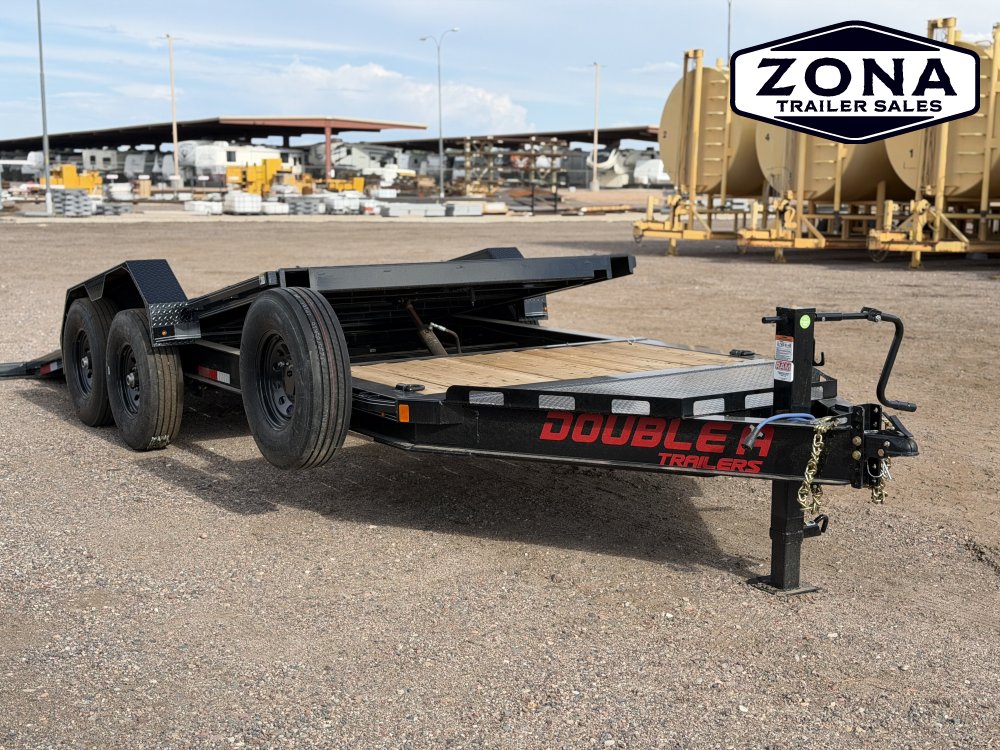
Zona Trailer Sales stocks split tilt, full tilt, cushion tilt and gooseneck tilt configurations for different hauling needs.
Browse Tilt TrailersTilt Trailer Types at a Glance
| Tilt Type | How It Works | Best Fit | Main Tradeoff |
|---|---|---|---|
| Split Tilt | Rear deck tilts while the front deck stays stationary | Equipment plus attachments or extra cargo | Less tilting deck length than a full tilt |
| Full Tilt | Most or all of the main deck tilts | Cars, compact equipment and simple drive-on loading | Little or no stationary front deck |
| Cushion Tilt | Tilt movement is controlled to slow or cushion deck travel | Frequent equipment loading and smoother operation | More system components than a simple gravity setup |
| Gooseneck Tilt | Tilt deck paired with a gooseneck hitch | Larger equipment and heavier-duty hauling | Requires an appropriate truck and bed-mounted hitch |
The table gives you the basic difference, but the best trailer depends on how each configuration fits your actual equipment and loading routine.
What Is a Split Tilt Trailer?
A split tilt trailer divides the deck into two sections.
The front portion stays stationary while the rear portion tilts toward the ground for loading and unloading.
This setup can be especially useful when you need to carry more than one type of load. For example, the tilting section can handle a skid steer, compact tractor or other machine while the fixed front deck carries attachments, pallets, tools or additional cargo.
A split tilt may make sense if:
- You regularly haul equipment plus attachments
- You want some deck space to remain level during loading
- You frequently carry buckets, forks or other implements
- You do not need the entire deck to tilt
The main tradeoff is that the tilting portion is shorter than the full usable trailer deck.
What Is a Full Tilt Trailer?
A full tilt trailer uses most or all of the main deck as the tilting surface.
As the deck tilts, the rear edge moves toward the ground and creates the loading angle. Equipment can then be driven or pulled onto the deck without using separate loading ramps.
A full tilt can work well for:
- Cars
- UTVs and side-by-sides
- Compact tractors
- Skid steers
- Other equipment that benefits from a long, continuous loading surface
The biggest advantage is simplicity. You get a large tilting deck without needing to position separate ramps.
The tradeoff is that you usually give up the stationary front deck found on a split tilt.
What Does Cushion Tilt Mean?
A cushion tilt uses a system that helps control the movement of the tilting deck.
Instead of allowing the deck to move freely and abruptly, the cushioning system slows or regulates the motion as the deck raises or lowers.
That can make loading feel smoother, especially when the trailer is used frequently for equipment.
A cushion tilt may appeal to buyers who:
- Load and unload equipment regularly
- Want more controlled deck movement
- Prefer not to deal with separate loading ramps
- Want the convenience of a tilt deck with smoother operation
When comparing cushion tilt trailers, look at how the deck operates, how it is maintained and what components are used in the tilt system.
Gravity Tilt vs Hydraulic Tilt
Tilt trailers can use different methods to move or control the deck.
Gravity tilt relies largely on weight balance and gravity. As equipment moves onto or off the trailer, the deck changes position.
Hydraulic tilt uses a hydraulic system to raise, lower or control the deck.
Neither is automatically better for every buyer.
Gravity systems can be mechanically simple, while hydraulic systems can offer more direct control over deck position.
When choosing between them, consider how frequently you load equipment, whether you want powered control, how much maintenance you are comfortable with and how the trailer will be used day to day.
Deckover Tilt vs Low-Pro Tilt
Deck height is another major difference between tilt trailers.
A low-profile tilt trailer positions the deck lower relative to the wheels. This can help reduce the loading angle and keep equipment closer to the ground.
A deckover tilt trailer places the deck above the tires, creating a wider uninterrupted deck surface.
That wider deck can be useful for equipment or cargo that benefits from more side-to-side deck space, but the higher deck also changes the loading angle and center of gravity.
If you are comparing deck height and wheel placement more broadly, Zona's guide to deckover trailers explains the differences in more detail.
Bumper-Pull vs Gooseneck Tilt Trailers
Tilt trailers are available in both bumper-pull and gooseneck configurations.
A bumper-pull tilt attaches behind the tow vehicle using a conventional receiver-style hitch setup.
A gooseneck tilt connects to a hitch mounted in the bed of the truck.
Gooseneck configurations are often considered when buyers need a larger trailer, more deck length or a heavier-duty hauling setup.
The right hitch style still depends on the trailer, the load and the truck you already have or plan to use.
If you are comparing hitch configurations, Zona's guide to the gooseneck hitch explains how that connection differs from a fifth-wheel setup.
Zona Trailer Sales carries gooseneck tilt configurations alongside bumper-pull tilt trailers, giving equipment haulers several ways to match the trailer to the truck and load.
Compare Tilt TrailersAxles and GVWR Still Matter
Tilt style is only one part of choosing the right trailer.
You also need to make sure the trailer has enough rated capacity for the equipment and cargo you plan to haul.
Pay attention to:
- Trailer GVWR
- Empty trailer weight
- Available payload
- Axle ratings
- Tire ratings
- Hitch and tow-vehicle limits
A trailer can have the perfect deck layout and still be the wrong choice if its rated capacity does not match your equipment.
Zona's guide to GVWR explains how trailer ratings affect usable payload.
Which Tilt Trailer Works Best for a Skid Steer?
Skid steers are one of the most common pieces of equipment hauled on tilt trailers.
A split tilt can make sense if you regularly carry buckets, forks or other attachments on the fixed portion of the deck.
A full tilt may be better if you want the longest possible continuous loading surface.
A gooseneck tilt may make sense when the skid steer is only part of a larger equipment load or when you need additional trailer capacity.
The better choice depends on the machine's operating weight, attachments, width and how you distribute the load on the trailer.
Which Tilt Trailer Works Best for a Mini Excavator?
Mini excavators can also work well with tilt trailers, but weight distribution becomes especially important.
Excavators can carry a significant amount of weight in a relatively compact footprint, and the boom, blade and attachments can affect where that weight sits on the deck.
Look for a trailer with sufficient payload and enough deck length to position the machine correctly rather than simply choosing the shortest trailer it will physically fit on.
Which Tilt Trailer Works Best for Cars?
A full tilt is often attractive for vehicle loading because it creates one continuous deck that can tilt toward the ground.
That can eliminate the need to line up and store individual ramps.
For lower vehicles, loading angle and ground clearance become especially important. A trailer that works well for a compact tractor may still be too steep for a low car.
Always compare the actual trailer angle and the vehicle's clearance before assuming a particular tilt style will work.
Tilt Trailer or Ramp Trailer?
If you have already decided you want a tilt, the main question is which tilt configuration fits your work.
If you are still deciding whether you want a tilt deck at all, that is a different comparison.
Ramps can be a good fit for some equipment, while tilt decks can reduce the need to carry and position separate ramps.
Zona's tilt trailer vs ramp trailer guide covers that decision in more detail.
Double A Tilt Trailers at Zona Trailer Sales
Zona Trailer Sales carries multiple Double A tilt configurations, including split tilt, full tilt, cushion tilt and gooseneck tilt trailers.
That makes it possible to compare several tilt styles without assuming one configuration is automatically right for every piece of equipment.
If you want to learn more about the manufacturer itself, Zona's Double A trailers guide covers the brand and its trailer lineup in more detail.
How to Choose the Right Tilt Trailer
Start with what you haul most often.
Ask yourself:
- What is the heaviest machine I plan to carry?
- Do I carry attachments with it?
- Do I need stationary deck space?
- Would I rather have the entire deck tilt?
- Do I want gravity operation or powered hydraulic control?
- Do I need a low deck for easier loading?
- Would a wider deckover configuration help?
- Do I need a bumper-pull or gooseneck hitch?
- Does the trailer have enough payload for the machine and attachments?
The best tilt trailer is the one that makes loading easier without sacrificing the capacity, deck layout or towing setup your equipment requires.
Compare Tilt Trailer Types at Zona Trailer Sales
Browse tilt trailers for sale at Zona Trailer Sales and compare split, full, cushion and gooseneck configurations for the equipment you haul.
Browse Tilt TrailersTilt Trailer FAQs
What is a split tilt trailer?
A split tilt trailer has a stationary front deck and a rear section that tilts for loading. It can be useful when you need to carry equipment on the tilting section while keeping attachments, tools or other cargo on a level front deck.
What does cushion tilt mean?
Cushion tilt refers to a system that helps control the movement of the tilting deck so it raises or lowers more smoothly instead of moving freely and abruptly.
Gravity tilt or hydraulic tilt: which is better?
Neither is automatically better. Gravity tilt can offer simpler operation, while hydraulic tilt can provide powered control over deck movement. The better choice depends on how often you load equipment and how much control you want over the tilt system.
Is a gooseneck tilt trailer worth it?
It can be if you need a larger trailer, more deck space or a heavier-duty hauling setup and already have an appropriate truck and gooseneck hitch. For lighter or more compact equipment, a bumper-pull tilt may be sufficient.
Do tilt trailers need ramps?
Most tilt trailers are designed so the deck itself creates the loading angle, which can eliminate the need for separate loading ramps. Some individual trailer configurations may still use additional ramps or loading equipment depending on their design.
What is the difference between a tilt bed trailer and a tilt deck trailer?
The terms are often used interchangeably when referring to equipment trailers with a deck that tilts for loading. The more important distinction is whether the trailer uses a split deck, full tilt, cushion system, hydraulic operation, deckover design or gooseneck configuration.
Zona Trailer Sales carries multiple tilt trailer configurations for equipment hauling, with pickup in Apache Junction and delivery options for out-of-state buyers.
View Tilt Trailers for SaleTilt trailer designs, capacities, deck configurations and operating systems vary by manufacturer and model. Always verify the GVWR, payload, deck dimensions, hitch requirements and operating instructions of the specific trailer before purchasing or loading equipment.