
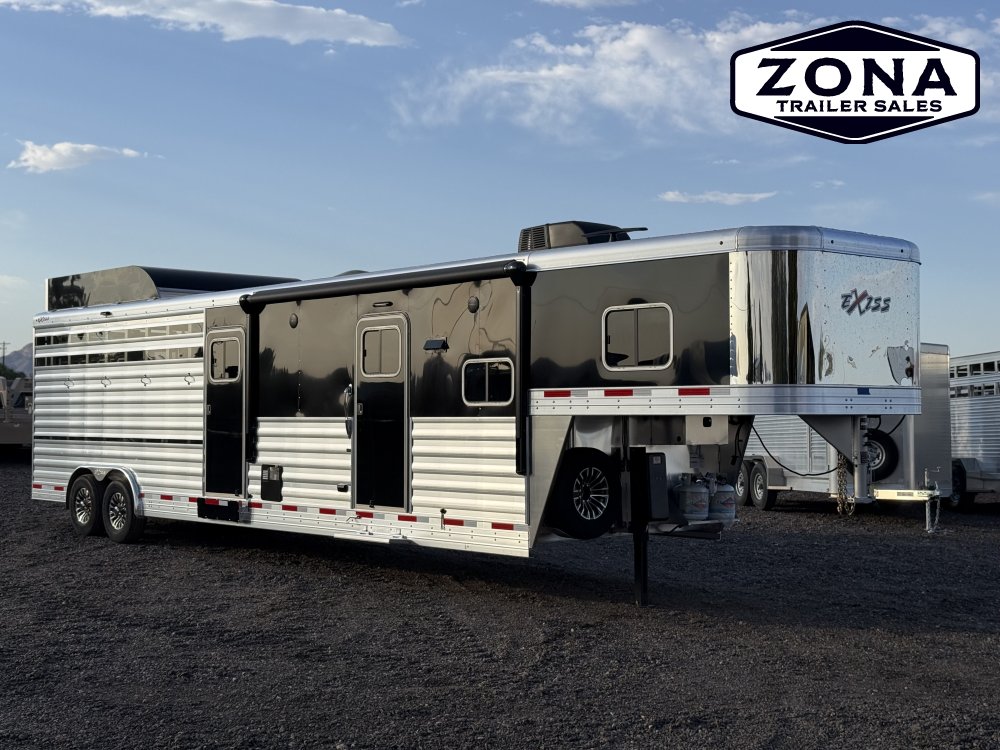
A stock trailer with living quarters combines livestock-hauling space with a finished area for sleeping, cooking and traveling. It can be a practical setup for ranchers, ropers, rodeo competitors and other owners who need to haul animals while spending multiple days away from home.
But a stock living quarters trailer is not simply a horse trailer with different sides. Stock-area layout, gates, ventilation, tack storage, living quarters size and towing requirements all need to work together. This guide explains what to compare before buying.
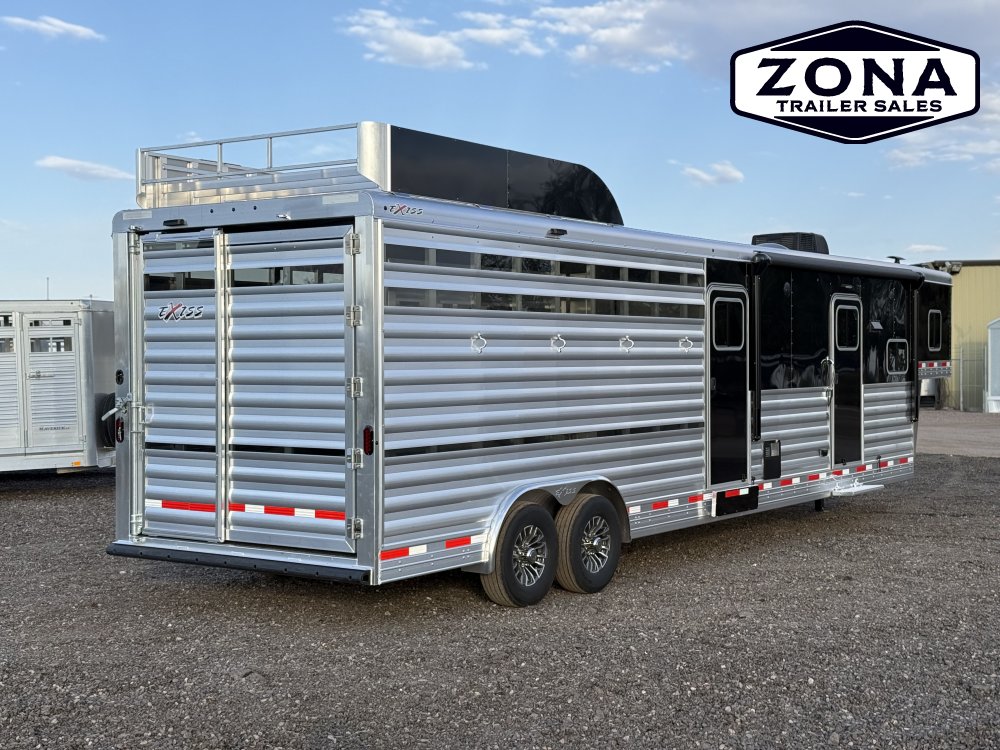
Compare current living quarters trailers at Zona Trailer Sales and ask about stock and stock-combo configurations that fit the way you haul.
See Living Quarters TrailersWhat Is a Stock Trailer With Living Quarters?
A stock trailer with living quarters combines two main areas:
- Livestock area: An open or divided stock compartment designed for hauling livestock and, depending on the configuration, horses.
- Living quarters: A finished front section that may include sleeping space, kitchen equipment, a bathroom, storage, climate control and other RV-style features.
The result is a trailer designed for people who need both animal-hauling capacity and a place to stay while traveling.
Before shopping, it helps to understand the distinction between stock vs livestock vs stock-combo trailers. The terms are often used loosely, but the interior layout can make a major difference in how the trailer functions.
Stock LQ vs Stock-Combo LQ vs Horse LQ
These trailers can look similar from the outside, but the animal area is configured differently.
| Trailer Type | Animal Area | Typical Buyer | What to Check |
|---|---|---|---|
| Stock LQ | Open stock-style hauling area, often with gates or partitions | Ranchers and livestock haulers | Stock-area length, gates, airflow and floor |
| Stock-Combo LQ | Stock area combined with tack or horse-oriented storage | Ropers, rodeo competitors and owners hauling different animals | Mid tack, gates, animal space and storage access |
| Horse LQ | Individual horse stalls and dividers | Horse owners hauling primarily horses | Stall dimensions, dividers, tack room and horse count |
The best choice depends on what you haul most often. If you primarily move cattle or mixed livestock, an open stock area can be more useful than individual horse stalls. If horses are the main priority, a dedicated horse living quarters trailer may make more sense.
Who Buys a Stock Trailer With Living Quarters?
Stock LQ trailers make the most sense when hauling animals and overnight travel are both regular parts of the job or lifestyle.
Common buyers include:
- Ranchers traveling with livestock
- Ropers and rodeo competitors
- Show livestock owners
- Families spending multiple days at livestock events
- Owners hauling both horses and other livestock
- People making longer livestock-hauling trips across the West
For buyers who only need to haul animals locally and return home the same day, the added living quarters size, weight and cost may not be necessary.
How Much Living Quarters Space Do You Need?
Living quarters size has a major effect on the overall trailer.
The term short wall refers to the measurement of the shorter wall in the living quarters portion of a gooseneck trailer. As the living quarters grows, you generally gain more room for seating, storage, kitchen equipment and bathroom space.
But more living space also means a longer and heavier trailer.
Think about what you actually need on the road:
- Do you need a full bathroom?
- How many people regularly sleep in the trailer?
- Do you cook inside?
- Do you need substantial clothing or gear storage?
- Will you spend one night or several days at a time?
- Is animal-hauling space more important than living space?
If the living portion is your biggest priority, Zona's living quarters horse trailer buyer's guide covers the main LQ features in more detail.
Stock Area Length and Gates Matter
The usable stock area is just as important as the living quarters.
A large interior does not help much if the remaining livestock compartment is too short for what you need to haul.
Compare:
- Usable stock-area length
- Interior width and height
- Number and placement of gates
- Full-swing versus other gate configurations
- Rear-door setup
- Side unloading access
- Floor construction and condition
- Ventilation through the livestock area
Do not estimate livestock capacity from trailer length alone. Animal size, trailer dimensions, partitions and safe loading practices all matter. Zona's guide to how many cows fit in a stock trailer explains the capacity side in more detail.
Why a Mid Tack Can Be Useful
A mid-tack compartment creates dedicated storage between the living quarters and livestock area.
That can be useful when you need to keep saddles, ropes, show equipment, feed tools or other gear separate from both the animals and the living area.
For people hauling horses and livestock, this type of configuration can make a stock-combo LQ especially practical.
The tradeoff is space. Every foot devoted to tack storage is a foot that is not being used for living quarters or livestock.
Exiss Stock Combo Living Quarters
Exiss is one example of a manufacturer that currently offers dedicated stock-combo living quarters models.
Exiss describes its Stock Combo LQ line as combining the rugged features of its stock trailers with living quarters and dedicated tack storage. Current manufacturer information shows an open stock area, center gate, mid-tack space and finished living quarters within the same trailer.
You can review the current Stock Combo LQ lineup on the official Exiss Trailers website.
Stock LQ Trailers Use a Gooseneck Configuration
Living quarters stock trailers are built around a gooseneck configuration rather than the compact bumper-pull format most buyers associate with smaller stock trailers.
The gooseneck area provides usable space above the truck bed for the sleeping area while allowing the rest of the trailer to extend rearward for the living quarters, tack and livestock compartments.
This also means the truck becomes a major part of the buying decision.
Do not choose a tow vehicle based only on advertised maximum towing capacity. You need to consider the trailer's loaded weight, the weight carried in the truck, hitch load, passengers, cargo and the truck's individual ratings.
Current stock can be limited because these are specialized trailers. See available living quarters trailers at Zona Trailer Sales and ask about ordering options if you need a particular stock or stock-combo layout.
Browse Living Quarters TrailersAluminum vs Steel Stock LQ Trailers
Trailer material affects weight, maintenance, corrosion considerations and repair options, but material alone does not determine whether a trailer is well built.
Aluminum can reduce traditional red-rust concerns and is common in larger premium living quarters trailers.
Steel remains popular in livestock hauling because of its strength, familiarity and repairability.
The right comparison should include the complete trailer structure, floor, frame, livestock area and finished LQ rather than focusing only on the exterior material.
Zona's guide to aluminum vs steel trailers explains those differences in greater detail.
Ventilation Matters in the Southwest
Livestock-area airflow deserves extra attention when hauling across Arizona, New Mexico and other hot parts of the West.
Look at the actual ventilation design rather than assuming an open-sided appearance guarantees enough airflow.
Consider:
- Air gaps or windows
- Roof vents when equipped
- How gates affect air movement
- Whether openings can be adjusted for changing weather
- How animals will be positioned when the trailer is loaded
The living quarters also needs to be evaluated for hot-weather travel, including its climate-control equipment and power requirements.
What to Check When Buying Used
A used stock LQ combines the inspection needs of a livestock trailer with the systems found in a small RV.
Check the livestock side for:
- Floor condition
- Corrosion or structural damage
- Gate operation and latches
- Rear and side doors
- Tires, brakes and bearings
- Lights and wiring
Then inspect the living quarters separately.
Look for signs of water intrusion, roof or window leaks, damaged cabinetry and issues with the electrical, plumbing, appliance and climate-control systems.
For specialized LQ systems such as propane appliances, generators and plumbing, follow the component or converter manufacturer's inspection and service guidance.
How to Shop for a Stock LQ at Zona Trailer Sales
Start by deciding what you need from the livestock area before choosing the living quarters.
Know:
- What animals you haul most often
- How much stock-area length you need
- Whether you need gates or separate compartments
- Whether you need a mid tack
- How many people need sleeping space
- How long your typical trips last
- What your truck can safely handle
- Whether you are open to ordering a configuration that is not currently available
If you are considering an Exiss specifically, Zona's Exiss trailers buyer's guide covers the brand, construction and trailer types in more detail.
Need the livestock and tack functionality without finished living quarters?
Browse Stock-Combo TrailersFind a Trailer That Fits the Whole Trip
See living quarters trailers at Zona Trailer Sales and compare animal space, tack storage and living arrangements based on how you actually haul.
See Living Quarters TrailersStock Trailer With Living Quarters FAQs
Can you haul cattle in a living quarters trailer?
Yes, if the trailer is specifically designed with a stock or livestock compartment suitable for the animals you are hauling. A standard horse living quarters trailer with individual stalls is not the same as a stock LQ. Verify the trailer's intended use, dimensions, gates, floor and carrying capacity before loading livestock.
What is the difference between a stock-combo LQ and a horse LQ?
A stock-combo LQ uses a more open livestock-style hauling area and may include gates and dedicated tack storage. A horse LQ usually has individual stalls and dividers designed specifically around horses. The better choice depends on the animals you haul and how much flexibility you need.
What size truck do I need for a stock trailer with living quarters?
It depends on the loaded trailer weight, hitch weight, truck payload, passengers, cargo and the ratings of the individual truck. Stock LQ trailers are substantial gooseneck trailers, so verify the actual trailer and truck ratings rather than relying on a general truck-size rule.
Are stock living quarters trailers aluminum or steel?
They can be built with different materials depending on the manufacturer and model. Some current stock-combo living quarters trailers use aluminum construction. Always verify the construction of the specific trailer you are considering.
Do stock LQ trailers have tack rooms?
Some do. A stock-combo living quarters trailer may include a mid-tack or other dedicated tack-storage area. The size and location vary by trailer, so compare how much room remains for livestock and living quarters after tack space is added.
Is a stock LQ better than a regular stock trailer?
Only if you need the living space. A stock LQ is larger, heavier and more complex than a basic stock trailer. Buyers who frequently travel overnight may benefit from the added living quarters, while local livestock hauling may be better served by a simpler trailer.
Compare current living quarters inventory at Zona Trailer Sales or ask about the stock and stock-combo configurations available to order.
View Living Quarters InventoryStock trailer, stock-combo and living quarters layouts vary by manufacturer, model and individual build. Trailer availability also changes regularly. Verify the dimensions, weight ratings, livestock-area configuration and living quarters equipment of the specific trailer before purchasing.