
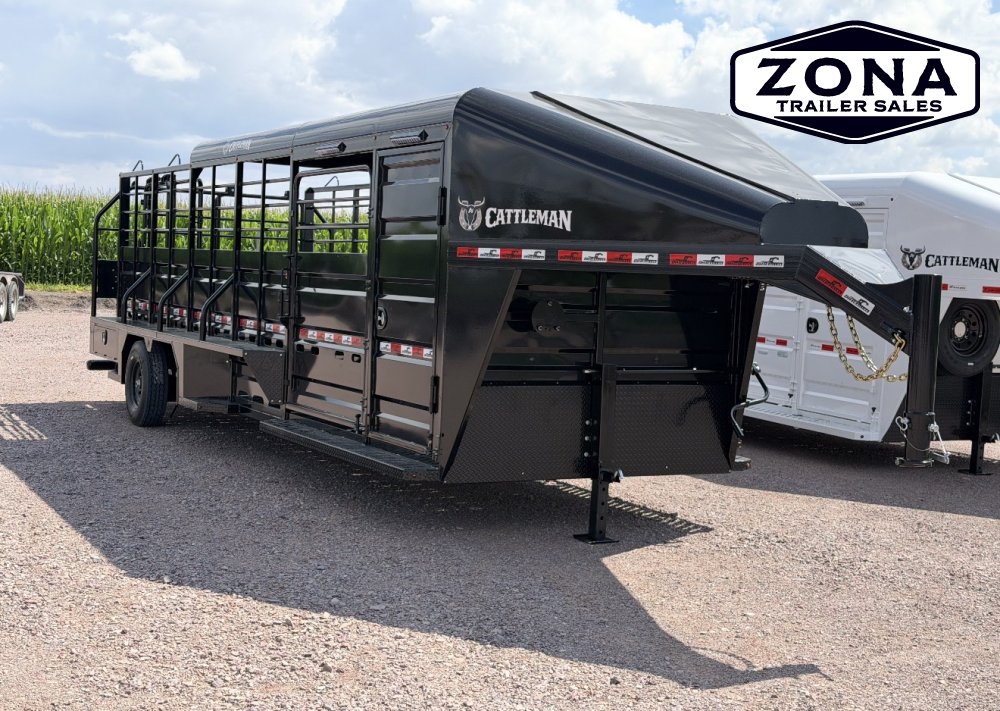
How many cows fit in a cattle trailer depends on more than trailer length. Animal weight, usable floor space, trailer width, dividers, tack compartments, GVWR, and weather all affect how many head can be hauled safely.
A 24-foot stock trailer carrying 600-pound calves is a very different load from the same trailer carrying mature 1,400-pound cows. Before choosing a trailer, it helps to compare both the physical space available and the total weight of the animals you plan to haul.
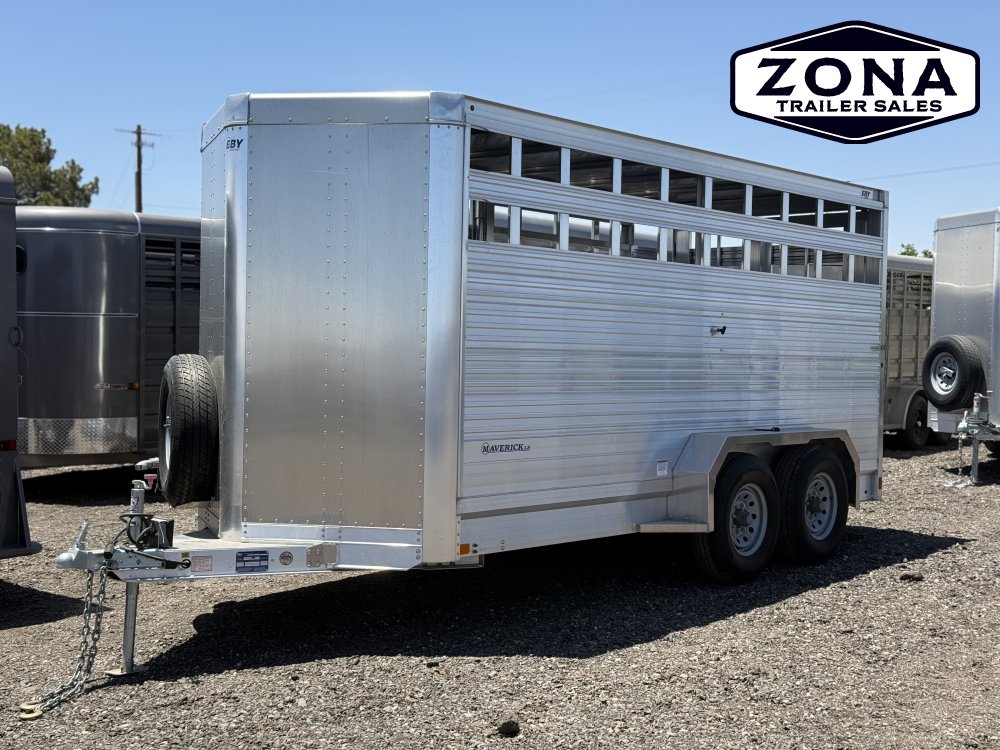
Compare current Zona stock and stock-combo trailers by length, layout, axle setup, livestock space, and tack configuration.
Browse Stock & Combo TrailersHow Many Cows Fit in a Cattle Trailer?
There is no single answer because cattle size changes the number dramatically.
Recommended capacity should be based on:
- Trailer length and usable interior width
- Average cattle weight
- Usable livestock floor space
- Divider gates or compartments
- Tack rooms or storage areas that reduce livestock space
- Trailer GVWR and actual payload
- Whether cattle are horned
- Temperature and travel conditions
That means trailer length alone should never be used as the final capacity number.
Cattle Trailer Capacity by Size and Animal Weight
The table below gives useful reference points for approximately 7-foot-wide stock trailers. These are transportation guidelines, not guarantees for every trailer or every group of cattle.
| Trailer Size | 600 lb Cattle | 800 lb Cattle | 1,000 lb Cattle | 1,200 lb Cattle | 1,400 lb Cattle |
|---|---|---|---|---|---|
| 20' x 7' | 18 head | 13 head | 11 head | 9 head | 8 head |
| 24' x 7' | 22 head | 16 head | 13 head | 11 head | 9 head |
| 28' x 7' | 25 head | 19 head | 15 head | 13 head | 11 head |
| 32' x 7' | 29 head | 22 head | 17 head | 14 head | 12 head |
Important: These are starting-point transportation recommendations adapted from cattle-hauling guidance. Actual capacity can be lower depending on trailer layout, cattle condition, horn status, weather, weight ratings, and available floor space.
Why Cattle Weight Changes Trailer Capacity So Much
The number of head a trailer can carry drops quickly as animal weight increases.
For example, the reference guidance for a 24-foot by 7-foot trailer moves from approximately 22 head at 600 pounds each to about 9 head at 1,400 pounds each.
There are two reasons for that.
First, larger cattle physically require more space. Second, the total weight of the load increases much faster.
Ten 600-pound cattle represent about 6,000 pounds of livestock. Ten 1,400-pound cattle represent about 14,000 pounds before accounting for the trailer itself, tack, feed, or other cargo.
That is why both space and weight have to be checked before loading.
Stock Trailer Length Is Not the Same as Livestock Space
This is especially important when comparing straight-stock trailers with stock-combo trailers.
A straight-stock trailer generally dedicates most of its enclosed length to livestock.
A stock-combo trailer may divide that same overall trailer length between livestock space and tack storage.
For example, Zona currently lists 16-foot stock-combo configurations with approximately 14 feet of stock space and 2 feet of tack space. That trailer should not be treated as having the same livestock capacity as a full 16-foot straight-stock trailer.
Before estimating head count, determine the actual usable length available to the animals.
Zona currently carries stock and stock-combo trailers in multiple lengths, including 20-, 24-, 28-, 32-, and 36-foot configurations.
Compare Stock Trailer SizesHow GVWR Limits Cattle Trailer Capacity
Even if the cattle physically fit, the trailer still has to stay within its rated weight limits.
GVWR is the maximum rated loaded weight of the trailer. It includes the trailer itself plus cattle, tack, feed, equipment, and anything else being carried.
The practical calculation is:
Then compare that available payload with the combined weight of the animals and any additional cargo.
A physically large trailer can still reach its weight limit before it reaches the recommended number of head for its floor space.
Why Divider Gates Matter
More empty space is not always better when hauling cattle.
When only a few animals are in a large trailer, divider gates can be used to confine them to a smaller section.
This gives cattle more opportunity to brace against the trailer walls and each other while the vehicle is moving.
University of Arizona Cooperative Extension specifically recommends using gates to reduce the available compartment size when hauling only a few cattle, while also warning against overcrowding. For more livestock transportation guidance, see the University of Arizona's livestock transportation resource.
Do Horned Cattle Need More Space?
Yes.
Published cattle-transportation guidelines recommend reducing stocking density for horned cattle. Mississippi State Extension cites a reduction of about 5 percent compared with similar-size polled cattle.
That may mean loading one fewer animal depending on the size of the trailer and cattle involved.
Mixed-size loads also require extra care. Large cattle and smaller calves should not simply be packed together based on total head count because larger animals can injure smaller ones during transport.
Arizona Heat Can Change How Many Cattle You Should Haul
Arizona conditions make stocking density especially important.
University of Arizona Extension cautions livestock haulers about extreme heat, traffic delays, and long periods of standing in a trailer. Overcrowding can increase the risk of heat stress and injury.
Transportation guidelines also recommend reducing the number of cattle loaded during hot conditions.
That means the maximum theoretical head count should not automatically become the number used on a hot summer haul.
Straight Stock vs. Stock Combo: Which Gives You More Capacity?
| Straight Stock | Stock Combo |
|---|---|
| More of the trailer length is generally available for livestock | Some overall length may be dedicated to tack or storage |
| Useful when maximizing livestock space is the priority | Useful when livestock and riding equipment need to travel together |
| Simpler capacity calculation | Capacity should be based on actual stock compartment length |
If your main goal is carrying the greatest number of cattle for a given overall trailer length, compare straight-stock configurations first.
If you need saddle racks, tack storage, or a trailer that will serve both livestock and horse-related uses, a stock-combo setup may be worth giving up some livestock floor space.
Compare straight-stock and stock-combo configurations currently available through Zona Trailer Sales.
View Stock & Combo InventoryWhat Size Stock Trailer Do You Need?
Start with the animals rather than the trailer.
Before shopping, estimate:
- Your usual number of cattle per trip
- Average weight per animal
- Whether you haul mature cattle, calves, or both
- Whether cattle are horned
- How often you need tack or equipment storage
- Typical travel distance
- Arizona heat and seasonal hauling conditions
- Your truck's towing and payload ratings
Then compare those needs with the usable livestock dimensions and weight ratings of the individual trailer.
Stock Trailer Capacity FAQs
How many cows fit in a 20-foot cattle trailer?
For an approximately 20-foot by 7-foot trailer, published cattle-transport guidance ranges from about 18 head of 600-pound cattle to about 8 head of 1,400-pound cattle. The actual number may be lower depending on usable trailer space, GVWR, cattle condition, horns, and weather.
How many cows fit in a 24-foot stock trailer?
Reference guidance for a 24-foot by 7-foot trailer ranges from approximately 22 head at 600 pounds each to about 9 head at 1,400 pounds each. Always check the individual trailer's weight ratings and actual livestock compartment size.
How many cows fit in a 32-foot cattle trailer?
Published guidance for a 32-foot by 7-foot trailer suggests roughly 29 head of 600-pound cattle, 17 head at 1,000 pounds, or about 12 head at 1,400 pounds under appropriate conditions.
Does a stock-combo trailer hold fewer cattle?
It can. A stock-combo trailer dedicates part of its overall length to tack or storage, so livestock capacity should be calculated from the usable stock compartment rather than the trailer's total length.
Should cattle be packed tightly in a trailer?
Cattle need enough room to stand safely without overcrowding, but too much open space can also reduce stability. Divider gates can help create an appropriately sized compartment when hauling a smaller group.
Does hot weather affect cattle trailer capacity?
Yes. Livestock transportation guidance recommends reducing stocking density during hot conditions, and Arizona heat can make ventilation, trip timing, and traffic delays especially important.
Compare Stock & Combo Trailers at Zona
Compare trailer length, usable livestock space, divider configuration, GVWR, axle setup, and tack storage before deciding how much capacity your operation needs.
Browse Stock & Combo Trailers Ask About Trailer CapacityCattle capacities shown are general transportation guidelines, not ratings for a specific trailer. Animal size, condition, horn status, trailer dimensions, compartments, weather, GVWR, payload, and applicable transportation requirements can change the appropriate load. Always verify the specifications and safe capacity of the individual trailer before hauling livestock.