
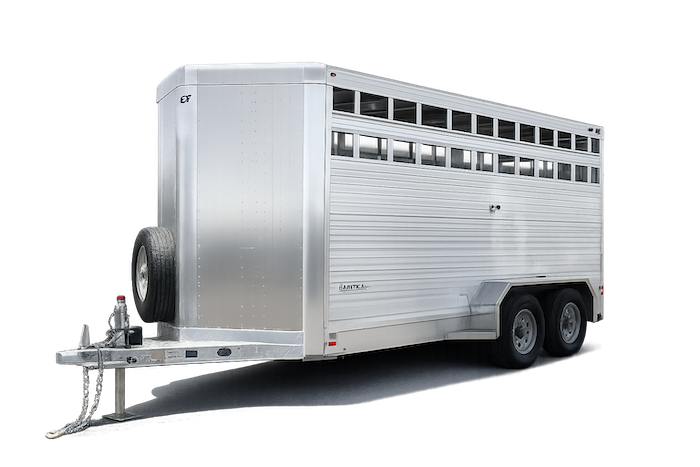
Shopping for a stock trailer sounds simple until you start comparing lengths, bumper pull vs. gooseneck, steel vs. aluminum, tack rooms, divider gates, combo layouts, and trailers with living quarters.
The right livestock trailer depends on what you're hauling, how many animals you normally move, how far you travel, what truck you're using, and whether the trailer also needs to carry tack, equipment, horses, or overnight accommodations.
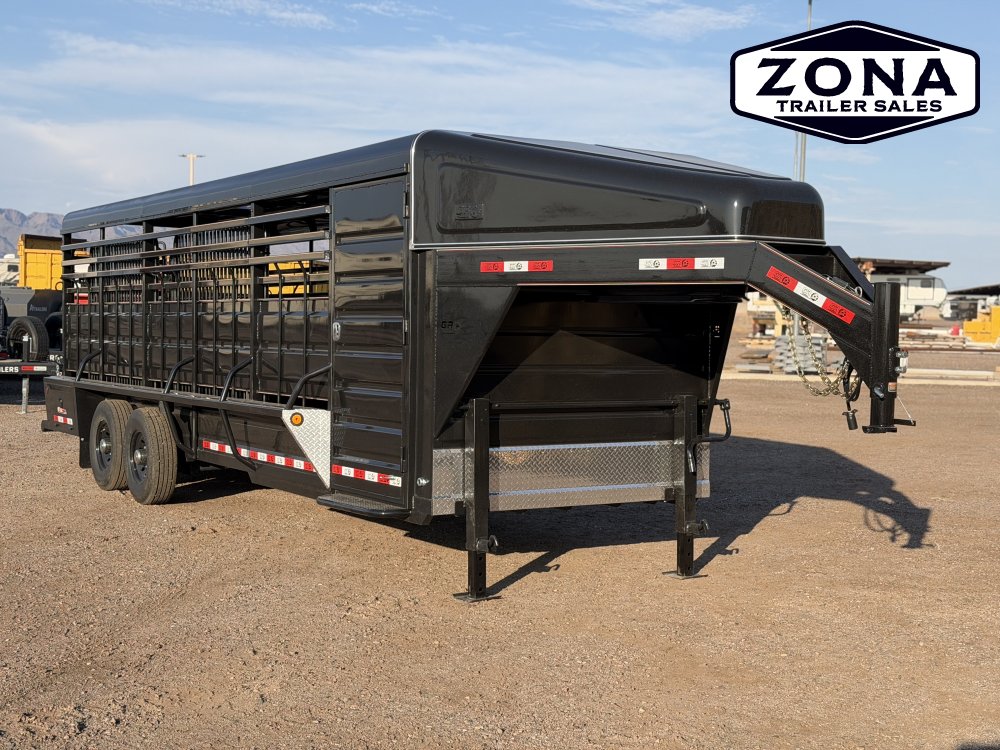
Browse Zona Trailer Sales' current stock and combo trailer inventory, including steel and aluminum configurations, bumper pulls, goosenecks, tack-room models, and more.
Shop Stock & Combo TrailersStock Trailer vs. Livestock Trailer vs. Stock-Combo Trailer
These terms are often used interchangeably, but they can describe different trailer layouts.
A stock trailer is generally an open or slatted livestock-hauling trailer designed to move cattle, horses, sheep, goats, and other livestock.
A livestock trailer is the broader category. Stock trailers are livestock trailers, but livestock trailers can vary considerably in design depending on what animals they are intended to haul.
A stock-combo trailer combines livestock space with additional features such as tack storage, dressing areas, dividers, horse-specific equipment, or other compartments.
For buyers who haul both horses and livestock, a combo layout can offer considerably more flexibility than a basic open stock trailer.
| Trailer Type | Best For | What Makes It Different |
|---|---|---|
| Stock Trailer | Cattle, livestock, ranch and farm use | Open livestock space with gates and ventilation |
| Stock-Combo | Buyers hauling horses and livestock or needing storage | Livestock area plus tack, dressing or separated-use space |
| Stock Trailer With Living Quarters | Rodeo, ranch, livestock and extended-travel buyers | Livestock hauling combined with overnight living space |
What Size Stock Trailer Do You Need?
Trailer length should follow your normal hauling requirements, not simply the biggest trailer your truck can pull.
Common stock-trailer lengths include 16-foot, 20-foot, and 24-foot configurations, although smaller and much larger trailers are also available.
| Length | Who It May Fit | Things to Consider |
|---|---|---|
| 16-Foot | Smaller operations and buyers who do not routinely need maximum livestock capacity | Animal count, interior width, tow vehicle and maneuverability |
| 20-Foot | Buyers wanting additional capacity without moving into a very long trailer | Divider placement, loaded weight and bumper pull vs. gooseneck |
| 24-Foot | Ranchers and livestock owners who routinely need more usable hauling space | GVWR, axle package, tow vehicle, gates and overall loaded weight |
How many animals fit safely in a trailer cannot be determined by length alone. Animal size, weight, species, interior width, divider configuration, trailer ratings, and the conditions of the trip all matter.
If you're unsure, tell the Zona team what you normally haul rather than simply asking for a certain trailer length.
Bumper Pull vs. Gooseneck Stock Trailers
Both configurations can work extremely well. The better choice depends on trailer size, hauling frequency, truck setup, and how much capacity you need.
Bumper Pull Stock Trailers
A bumper pull can make sense for buyers wanting a smaller overall package or who do not regularly need the capacity of a larger gooseneck.
Because the hitch does not occupy the truck bed, a bumper pull also leaves the bed available for feed, tools, equipment, tack, and other cargo.
Gooseneck Stock Trailers
Gooseneck configurations are common as stock trailers become longer, heavier, and more heavily equipped.
Buyers hauling livestock frequently, needing additional trailer length, or considering tack rooms and combo layouts may find a gooseneck better suited to their requirements.
- Tow vehicle capacity
- Trailer GVWR and empty weight
- Expected loaded weight
- Axle configuration
- Trailer length
- Frequency and distance of hauling
- Whether you need to preserve your truck bed for cargo
When Does a Stock-Combo Trailer Make More Sense?
A basic stock trailer is designed primarily around livestock space. A combo trailer gives some of that space to other functions.
That can be valuable if you haul horses as well as cattle, carry significant tack and equipment, need a dressing area, or want more organization than an open livestock compartment provides.
Zona regularly carries both steel and aluminum stock and combo trailers, and many configurations include tack and dressing-room options.
When comparing a combo trailer, pay attention to how much livestock space is sacrificed to create those additional features. More storage is useful only if the remaining hauling area still works for the animals you need to move.
Stock Trailers With Living Quarters
A stock trailer with living quarters combines livestock-hauling space with an area designed for overnight travel.
These can make sense for buyers spending extended time at rodeos, livestock events, competitions, ranch work, or other situations where sleeping and living space can replace hotels or repeated travel.
Living quarters add weight, complexity, length, and cost, so the tow vehicle becomes an even more important part of the purchase.
If overnight accommodations are one of your primary requirements, you may also want to compare Zona's dedicated Living Quarters inventory.
Browse Living Quarters Trailers
Steel vs. Aluminum Stock Trailers
Material is one of the most common decisions livestock-trailer buyers face.
Zona sells both steel and aluminum stock and combo trailers, although the majority of the stock/combo trailers Zona sells use steel-frame construction.
Neither material is automatically the right choice for every buyer.
| Consideration | Steel | Aluminum |
|---|---|---|
| Weight | Often heavier in comparable designs | Can reduce trailer weight depending on construction |
| Corrosion | Requires attention to paint, coatings and rust prevention | Does not rust like steel, but still requires inspection and maintenance |
| Repair | Steel fabrication and welding are widely available | May require a shop experienced with aluminum fabrication |
| Purchase Decision | Compare strength, price, weight and maintenance | Compare weight savings, construction, price and repair needs |
The material discussion also applies to floors and structural components. Instead of assuming one material is always superior, inspect the construction and condition of the individual trailer and understand how that floor is designed to be maintained.
What Should Arizona Buyers Consider?
Arizona creates some specific trailer considerations because heat, sun exposure, dust, and long-distance hauling can all affect how a trailer is used and maintained.
Ventilation becomes especially important when animals are being transported in hot conditions. Trailer color, roof design, airflow, shade during stops, travel timing, and animal-loading practices can all influence conditions inside the trailer.
- Ventilation and airflow
- Roof and exterior condition
- Tire age and condition
- Floor condition
- Water and animal-care planning during longer trips
- Brake and bearing maintenance
- How much time animals will spend loaded during extreme heat
Arizona heat does not automatically mean you need one particular trailer material. The full trailer design, ventilation, maintenance, animal load, and how you travel matter more than reducing the decision to steel vs. aluminum alone.
For additional guidance on livestock transport, loading, trailer condition, ventilation and extreme-heat considerations, review the University of Arizona Cooperative Extension's livestock transportation guide .
Cattle Trailer vs. Horse Trailer: What's Different?
Horses and cattle can both be transported in stock-style trailers, but the ideal layout may be different.
Cattle buyers often prioritize open livestock space, strong gates, durability, capacity, and efficient loading and unloading.
Horse owners may place greater emphasis on individual horse space, tack storage, interior dividers, height and width, flooring, and how horses are separated during travel.
This is one reason stock-combo trailers exist. They can bridge the gap for owners who need livestock versatility but also want horse-focused storage or organization.
What Should You Inspect Before Buying a Stock Trailer?
Whether the trailer is new or used, focus on the parts that directly affect capacity, safety, durability, and animal transport.
- Frame and structural condition
- Floor condition
- Gates, dividers and latches
- Axles and suspension
- Brakes and bearings
- Tires and date codes
- Lights and electrical system
- Roof and seams
- Ventilation
- GVWR and payload requirements
- Compatibility with your tow vehicle
Compare Stock & Combo Trailers at Zona
Browse current steel and aluminum stock trailers, livestock trailers and combo configurations. Compare sizes, manufacturers, layouts, pricing and available features.
Shop Stock & Combo Trailers Explore FinancingStock & Livestock Trailer FAQs
What is a stock trailer?
A stock trailer is designed to transport livestock such as cattle, horses, sheep, goats, and other animals. Configurations vary by size, construction, gate layout, axle package, and intended use.
What is a stock-combo trailer?
A stock-combo trailer combines livestock-hauling space with other features such as tack storage, dressing areas, dividers, or horse-focused equipment. The exact layout varies considerably by manufacturer and model.
Is a 16-foot or 20-foot stock trailer better?
Neither length is automatically better. Choose based on the livestock you normally haul, required interior space, expected loaded weight, tow vehicle, and how frequently you use the trailer.
Should I buy a bumper pull or gooseneck stock trailer?
Bumper pulls can work well for smaller hauling requirements and preserve the use of the truck bed. Goosenecks are commonly chosen as trailer size and hauling capacity increase. Your tow vehicle and actual loaded weight should help determine the right configuration.
Are aluminum stock trailers better than steel?
Not automatically. Aluminum can offer weight and corrosion advantages in some designs, while steel offers its own advantages in construction, repairability, and cost. Compare the actual trailer rather than choosing solely by material.
Can a stock trailer have living quarters?
Yes. Stock trailers with living quarters combine livestock-hauling space with accommodations for overnight travel. These trailers tend to be larger and heavier, so tow-vehicle requirements are especially important.
Can I finance a stock trailer?
Financing options are available for qualified buyers through Zona Trailer Sales. Rates, terms, down payment requirements, and approval vary by buyer, trailer, and lender.
Does Zona deliver stock trailers outside Arizona?
Yes. Zona Trailer Sales works with buyers across the United States and offers nationwide delivery.
Browse Zona's current stock and combo inventory and compare bumper pulls, goosenecks, steel and aluminum trailers, tack-room layouts, and more.
View Stock & Combo TrailersTrailer dimensions, capacities, payload, construction, animal capacity, and towing requirements vary by model and individual load. Always verify the specifications of the trailer, tow vehicle, and intended load before purchasing or transporting livestock.