

There are several types of horse trailers, and the right one depends on more than how many horses it can carry. Hitch style, stall layout, construction material, horse size, tack storage and travel needs all influence which trailer will work best.
This guide explains the main horse trailer types and how to narrow your choices before comparing specific brands and models.
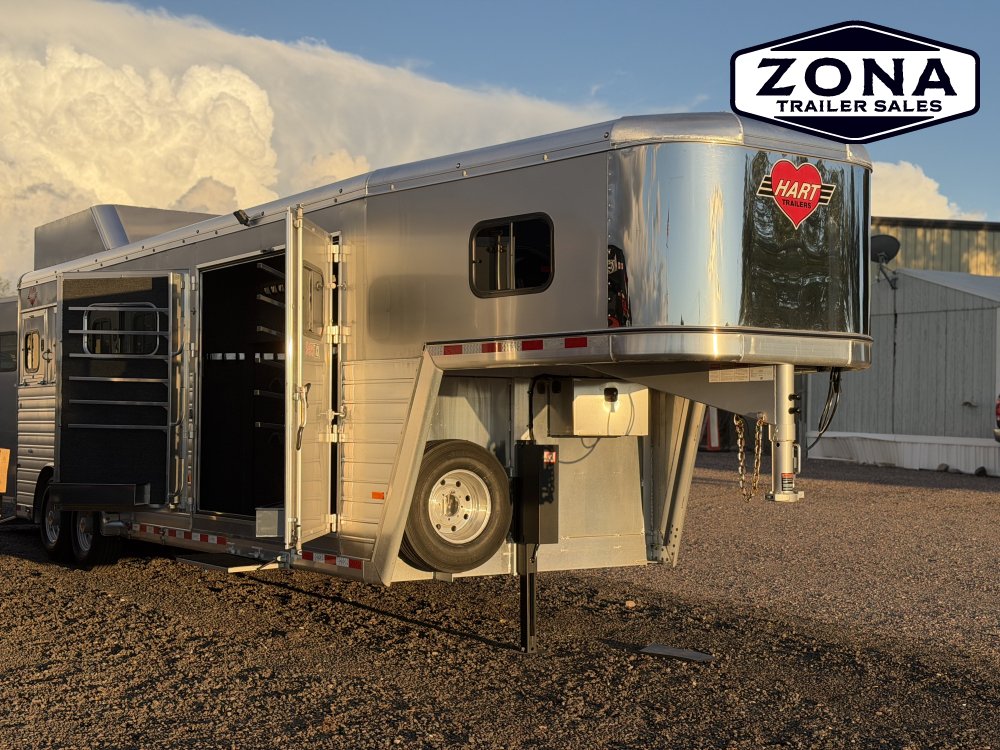
Not sure which horse trailer type you need?
Browse Zona Trailer Sales' available horse trailers to compare sizes, loading layouts, materials and tack configurations.
Shop Horse Trailers
What Are the Main Types of Horse Trailers?
Horse trailers can be grouped by how they hitch to the truck, how the horses stand inside, what the trailer is built from and how the trailer is used. These are overlapping categories, not completely separate products. For example, one trailer can be an aluminum, gooseneck, slant-load horse trailer with living quarters.
| How Trailers Differ | Common Types | Main Buying Question |
|---|---|---|
| Hitch | Bumper pull, gooseneck | How will the trailer connect to your tow vehicle? |
| Loading layout | Slant load, straight load | How will the horses stand, load and unload? |
| Construction | Steel, aluminum, mixed-material | What weight, maintenance and price tradeoffs matter? |
| Purpose | Horse-only, stock-combo, living quarters | Do you also need livestock space, storage or overnight accommodations? |
Bumper Pull Horse Trailers
A bumper pull horse trailer attaches to a properly rated receiver hitch at the rear of the tow vehicle. These trailers are common in smaller two- and three-horse configurations and can be practical when you want a more compact hauling setup.
A bumper pull also keeps the pickup bed available for feed, tools and other gear. It is not automatically easier or safer to tow: the truck, hitch and trailer must still be matched to the loaded weight.
Gooseneck Horse Trailers
A gooseneck horse trailer connects to a hitch in the pickup bed, with the connection point near the truck's rear axle. Goosenecks are common when buyers need additional horse capacity, larger tack areas or more elaborate layouts.
The truck needs a compatible in-bed hitch, adequate ratings and proper clearance around the trailer neck. For a more detailed comparison, read Zona's Gooseneck vs. Bumper Pull Horse Trailer Guide.
Slant-Load Horse Trailers
In a slant-load horse trailer, horses stand at an angle to the direction of travel. This layout can make efficient use of trailer length and is available in both bumper pull and gooseneck models.
Compare actual stall length and width, divider design, and whether you can access or unload an individual horse conveniently. A trailer advertised for three horses does not necessarily offer the same usable space as another three-horse model.
Straight-Load Horse Trailers
In a straight-load horse trailer, horses face forward rather than standing diagonally. Some buyers prefer this arrangement for their horses or for the particular loading and unloading setup it provides.
Look closely at stall length, headroom, doors, dividers and access to each horse. Neither straight load nor slant load is universally better; fit and safe handling depend on the individual horse and trailer design.
Steel Horse Trailers
Steel horse trailers are common among buyers looking for traditional construction and a range of price points. They can be durable and repairable, but painted steel and exposed components require attention to corrosion prevention.
Compare the frame, floor, roof, trailer weight and condition rather than assuming every steel trailer is built the same way.
Aluminum Horse Trailers
Aluminum horse trailers may reduce empty weight in some designs and avoid the type of rust associated with steel, but they still need regular inspection and maintenance. Construction can also mix aluminum with other materials, so confirm what the frame, floor and body are actually made from.
When comparing aluminum and steel trailers, consider loaded weight, floor construction, repair needs, horse space and purchase price, not just the exterior material.
Stock-Combo Horse Trailers
A stock-combo trailer combines livestock-hauling space with features useful to horse owners, such as tack storage, dividers or a dressing area. It may suit owners who move both horses and other livestock or need a flexible ranch-oriented layout.
Because storage and compartments take up room, confirm the usable animal space and the layout needed for each type of load. Not every stock trailer is configured appropriately for every horse.
Living Quarters Horse Trailers
A living quarters horse trailer adds an area for overnight accommodations to the horse-hauling section. These trailers are worth considering for owners who travel to shows, rodeos or other events and spend extended time away from home.
Living quarters add weight, length and systems to maintain, which makes towing capacity and payload especially important. Zona's Living Quarters Horse Trailer Buyer's Guide explains what to compare in greater detail.
Horse Trailers for Warmbloods and Taller Horses
Warmblood and larger-horse trailers are not one separate hitch or loading style. They are configurations with dimensions intended to accommodate horses that need more headroom, stall length or stall width.
Instead of choosing a trailer because it says "warmblood," compare the actual interior height and stall measurements against your horse's needs. See Zona's Horse Trailer Dimensions and Sizes Guide for the measurements that matter.
How Do You Choose the Right Type of Horse Trailer?
Start with the horses and hauling routine you have today, not just the trailer you might want someday.
- How many horses do you normally haul?
- How much stall height, length and width does each horse need?
- Will you also haul livestock or need a separate tack area?
- Do you need overnight accommodations?
- Does your truck have the right hitch and enough towing and payload capacity?
- What budget makes sense after considering maintenance and equipment?
For an independent overview of horse fit, trailer layout and buying considerations, see the University of Maryland Extension's guide to selecting a horse trailer.
Compare Horse Trailer Types at Zona Trailer Sales
Zona carries horse trailers in different hitch styles, horse capacities, materials and configurations. For example, its October 15, 2026 inventory included compact steel slant-load trailers, taller aluminum horse trailers, stock-combo layouts and multi-horse goosenecks with expanded tack storage.
Inventory changes, so compare the specifications of the individual trailers currently listed. The most useful details are interior dimensions, trailer empty weight, GVWR, hitch requirements, stall arrangement and available storage.
Find the Horse Trailer That Fits Your Hauling Needs
Compare current horse trailers at Zona by size, horse count, hitch configuration, construction and available features.
Browse Horse Trailers
Types of Horse Trailers FAQs
What are the main types of horse trailers?
Horse trailers are commonly compared by hitch (bumper pull or gooseneck), stall layout (slant or straight), material (steel or aluminum) and purpose (horse-only, stock-combo or living quarters).
Is a slant-load or straight-load trailer better?
Neither is best for every horse. Compare stall dimensions, divider design, loading access and how the individual horse travels in each layout.
Should I choose a bumper pull or a gooseneck?
A bumper pull may suit a more compact hauling setup, while a gooseneck is often used when buyers need additional horse capacity or storage. The truck and hitch must be rated for whichever trailer you select.
What is a stock-combo horse trailer?
A stock-combo trailer combines livestock-hauling space with features such as tack storage, dividers or a dressing area, making it useful for some mixed-use hauling needs.
Do I need a special trailer for a Warmblood?
You need a trailer that provides enough actual stall space for your horse. Extra-height and longer-stall configurations may help, but check the measurements instead of relying on a model label alone.
What is the difference between a horse trailer and a living quarters horse trailer?
A living quarters horse trailer includes an accommodation area in addition to the horse compartment. That can be useful for travel, but adds size, weight and systems that need maintenance.
Ready to compare your options?
Start with the horses you haul and the truck you drive, then compare the trailer types that meet those requirements.
View Horse Trailers for Sale
Trailer features, dimensions, materials, weights and availability vary by manufacturer, model and individual unit. Always verify trailer specifications, loaded weight, hitch compatibility and tow-vehicle ratings before purchasing or towing.