
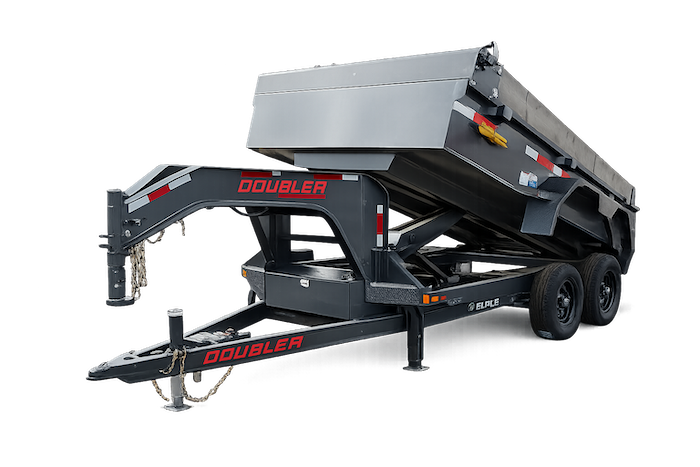
When shopping for a dump trailer, it's easy to focus on size, weight capacity and side height. But another important decision is how the trailer raises its bed. Telescopic and scissor lift dump trailers use different hydraulic lifting systems, and those differences can influence performance, maintenance and which trailer is right for your work.
Whether you're hauling gravel, dirt, landscaping materials, construction debris or farm supplies, understanding these two lift systems can help you choose a dump trailer that fits your everyday needs.
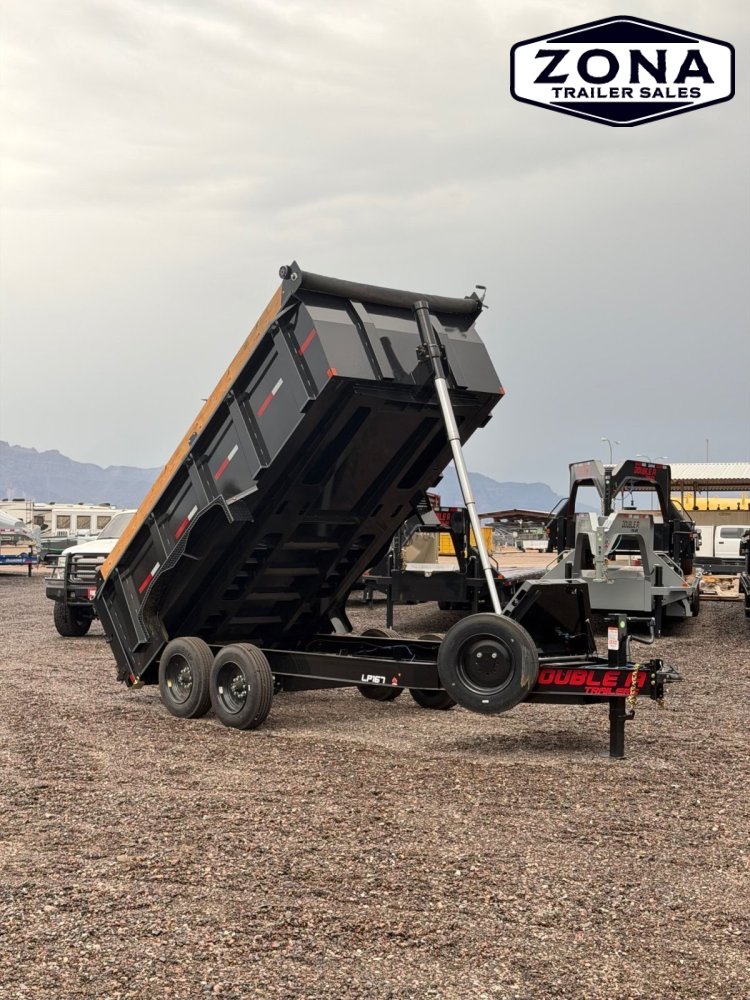
Zona Trailer Sales carries dump trailers with different lifting systems, sizes and weight ratings. Compare the available configurations to find the right setup for your work.
Shop Dump TrailersWhat Is a Dump Trailer Hoist?
A dump trailer hoist is the lifting mechanism that raises the trailer bed so materials can slide or fall out through the rear opening. Most modern hydraulic dump trailers use a powered hydraulic system to perform this work.
The lifting system must overcome the weight of the bed and the load while raising the trailer around its rear pivot point. How it creates that lifting force is one of the main differences between scissor and telescopic designs.
Neither system automatically makes a trailer better. The complete design, including the frame, cylinder, hoist geometry, hydraulic components and rated capacity, determines what the trailer can safely handle.
How Does a Scissor Lift Dump Trailer Work?
A scissor lift dump trailer uses a hydraulic cylinder and a set of pivoting arms or linkages mounted beneath the dump bed. As the cylinder extends, the linkage opens and raises the bed.
The scissor mechanism transfers lifting force through the arms and mounting points rather than depending solely on a long cylinder extending directly toward the front of the bed.
Scissor lifts are found on many compact and general-purpose dump trailers. They can be a practical choice for landscaping, property maintenance, farm use and routine material hauling.
- Commonly available on smaller and general-purpose dump trailers
- Compact lifting mechanism beneath the bed
- Useful for many everyday landscaping and cleanup jobs
- May offer a lower upfront cost in otherwise comparable trailer designs
- Worth comparing if you want a straightforward work trailer without paying for unnecessary capacity
Scissor lift trailers still require regular inspection and maintenance. The hydraulic cylinder, pivots, mounting points and electrical components all need to remain in good working condition.
How Does a Telescopic Dump Trailer Work?
A telescopic dump trailer uses a hydraulic cylinder with multiple nested stages. When hydraulic pressure is applied, the stages extend progressively, allowing the cylinder to reach a greater extended length than its compact retracted size might suggest.
Many telescopic systems lift the bed from a front-mounted position, although the exact design and mounting arrangement depend on the trailer.
Telescopic systems are commonly considered for larger dump trailers and applications involving substantial material loads. Their lifting characteristics depend on cylinder size, mounting geometry, hydraulic pressure and the manufacturer's design.
- Multi-stage cylinder design allows substantial extension
- Available on larger, heavy-duty dump trailer configurations
- May be well suited to frequent material hauling when properly matched to the trailer
- Can provide useful dumping geometry depending on the mounting arrangement
- Offers an alternative to a linkage-based scissor hoist
A telescopic cylinder does not automatically mean greater trailer capacity or a steeper dumping angle. Those characteristics must be verified for the actual trailer.
Telescopic vs. Scissor Lift Dump Trailers: Side-by-Side Comparison
| Feature | Scissor Lift | Telescopic Lift |
|---|---|---|
| How It Works | Cylinder raises the bed through pivoting arms | Multi-stage cylinder extends to raise the bed |
| Common Applications | Compact and general-purpose dump trailers | General-purpose and heavier dump trailer configurations |
| Lifting Mechanism | Linkage and hydraulic cylinder | Nested hydraulic cylinder stages |
| Maintenance | Inspect cylinder, pivots, pins and linkages | Inspect cylinder stages, seals, mounts and hydraulic components |
| Dump Angle | Depends on the specific trailer design | Depends on the specific trailer design |
| Cost | Can cost less in comparable configurations | May cost more depending on hoist and trailer specifications |
| Best Buying Approach | Compare lift design with your typical loads | Compare lift design with your typical loads |
The biggest takeaway is that hoist type is only one part of dump trailer performance. A properly engineered scissor lift can be better suited to a particular job than a telescopic trailer with the wrong size, payload or configuration, and vice versa.
Which Lift System Is Stronger?
There is no universal answer. Lifting force depends on hydraulic pressure, cylinder dimensions, mechanical leverage and the position of the load throughout the dumping cycle.
Scissor mechanisms and telescopic cylinders apply force differently, so comparing the appearance of the lifting system does not tell you which trailer can safely handle more weight.
For an actual purchase, check the manufacturer's hoist specifications alongside the trailer's GVWR and payload. A stronger hoist does not increase the trailer's legally rated carrying capacity.
Which Dump Trailer Handles Heavy Loads Better?
Both lift designs can be used in trailers intended for substantial loads. The better choice depends on the manufacturer's ratings and the materials you regularly haul.
Gravel, wet soil, demolition debris and other dense materials can reach a trailer's payload limit before the bed looks full. Side height and bed volume should never be mistaken for available weight capacity.
Before choosing either lifting system, calculate your expected load and compare it with the trailer's actual payload rating. Zona's Dump Trailer Sizes and Capacity Guide explains the importance of trailer size, GVWR and payload in more detail.
Does a Telescopic Dump Trailer Dump at a Steeper Angle?
Some telescopic systems can be designed for substantial bed travel, but the cylinder type alone does not establish the dumping angle.
The bed length, hinge position, cylinder mounting points and lift geometry determine how high a trailer can raise its bed.
This matters when unloading materials that do not flow easily. Wet soil, sticky material and certain debris may require careful attention to the dumping surface and trailer positioning.
Always use the manufacturer's actual dump-angle specification when comparing individual trailers. Do not assume a telescopic trailer will automatically dump more completely than a scissor lift.
Which System Requires More Maintenance?
Both systems rely on hydraulic components that need maintenance. The difference is where the wear points and inspection needs are concentrated.
On a scissor lift, regularly inspect linkage pivots, pins, mounting points, hydraulic hoses and the cylinder.
On a telescopic lift, pay attention to the cylinder stages, seals, mounting hardware, hydraulic lines and any signs of leaking or uneven movement.
For either type, inspect the battery and electrical system, hydraulic fluid condition, bed hinges and safety equipment. Follow the manufacturer's maintenance instructions and never work beneath an unsupported raised dump bed.
If a trailer struggles to lift, moves unevenly, leaks hydraulic fluid or makes unusual noises, stop using the lifting system until it can be inspected.
Raised dump beds can create serious hazards during maintenance. For additional safety information, review OSHA's guidance on hazards associated with operating and maintaining dump trucks. Always follow the trailer manufacturer's instructions and use the approved bed-support system.
Which Hoist Is Better for Landscaping, Construction and Farm Work?
Start with the materials, volume and frequency of your normal jobs.
- Landscaping: Compare payload, bed size and loading height for mulch, branches, soil and cleanup debris.
- Construction: Prioritize GVWR, payload, bed construction and the ability to unload the specific materials you carry.
- Farm and ranch: Consider how frequently you move feed, manure, supplies and other materials.
- Frequent hauling: Evaluate hoist reliability, service access and how the complete trailer handles repeated daily use.
A smaller scissor-lift trailer may be an excellent fit for routine property maintenance, while a larger telescopic trailer may better match an operation that needs additional length or rated payload.
However, those differences come from the complete trailers being compared, not simply from the presence of one lift style.
Compare Scissor Lift and Telescopic Dump Trailers at Zona
Zona Trailer Sales carries examples of both lifting systems, so buyers can compare the configurations available rather than choosing based only on a general description.
Scissor Lift Example
Zona has listed a 2026 Double A 6x10 dump trailer with a scissor lift, stock #36154. Its published listing identifies an 11,500-pound GVWR, making it an example of a more compact dump trailer configuration.
Telescopic Lift Examples
Zona has also listed a 2027 Double A LP147 14-foot telescopic dump trailer, stock #36020, with 3-foot sides and 7,000-pound axles.
For buyers comparing larger configurations, a 2027 Double A LP167 14-foot telescopic dump trailer, stock #36028, is advertised with 3-foot sides and 8,000-pound oil-bath axles.
These examples illustrate differences in trailer size and equipment. They do not establish that every telescopic trailer has more capacity than every scissor-lift trailer.
Individual inventory, prices and specifications can change. Check the current listings and verify the ratings of the exact trailer before purchasing.
Compare Zona's available scissor-lift and telescopic dump trailers by bed size, GVWR, payload, hoist design and other features.
Browse Dump TrailersWhat Else Should You Compare Before Buying?
Hoist design matters, but a dump trailer needs to be evaluated as a complete hauling system.
- GVWR and actual available payload
- Bed length, width and side height
- Axle ratings and tire specifications
- Floor thickness and overall construction
- Rear gate and unloading options
- Hydraulic power system and battery access
- Ramps and equipment-loading requirements
- Tow vehicle and hitch compatibility
- Purchase price, warranty and maintenance needs
Choosing the right trailer means matching its capabilities to your work, truck and budget rather than paying for features or capacity you will rarely use.
Telescopic vs. Scissor Lift Dump Trailer FAQs
Is a telescopic dump trailer better than a scissor lift?
Not automatically. Both can be effective lifting systems. Compare the complete trailer's capacity, lift geometry, build quality and intended use before choosing.
Are telescopic dump trailers stronger?
Not necessarily. Hoist strength depends on hydraulic pressure, cylinder design and mounting geometry. The trailer's rated payload remains the limit for how much cargo it can carry.
Are scissor lift dump trailers good for landscaping?
Yes. A properly rated scissor-lift dump trailer can be useful for hauling landscaping debris, mulch, soil and similar materials. Make sure the trailer's payload matches the weight of your intended loads.
Which type of dump trailer is easier to maintain?
Both require maintenance. Scissor lifts have pivoting linkages to inspect, while telescopic cylinders have multiple extending stages and seals. Overall maintenance depends on the specific system and how it is used.
Does a telescopic cylinder give a dump trailer a higher dumping angle?
It can in some designs, but not universally. Dump angle depends on the complete trailer geometry and manufacturer's specifications.
Can I finance a telescopic or scissor lift dump trailer?
Zona Trailer Sales offers financing options for qualified buyers. Approval, rates, down payment requirements and available terms vary by buyer, trailer and lender.
Compare Dump Trailers at Zona Trailer Sales
Whether you need a compact scissor-lift dump trailer or a larger telescopic configuration, the right choice starts with your loads, capacity requirements and hauling routine.
Shop Dump TrailersExplore FinancingTrailer specifications, lift performance, dumping angles, weights, prices and availability vary by model and individual unit. Always verify the manufacturer's specifications, actual payload and tow-vehicle requirements. Never exceed rated capacities or work beneath a raised dump bed without approved mechanical support.