
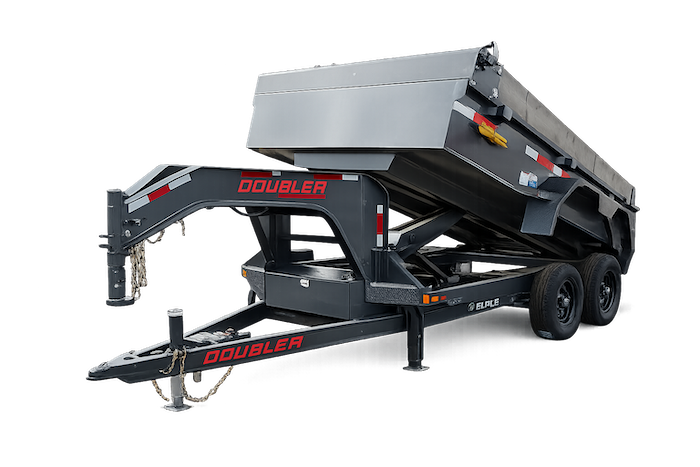
Dump trailer size matters because capacity is about more than the dimensions of the box. A 5x8 dump trailer, a 6x10 dump trailer and a 14-foot dump trailer can all be useful, but they are built for very different jobs.
The right trailer depends on what you are hauling, how heavy that material is, how much volume you need, how often you dump and what your tow vehicle can safely handle. This guide breaks down common dump trailer sizes, GVWR, payload, side height and what each size is realistically suited for.
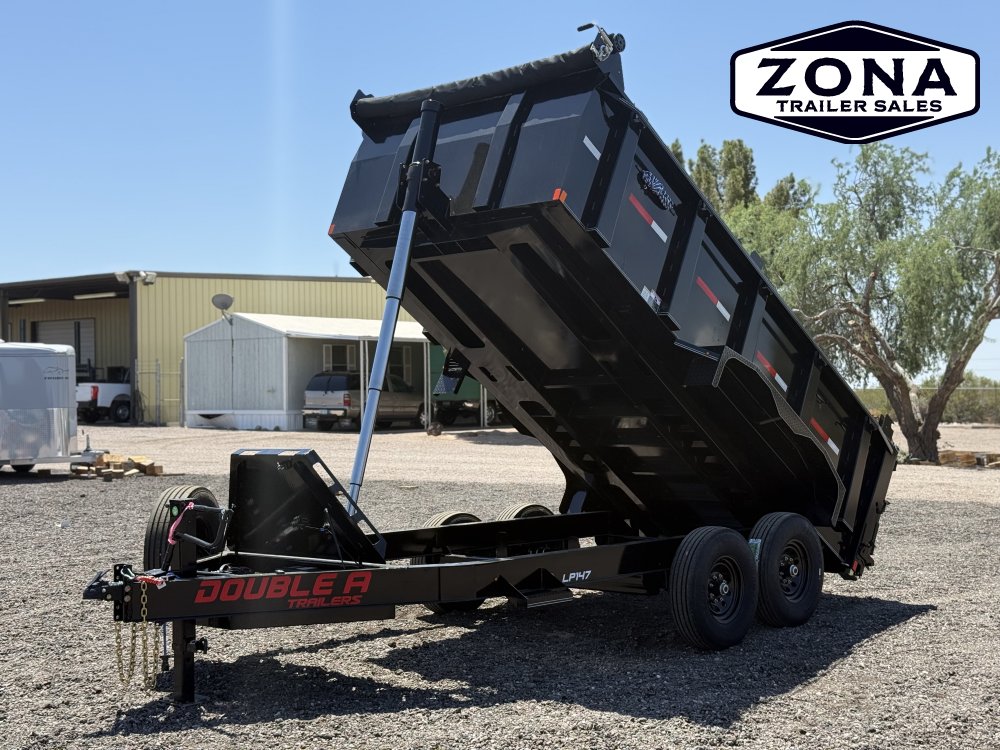
Zona Trailer Sales carries compact dump trailers and larger contractor-focused configurations with different side heights, GVWR ratings and hauling capacities.
Shop Dump TrailersWhat Are the Most Common Dump Trailer Sizes?
Dump trailers come in a wide range of dimensions, but several sizes show up repeatedly because they work well for common landscaping, construction, property maintenance and equipment-hauling jobs.
Compact trailers can work well for smaller cleanup jobs, while longer dump bodies give contractors and commercial users more volume. But trailer length alone does not tell you how much weight the trailer can carry.
| Dump Trailer Size | Best Fit | What to Watch |
|---|---|---|
| 5x8 | Property cleanup, landscaping, lighter material and smaller jobs | Payload can be reached quickly with dense material even though the box looks small |
| 6x10 | Landscaping, renovation debris, property maintenance and general contractor use | Compare GVWR, empty weight and lift system rather than assuming all 6x10 trailers are equal |
| 12-Foot | Contractors and operators needing more volume without moving into the longest common beds | Material density and payload often matter more than box volume |
| 14-Foot | Construction, demolition, landscaping, equipment and heavier commercial use | Higher GVWR, larger tow-vehicle requirements and loaded tongue weight |
| 16-Foot and Larger | Higher-volume commercial work and specialized hauling | Truck ratings, GVWR, payload, licensing considerations and maneuverability |
Dump Trailer Size Does Not Equal Capacity
This is the most important thing to understand when comparing dump trailer sizes.
A bigger dump box gives you more volume, but it does not automatically mean you can fill that box to the top with any material.
Dense loads such as dirt, gravel, rock and concrete can reach the trailer's weight limit long before the box is physically full.
Lighter materials such as brush, leaves, cardboard or certain construction debris may fill the box before weight becomes the limiting factor.
- Volume: How much material physically fits in the dump body?
- Payload: How much weight can the trailer actually carry within its ratings?
What Does GVWR Mean on a Dump Trailer?
GVWR stands for Gross Vehicle Weight Rating.
It is the maximum rated weight of the trailer when fully loaded, including the trailer itself and everything inside it.
GVWR is not the same thing as payload.
Use the actual manufacturer specifications for the individual trailer because options and equipment can change finished weight.
For additional information about vehicle weight ratings and loading limits, review the National Highway Traffic Safety Administration's vehicle safety resources .
How Much Weight Can a Dump Trailer Hold?
The answer depends on the specific trailer's GVWR and empty weight.
Two 14-foot dump trailers can have different payload capacities if one has a heavier frame, larger hydraulic system, taller sides, heavier axles or additional equipment.
That is why buyers should compare actual specifications instead of assuming all trailers of the same length can haul the same amount.
When comparing trailers at Zona, look at the GVWR and empty weight of the individual unit, then calculate how much capacity remains for the material or equipment you intend to haul.
5x8 Dump Trailers
A 5x8 dump trailer is compact and maneuverable, which can make it useful for property owners, landscapers and smaller cleanup jobs.
It can work well for mulch, brush, yard debris, smaller renovation projects and other jobs where you do not need a large commercial dump body.
The mistake is assuming that a small trailer can be filled completely with dense material just because the box has room.
Dirt, gravel and concrete are heavy enough that payload may become the limit very quickly.
6x10 Dump Trailers
The 6x10 size gives buyers more usable volume while still remaining relatively compact.
This size can be a useful fit for landscaping, property maintenance, construction cleanup and smaller contractor operations where a 14-foot trailer would be more trailer than the job requires.
Do not assume every 6x10 has the same hauling capacity. Axles, GVWR, trailer weight, side height and hydraulic equipment can vary considerably.
12-Foot Dump Trailers
Twelve-foot trailers sit in a useful middle ground.
They can offer more volume than a compact trailer without taking on the full length and weight of a larger 14-foot or 16-foot configuration.
Contractors hauling dirt, landscape materials, debris or compact equipment may find this range useful depending on payload needs and tow vehicle.
14-Foot Dump Trailers
Fourteen-foot dump trailers are common for serious contractor, landscaping and commercial use.
Buyers can find different side heights, axle configurations and GVWR ratings within the same general trailer length.
Those side-height differences matter because taller sides increase usable volume, but they do not increase the trailer's rated payload.
A 14-foot trailer with tall walls can hold significantly more bulky material by volume than a similar trailer with shorter sides, but dense material may still max out the trailer by weight first.
Does Side Height Matter?
Yes, especially when hauling lighter material.
Taller sides increase the cubic volume of the dump body.
That can be helpful for brush, demolition debris, landscape waste and other lower-density loads.
For heavy dirt, gravel or concrete, taller walls may not provide much additional usable capacity because the trailer can reach its weight rating before the box is full.
| Material Type | What Usually Limits You First | Why |
|---|---|---|
| Brush / Yard Waste | Volume | Bulky material often fills the box before reaching maximum payload |
| Construction Debris | Depends on material | Wood and drywall behave very differently from concrete and masonry |
| Dirt | Payload | Dense material becomes heavy quickly |
| Gravel / Rock | Payload | High material density can use available payload long before the box is full |
| Mulch | Often volume | Lighter material can take advantage of taller sides |
How to Calculate the Payload You Actually Need
Start with the heaviest material or equipment you realistically expect to haul.
Then work backward from the trailer's specifications.
- Trailer GVWR
- Trailer empty weight
- Approximate available payload
- Expected material weight
- Box dimensions and side height
- Tow vehicle ratings
- Hitch and tongue-weight requirements
If the material is especially dense, choose the trailer based on payload first and volume second.
Which Dump Trailer Size Is Best for Landscaping?
Landscaping operations vary enough that there is no single best size.
Smaller trailers can work well for residential cleanup, mulch and property maintenance.
Larger 12-foot and 14-foot trailers become more useful when moving higher volumes of debris, soil, landscape material or equipment regularly.
If you routinely haul both light bulky material and heavy material, prioritize sufficient payload first, then choose the box size and side height that give you enough volume.
Which Dump Trailer Size Is Best for Contractors?
Contractors often benefit from larger 12-foot or 14-foot trailers because of the additional usable box volume and heavier GVWR options available.
But the best choice still depends on the job.
Roofing debris, concrete, landscaping material and equipment all place very different demands on the trailer.
If contractor use is your main focus, also read Zona's Best Dump Trailers for Contractors .
Can You Haul Equipment in a Dump Trailer?
Some dump trailers can also transport compact equipment when the trailer is properly configured and rated for the load.
The machine's weight, trailer payload, bed dimensions, loading system, ramps and tie-down points all have to work together.
Do not assume that a dump trailer can safely haul a skid steer, mini excavator or tractor simply because the machine physically fits in the box.
How Much Truck Do You Need for a Dump Trailer?
The trailer's loaded weight matters much more than its empty weight.
Check the exact truck's towing capacity, payload, GVWR, GAWR, hitch rating and tire ratings against the trailer you are considering.
A larger dump trailer can also create significant tongue or pin weight, which uses part of the truck's available payload.
Do not choose a tow vehicle based only on the words half-ton, three-quarter-ton or one-ton.
Which Dump Trailer Size Should You Buy?
| Your Main Use | Size to Consider | Why |
|---|---|---|
| Property cleanup / light landscaping | 5x8 or 6x10 | Compact, easier to maneuver and often enough volume for smaller jobs |
| Regular landscaping work | 6x10 to 12-foot | More volume while remaining manageable for frequent use |
| Contractor / construction use | 12 to 14-foot | More box volume and access to heavier GVWR configurations |
| Heavy dirt, gravel or rock | Choose by payload first | Dense material reaches weight limits before volume limits |
| Bulky light debris | Larger box / taller sides | Volume often matters more than weight |
Compare Dump Trailers at Zona
Zona Trailer Sales carries dump trailers across multiple sizes, side heights and GVWR ratings. Compare the actual dimensions, payload and lift configuration that fit the work you need to do.
Shop Dump Trailers Explore FinancingDump Trailer Size & Capacity FAQs
What are the most common dump trailer sizes?
Common dump trailer sizes include compact 5x8 and 6x10 trailers along with larger 12-foot, 14-foot and 16-foot configurations. The right size depends on material, payload needs, volume and tow vehicle.
How much weight can a dump trailer hold?
Payload depends on the trailer's GVWR and empty weight. Subtract the trailer's empty weight from its GVWR to estimate the available payload, then verify the manufacturer's specifications for the individual trailer.
Is a bigger dump trailer always better?
No. A bigger trailer adds volume, weight and towing requirements. If you primarily do smaller residential or landscaping jobs, a compact trailer may be easier to use and tow.
What size dump trailer is best for dirt?
Choose based on payload rather than box volume. Dirt is dense enough that the trailer may reach its maximum rated weight well before the dump body is full.
What size dump trailer is best for gravel?
Gravel is also very dense, so GVWR and available payload matter more than side height or total box volume.
Do taller sides increase dump trailer capacity?
Taller sides increase volume, but they do not increase the trailer's GVWR or payload rating. They are most useful with lighter bulky materials.
What is the difference between GVWR and payload?
GVWR is the maximum rated loaded weight of the trailer. Payload is the amount of that rating available for material or equipment after accounting for the trailer's own weight.
Can a dump trailer haul a skid steer?
Some dump trailers can, but the machine weight, trailer payload, bed dimensions, ramps and tie-down system must all be appropriate. Never assume a machine is safe to haul just because it physically fits.
Can I finance a dump trailer?
Financing options are available for qualified buyers through Zona Trailer Sales. Rates, terms, down payment requirements and approval depend on the buyer, trailer and lender.
Compare Zona's current dump trailers by dimensions, side height, GVWR and configuration before you buy.
View Dump Trailers for SaleTrailer specifications, GVWR, payload, dimensions and towing requirements vary by manufacturer, model and individual trailer. Always verify the manufacturer's specifications and applicable tow-vehicle ratings before loading or towing.