

When you're towing a trailer loaded with horses, livestock, equipment or other heavy cargo, stopping safely takes more than your truck's brakes alone. The trailer's braking system plays an important role in helping you maintain control, but how do trailer brakes work, and what's the difference between the systems available?
Electric, electric-over-hydraulic and surge brakes all help slow a trailer, but they work in different ways. Understanding those differences can help you compare trailers, recognize potential problems and make better decisions about maintenance and repairs.
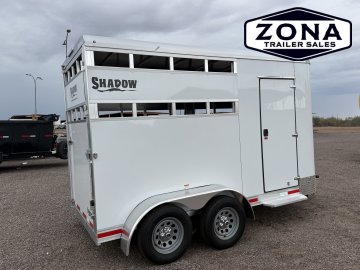
From brake performance concerns to controllers and wiring questions, Zona Trailer Sales can help you determine the next step. Contact the service team to discuss your trailer and the work it may need.
Schedule Trailer ServiceWhy Do Trailers Need Their Own Brakes?
When you apply your truck's brakes, the truck needs to slow itself and the trailer it's towing. Adding a heavily loaded trailer increases the total weight that must be brought to a stop.
Trailer brakes provide braking force at the trailer's wheels, helping manage that additional weight. Properly functioning trailer brakes can improve stopping performance and help reduce the burden on the tow vehicle's braking system.
Trailer brakes are especially important when hauling livestock, horses, machinery, construction materials and other substantial loads. The type of brakes required depends on applicable laws, trailer ratings and the specific towing setup.
Not every trailer uses the same braking system. Three common designs are electric drum brakes, electric-over-hydraulic brakes and hydraulic surge brakes.
How Do Electric Trailer Brakes Work?
Electric trailer brakes use an electrical signal from the tow vehicle to activate braking components inside the trailer's wheels. Conventional electric drum brakes use electromagnets to create the mechanical force that presses the brake shoes against the inside of the drums.
When the driver applies the tow vehicle's brakes, a compatible trailer brake controller sends electrical current to the trailer brakes. The amount of current influences the braking force.
Electric drum brakes are widely used on many horse trailers, stock trailers, equipment trailers and utility trailers.
What Happens When You Press the Brake Pedal?
- The tow vehicle's braking system signals the trailer brake controller.
- The controller sends electrical current through the trailer's wiring.
- An electromagnet inside each equipped brake assembly is energized.
- The brake mechanism presses the shoes against the drum.
- The resulting friction helps slow the trailer.
The driver can adjust brake-controller settings according to the controller manufacturer's instructions to help achieve appropriate braking for the trailer and load.
- Common on many horse, livestock and equipment trailers
- Typically require a compatible brake controller in the tow vehicle
- Braking output can be adjusted through the controller
- Depend on functioning wiring, connections and brake components
- Require inspection and adjustment according to the brake manufacturer's instructions
How Do Electric-Over-Hydraulic Trailer Brakes Work?
Electric-over-hydraulic trailer brakes, often called EOH or E/H brakes, combine electrical control with hydraulic braking pressure.
Instead of using an electromagnet inside each drum to mechanically activate the brakes, an electric signal operates a hydraulic actuator mounted on the trailer. That actuator creates brake-fluid pressure, which travels through hydraulic lines to the wheel brakes.
Electric-over-hydraulic systems may operate hydraulic disc brakes or hydraulic drum brakes, depending on the trailer's configuration.
What Happens When You Apply the Brakes?
- The tow vehicle's compatible brake controller sends a braking signal.
- The trailer-mounted electric-over-hydraulic actuator responds to that signal.
- The actuator generates hydraulic pressure.
- Brake fluid carries that pressure through the trailer's hydraulic lines.
- The hydraulic brakes at the wheels apply braking force.
These systems are found in some higher-capacity trailer configurations and other specialized towing applications. However, trailer weight alone does not tell you whether a particular unit has electric or electric-over-hydraulic brakes.
One important consideration is brake-controller compatibility. Not every controller is designed to operate every electric-over-hydraulic actuator. Both components must be compatible and installed according to their manufacturers' requirements.
How Do Surge Brakes Work on a Trailer?
Surge brakes are a type of hydraulic trailer braking system activated by the trailer's movement against the tow vehicle as the combination slows down.
A surge-brake trailer uses a specialized coupler and actuator at the hitch. When the tow vehicle decelerates, the trailer's forward momentum pushes against the actuator, which creates hydraulic pressure to apply the trailer brakes.
Unlike conventional electric brakes, a standard hydraulic surge system does not rely on a tow-vehicle electric brake controller to activate its service brakes.
How Does the Surge-Brake Actuator Work?
- The tow vehicle begins slowing down.
- The trailer's momentum creates a pushing force at the coupler.
- The surge actuator compresses and operates its hydraulic master cylinder.
- Hydraulic pressure travels to the trailer brakes.
- The trailer brakes help slow the trailer.
Surge brakes are common in certain boat trailers and other applications, although the exact equipment varies. Some surge-brake configurations need additional provisions for reversing, such as an electrically controlled reverse lockout.
They still require regular inspection of the actuator, hydraulic lines, fluid and wheel-brake components.
Electric vs. Electric-Over-Hydraulic vs. Surge Brakes
The main difference between these three braking systems is how braking force is initiated and transmitted to the trailer's wheels.
| Feature | Electric Brakes | Electric-Over-Hydraulic | Surge Brakes |
|---|---|---|---|
| Activation | Electrical signal activates drum-brake mechanism | Electrical signal activates hydraulic actuator | Trailer's forward force compresses hitch actuator |
| Brake Controller | Generally required | Compatible controller generally required | Not needed for normal surge activation |
| Wheel Brakes | Electric drum brakes | Hydraulic disc or drum brakes | Hydraulic disc or drum brakes |
| Key Components | Magnets, drums, wiring, controller | Controller, hydraulic actuator, fluid lines | Surge coupler, master cylinder, fluid lines |
| Common Applications | Many horse, stock, utility and equipment trailers | Some higher-capacity and specialized trailers | Certain boat and other trailers |
| Main Consideration | Electrical and controller condition | Controller compatibility and hydraulic maintenance | Actuator, hydraulic condition and reverse operation |
No single system is universally best. The trailer manufacturer's design, brake ratings, tow-vehicle compatibility and intended use matter more than choosing a system based on its name alone.
Which Trailer Brake System Is Best for Heavy Equipment?
When hauling machinery, construction equipment or other heavy cargo, it's important to evaluate the complete trailer, not just its brakes.
Electric drum brakes are used on many work trailers. Electric-over-hydraulic systems are another option found in certain equipment and higher-capacity configurations.
The right setup depends on the trailer's weight ratings, axle configuration, brake specifications, intended load and tow vehicle.
For example, buyers comparing equipment trailers at Zona Trailer Sales should consider GVWR, payload, axle ratings and braking-system compatibility together.
Important: A trailer's GVWR or axle rating does not establish which type of brakes it has. Confirm the actual brake system for the individual trailer before purchasing.
What Does a Trailer Brake Controller Do?
A trailer brake controller manages the braking signal sent from the tow vehicle to compatible electrically controlled trailer brakes.
Some controllers are integrated into the truck, while others are installed separately. Certain controllers adjust braking based on the vehicle's deceleration, while other designs use different control methods.
The controller must be compatible with the trailer braking system. This is especially important with electric-over-hydraulic actuators.
If the controller displays an error, the trailer brakes respond unexpectedly or the braking feels uneven, the truck-to-trailer connection and braking components should be checked before further towing.
What Are the Signs That Trailer Brakes Need Service?
Brake problems can develop from normal wear, damaged wiring, corrosion, hydraulic leaks or other component issues. Recognizing changes in braking performance can help prevent an unsafe towing situation.
- The trailer takes longer than expected to slow down.
- Braking feels uneven, weak or unusually aggressive.
- One wheel repeatedly becomes abnormally hot.
- The brakes make unusual grinding or scraping noises.
- The brake controller displays a fault or connection warning.
- You notice damaged wiring or corroded connectors.
- Hydraulic fluid is leaking near an actuator, hose or brake assembly.
- Brake performance changes suddenly while towing.
If you notice these symptoms, don't continue hauling as though nothing is wrong. Stop in a safe location and arrange for the system to be inspected before towing again.
Trailer brake repairs involve safety-critical equipment, so diagnosis, adjustment and component replacement should follow the manufacturer's procedures and be performed by someone qualified to work on that system.
Brake performance problems, controller warnings and wiring concerns are worth checking before your next haul. Contact Zona Trailer Sales to discuss your trailer and available service options.
Request Trailer ServiceHow Often Should Trailer Brakes Be Checked?
Trailer brakes should be checked before towing and inspected and serviced at intervals recommended by the brake and trailer manufacturers.
Inspection needs vary depending on mileage, operating conditions, trailer weight and how frequently the trailer is used. A trailer exposed to water, mud, dust or frequent heavy loads may need additional attention.
Before a trip, look for visible damage to wiring and connectors, check the breakaway system according to the manufacturer's instructions and confirm that the brake controller and trailer brakes respond correctly.
Not every electric drum brake adjusts itself. Some require periodic manual adjustment, while others have self-adjusting features. Follow the instructions for the exact brake assembly on your trailer.
Are Trailer Brakes Required in Arizona?
Yes, Arizona law requires brakes on certain trailers based on their gross weight. Under Arizona Revised Statutes § 28-952(A)(3), a trailer or semitrailer operated on a highway with a gross weight of 3,000 pounds or more must have brakes adequate to control its movement and bring it to a stop.
The law also addresses how the brakes must be activated and requires automatic brake application in the event of an accidental trailer breakaway, subject to the statute's exceptions.
Section 28-952(A)(4) separately addresses service brakes on the wheels of new trailers sold in Arizona. The law provides an exception for trailers with a gross weight below 3,000 pounds.
These requirements concern actual braking equipment and operation, not merely whether a trailer is advertised with a particular brake system.
For the full requirements, review Arizona Revised Statutes § 28-952: Required Brake Equipment, published by the Arizona State Legislature.
Other state or federal requirements may apply depending on where and how the trailer is operated. Always verify the requirements for your specific towing situation.
What Should You Check When Buying a Trailer?
When comparing trailers, don't assume the brake system from the trailer's size or appearance. Confirm the equipment installed on the individual unit.
- What type of braking system does the trailer use?
- Which axles are equipped with brakes?
- Is the brake system compatible with your tow vehicle?
- Does your truck need a brake controller or a different controller configuration?
- What breakaway system is installed?
- What maintenance does the manufacturer recommend?
- Are the brakes appropriate for the trailer's rated weight and intended use?
These questions are especially useful when shopping for a used trailer or moving from a smaller utility trailer to a larger equipment, stock or horse trailer.
For more purchasing considerations, see Zona's Used Horse Trailer Buyer's Inspection Guide.
Trailer Brake FAQs
How do electric trailer brakes work?
Conventional electric trailer drum brakes use an electrical signal from a brake controller to energize electromagnets inside the brake assemblies. The mechanism presses brake shoes against the drums to slow the trailer.
What is the difference between electric and hydraulic trailer brakes?
Conventional electric drum brakes use electromagnets and mechanical components to apply braking force. Hydraulic brakes use pressurized brake fluid to activate the brakes at the wheels. Electric-over-hydraulic systems use an electrical signal to generate that hydraulic pressure.
Do all trailers need a brake controller?
No. Trailers with conventional electric brakes generally require a compatible brake controller, and electric-over-hydraulic systems generally require one as well. Standard hydraulic surge brakes activate through movement at the coupler rather than through a tow-vehicle electric brake controller.
What happens if trailer brakes stop working?
The tow vehicle may have to handle more of the stopping force, potentially increasing stopping distance and reducing control. If the brakes malfunction, stop safely and arrange for inspection rather than continuing to haul.
Do electric-over-hydraulic trailer brakes use brake fluid?
Yes. The trailer-mounted actuator produces hydraulic pressure that travels through brake lines to the wheel brakes. The correct brake fluid and service procedures depend on the manufacturer's specifications.
How do you adjust trailer brakes?
Adjustment procedures depend on the brake manufacturer and design. Some electric drum brakes require manual adjustment, while others have self-adjusting mechanisms. Always follow the manufacturer's instructions and have a qualified technician perform the work if you are unfamiliar with the system.
Can Zona Trailer Sales help with trailer brake problems?
Zona Trailer Sales has a service department for trailer maintenance and repair. If you're experiencing brake, controller or wiring concerns, contact the service team to discuss the issue and confirm the appropriate service.
Keep Your Trailer Ready for the Road
Whether you're comparing trailer braking systems before buying or need help with your current trailer, Zona Trailer Sales can help you explore your options.
Schedule Trailer ServiceBrowse Equipment TrailersTrailer brake types, components and requirements vary by manufacturer, model and application. Confirm the specifications of your individual trailer and tow vehicle. Brake-system inspections and repairs should follow manufacturer instructions and applicable regulations.