
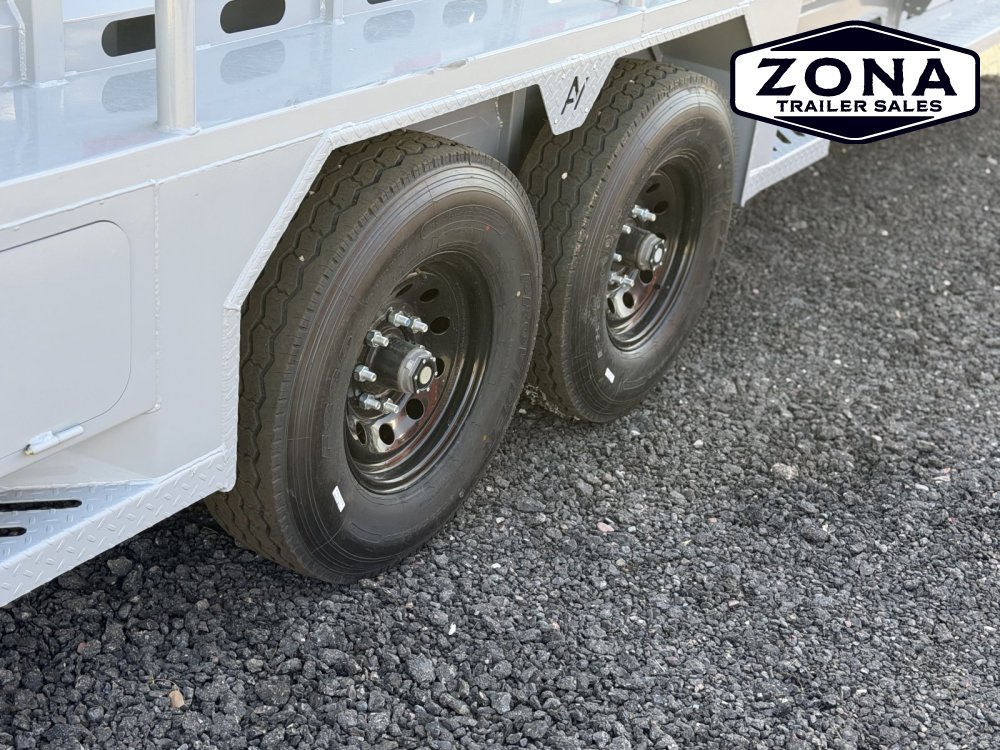
If your electric trailer brakes feel weak, uneven or slow to respond, they may need adjustment, but not every electric brake is adjusted the same way. Many standard electric drum brakes require periodic manual adjustment, while self-adjusting brake assemblies are designed to maintain shoe clearance automatically as they wear.
Before reaching for an adjustment tool, identify the brake assembly on your trailer and check the axle or brake manufacturer's instructions. The procedure below describes a common manual star-wheel adjustment used on many electric drum brakes, but your exact system may differ.
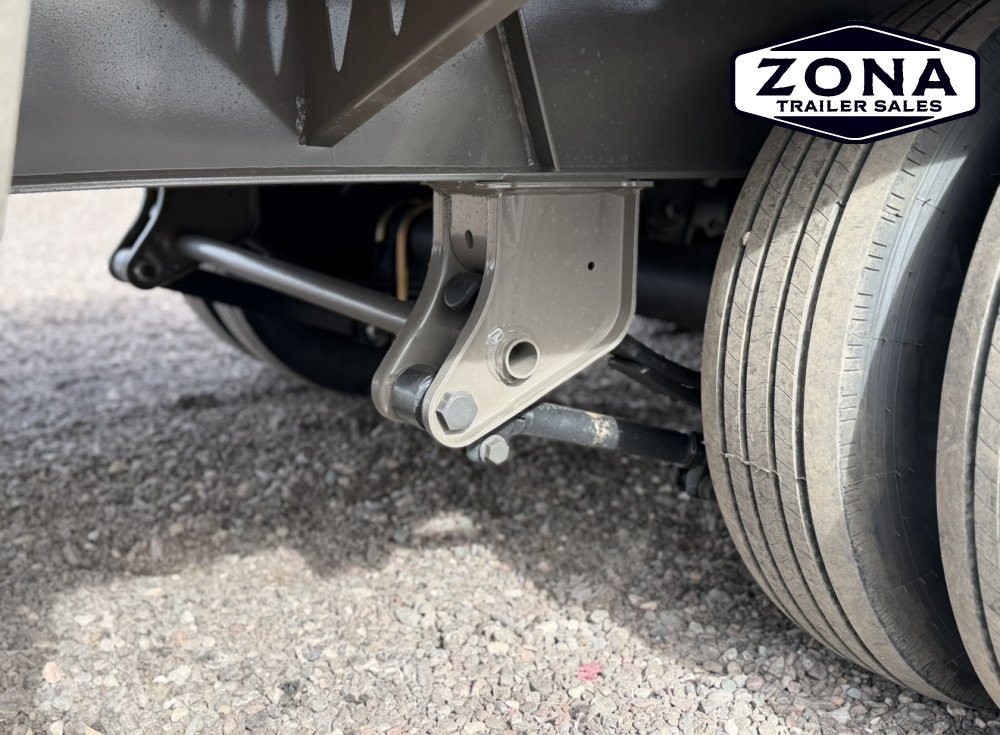
If brake performance has changed or you are not sure whether adjustment will solve the problem, Zona Trailer Sales can inspect the system and help determine what service is needed.
Schedule Trailer ServiceDo Electric Trailer Brakes Need to Be Adjusted?
Some do.
Standard electric drum brakes use brake shoes that press against the inside of the drum. As the brake linings and drum wear, the clearance between those surfaces can increase.
If the brake assembly does not have a self-adjusting mechanism, that clearance may need to be corrected manually.
Dexter states that standard electric brakes require periodic adjustment as the shoes wear, while its Nev-R-Adjust self-adjusting brakes do not require periodic manual adjustment.
That is why the first step is not turning the star wheel. It is identifying what type of brake assembly you actually have.
Manual vs. Self-Adjusting Trailer Brakes
| Brake Type | How Adjustment Works | What You Should Do |
|---|---|---|
| Manual-Adjust Electric Drum | Brake-shoe clearance is adjusted through the star-wheel adjuster | Follow the axle or brake manufacturer's manual adjustment procedure |
| Self-Adjusting Electric Drum | An internal mechanism compensates for lining wear during normal operation | Do not automatically apply a generic manual-adjustment procedure; verify the manufacturer's instructions |
If you are unsure which system is installed, check the axle identification information, brake assembly documentation or manufacturer support resources before adjusting anything.
Dexter and Lippert both publish brake service information for their axle and brake systems. Use the manual for the exact equipment installed on your trailer rather than assuming a general internet procedure applies to every brake.
Before Adjusting Electric Trailer Brakes
Brake work involves safety-critical equipment, and the trailer must be supported correctly before a wheel is lifted.
- Park on firm, level ground
- Prevent the trailer from rolling
- Use lifting points specified by the trailer manufacturer
- Support the trailer with properly rated jack stands
- Never rely on a jack alone while working around a raised trailer
- Identify the brake manufacturer and brake type
- Read the manufacturer-specific brake adjustment instructions before beginning
Dexter specifically warns against supporting a trailer by the axle or suspension system unless the trailer manufacturer directs otherwise, and it requires adequate jack stands before working on a raised trailer.
How to Adjust Manual Electric Trailer Brakes
The following describes the general procedure used by Dexter for many manually adjusted electric drum brakes. Use it only after confirming that your brake assembly is designed for this type of manual adjustment.
1. Raise and Secure the Trailer
Raise the trailer using the lifting method specified by the trailer manufacturer and support it securely on properly rated jack stands.
The wheel you are adjusting needs to rotate freely.
2. Locate the Brake Adjustment Access Hole
Look at the rear of the brake backing plate.
Many manual-adjust brake assemblies have an access slot near the bottom of the backing plate. If a rubber or plastic cover is installed, remove it to reach the adjuster.
3. Find the Star-Wheel Adjuster
Insert an appropriate brake-adjusting tool or screwdriver through the access opening until it engages the star wheel.
The star wheel changes the distance between the brake shoes and drum.
4. Expand the Brake Shoes
Rotate the star wheel in the direction that expands the brake shoes outward toward the drum.
Turn the wheel or drum by hand as you make the adjustment.
Continue until the brake-shoe pressure makes the wheel difficult to rotate.
5. Back the Adjuster Off
Rotate the star wheel in the opposite direction to reduce the shoe pressure.
Continue until the wheel turns freely while maintaining a slight amount of brake-lining drag.
The goal is not to leave the brake locked against the drum. It is to establish the clearance specified by the brake manufacturer.
6. Replace the Access Cover
If the brake backing plate has an adjustment-hole cover, reinstall it after the adjustment is complete.
This helps keep dirt and moisture out of the brake assembly.
7. Repeat on the Other Brakes
Repeat the manufacturer's procedure on each brake assembly that requires manual adjustment.
Dexter recommends setting the brakes to consistent clearance for the best results.
8. Lower the Trailer and Test the Brakes
After all work is complete, lower the trailer safely and test brake operation according to the trailer, brake and brake-controller manufacturer's instructions before returning to normal towing.
Dexter publishes brake-adjustment and service instructions for its axle systems, including manual-adjust and self-adjusting designs.
Review Dexter Brake GuidanceWhich Way Do You Turn the Star Wheel?
There is no safe universal answer based only on "up" or "down."
The direction that expands the brake shoes can depend on which side of the trailer you are working on, the orientation of the adjuster and the specific brake assembly.
Instead of memorizing a direction, watch how the wheel responds.
Turn the adjuster while rotating the wheel. If resistance increases, you are moving the shoes outward toward the drum. If resistance decreases, you are moving them away from the drum.
If you are unsure, stop and check the manufacturer's instructions for the exact brake assembly.
How Much Drag Should Trailer Brakes Have?
For the Dexter manual-adjustment procedure, the shoes are first expanded until the wheel becomes difficult to turn. The adjuster is then backed off until the wheel rotates freely with a slight lining drag.
"Slight drag" is not the same as a wheel that is difficult to turn.
If the brake remains heavily engaged, it can generate excessive heat and wear.
If there is too much clearance, braking response can become weak or delayed.
Because different brake manufacturers can specify different procedures, use the actual service manual rather than relying only on how the wheel feels.
How Often Should Electric Trailer Brakes Be Adjusted?
The correct interval depends on the brake assembly and manufacturer.
Dexter's guidance for standard manually adjusted electric brakes calls for adjustment after the brake shoes and drums have seated and then periodically as wear and performance require. Dexter currently recommends manual brake adjustment at approximately 3,000-mile intervals for standard electric brakes.
Self-adjusting Dexter brakes do not require that same periodic manual adjustment.
Use the maintenance interval published for your particular axle and brake system, especially if the trailer works frequently, carries heavy loads or operates in demanding conditions. Owners using equipment trailers for regular work should pay particular attention to changes in braking performance between scheduled maintenance intervals.
Self-Adjusting Trailer Brakes Work Differently
A self-adjusting electric brake uses an internal mechanism to compensate for increased clearance as the brake linings wear.
That means a routine star-wheel adjustment schedule used for standard brakes should not automatically be applied to a self-adjusting assembly.
Self-adjusting does not mean maintenance-free.
The brakes still need inspection for:
- Worn brake shoes
- Damaged or glazed drums
- Contamination from grease or other material
- Corrosion
- Wiring problems
- Magnet wear or failure
- Problems with the self-adjusting mechanism
If a self-adjusting brake is not performing correctly, identify the cause rather than assuming it only needs the same manual adjustment used on a standard brake.
Brake Adjustment vs. Brake Controller Gain
These are two different adjustments.
Brake-shoe adjustment changes the mechanical clearance inside a drum brake.
Brake-controller gain changes the electrical braking output the tow vehicle sends to compatible electric trailer brakes.
Increasing controller gain does not correct excessive shoe-to-drum clearance, worn brake shoes or a mechanical brake problem.
Likewise, properly adjusted brake shoes will not fix a wiring problem or an incorrectly configured brake controller.
If you continually need unusually high controller output just to get normal braking, the complete system should be inspected rather than simply increasing the gain again.
Signs Your Trailer Brakes May Need Adjustment
Possible signs of excessive brake-shoe clearance can include:
- Trailer braking feels weaker than before
- Brake response feels delayed
- Brake controller needs more output than previously required
- One brake appears to engage differently from the others
- Manual-adjust brakes have gone beyond the manufacturer's recommended service interval
These symptoms do not prove that adjustment is the problem. Wiring faults, worn linings, damaged drums, weak magnets, contamination and controller issues can produce similar symptoms.
When Brake Adjustment Won't Fix the Problem
Adjustment only corrects brake-shoe clearance.
It will not repair damaged or worn components.
- Grinding or scraping noises
- A wheel or brake assembly that becomes unusually hot
- Grease contamination inside the brake drum
- Cracked, damaged or badly worn brake shoes
- Grooved, cracked or damaged drums
- Brakes that grab or lock unexpectedly
- One wheel braking very differently from another
- Damaged or corroded brake wiring
- Little or no braking even after proper adjustment
Dexter's current maintenance guidance recommends inspecting brake shoes, drums, mechanisms and wiring rather than treating adjustment as a cure for every braking complaint.
If the brakes remain weak, grab, run hot or behave differently from one wheel to another, have the system checked before your next haul.
Schedule Trailer ServiceCan You Adjust Trailer Brakes Without Jacking Up the Trailer?
For the common manual star-wheel procedure described here, the wheel needs to rotate so you can feel when the brake shoes begin contacting the drum and when the proper drag is reached.
That means the wheel must be safely lifted and the trailer properly supported according to the trailer manufacturer's instructions.
Do not crawl under or work around a trailer that is supported only by a jack.
What If One Trailer Brake Is Tighter Than the Others?
Manual-adjust brakes should be set consistently across the trailer.
If one wheel has much more drag than another, braking can become uneven.
However, repeated differences between wheels may indicate more than poor adjustment.
Possible causes can include:
- Different brake-shoe wear
- A sticking mechanism
- Contamination
- Electrical differences between brake magnets
- Damaged drums
- Wiring or connection problems
If the brakes will not adjust evenly or quickly return to uneven operation, inspect the system rather than continuing to readjust the same wheel.
Arizona Trailer Brake Requirements
Arizona law requires brakes on trailers and semitrailers with a gross weight of 3,000 pounds or more when operated on a highway.
The brakes must be adequate to control, stop and hold the trailer, and the statute also addresses brake activation and breakaway requirements.
Arizona law further requires brakes to be maintained in good working order and adjusted so they operate as equally as practicable on opposite sides of the vehicle.
For the full requirements, review Arizona Revised Statutes § 28-952.
When Should You Have Trailer Brakes Serviced?
If you are comfortable identifying the brake assembly, supporting the trailer safely and following the manufacturer-specific adjustment procedure, manual brake adjustment can be part of routine trailer maintenance.
Service becomes the better choice when:
- You do not know which brake system is installed
- The adjuster will not move normally
- The brakes remain weak after adjustment
- Brakes grab, lock or operate unevenly
- A wheel is overheating
- There is grinding, scraping or unusual noise
- Wiring or controller faults are present
- Brake components appear contaminated or damaged
- You simply do not want to perform safety-critical brake work yourself
Brake adjustment is only one part of a complete braking system. The brake assemblies, controller, wiring, drums, bearings and breakaway equipment all need to work together.
If you are evaluating a used trailer, brake condition should be checked along with the tires, bearings, floor, frame and other safety-related components. Zona's Used Horse Trailer Buyer's Inspection Guide shows the type of pre-purchase inspection that can help uncover maintenance issues before you tow.
Need Help With Your Trailer Brakes?
If your trailer brakes are weak, grabbing, uneven, running hot or simply due for service, Zona Trailer Sales can help inspect the system and determine what it needs.
Schedule Trailer ServiceElectric Trailer Brake Adjustment FAQs
How do you adjust electric trailer brakes?
For many manual-adjust electric drum brakes, the trailer is safely raised and supported, the star-wheel adjuster is accessed through the backing plate, and the brake shoes are expanded until the wheel becomes difficult to turn. The adjuster is then backed off until the wheel rotates freely with slight lining drag. Always follow the procedure for the exact brake manufacturer and model.
Which way do you turn the trailer brake adjuster?
The correct direction depends on the brake assembly and which side of the trailer you are working on. Rather than relying on a universal up-or-down rule, verify the manufacturer's instructions and observe whether resistance increases or decreases as you turn the adjuster.
How much drag should electric trailer brakes have?
Dexter's manual-adjust procedure calls for backing the brake off until the wheel turns freely with slight lining drag. The exact procedure can differ by manufacturer, so use the service manual for your brake assembly.
How often should trailer brakes be adjusted?
It depends on the brake design. Dexter recommends approximately 3,000-mile adjustment intervals for many standard manually adjusted electric brakes, along with adjustment after initial break-in and as performance requires. Self-adjusting brakes have different maintenance requirements.
Do self-adjusting electric trailer brakes need manual adjustment?
Not as part of the same periodic routine used for standard manual-adjust brakes. Self-adjusting systems are designed to compensate for brake-lining wear automatically. They still require inspection and maintenance, and problems with the adjustment mechanism or other brake components can still occur.
Is adjusting trailer brakes the same as adjusting the brake controller?
No. Brake-shoe adjustment changes mechanical clearance inside the drum. Brake-controller gain changes the electrical output sent to compatible trailer brakes. Increasing controller gain does not repair incorrect shoe clearance or worn brake components.
Why are my trailer brakes still weak after adjustment?
Weak braking can also result from worn shoes, damaged drums, contaminated brakes, weak magnets, wiring problems, poor electrical connections, controller settings or other faults. If proper adjustment does not restore normal braking, inspect the complete system.
Can trailer brakes be adjusted too tight?
Yes. Excessive shoe-to-drum contact can create drag, heat and premature wear. Follow the brake manufacturer's procedure rather than leaving the wheel difficult to rotate.
If adjustment does not restore normal brake operation, have the trailer checked before putting it back under load.
Schedule Trailer ServiceBrake designs, adjustment procedures and service intervals vary by axle and brake manufacturer. This guide describes a common manual electric drum-brake adjustment process and does not replace the service manual for your specific trailer. Support the trailer safely, follow manufacturer procedures and use a qualified technician when you are not comfortable performing brake work.