
Horse trailer dimensions matter more than the label on the side of the trailer. A trailer may be advertised as a 2-horse, 3-horse or 4-horse model, but the interior height, stall width and usable stall length determine whether your horses actually fit comfortably.
That becomes especially important with taller horses, Warmbloods, draft crosses and larger-bodied horses. This guide explains the measurements to check, how trailer size changes by configuration, and what to measure before you buy.
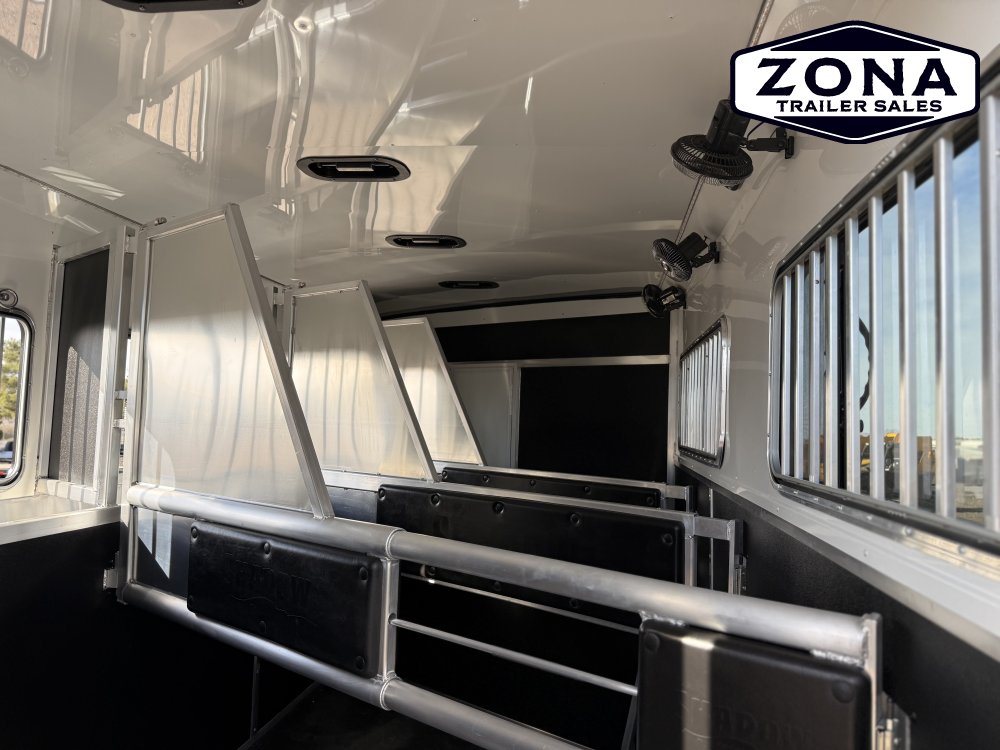
Compare Zona Trailer Sales' current horse trailer inventory by horse capacity, interior size, material and layout.
Shop Horse TrailersWhat Are Standard Horse Trailer Dimensions?
There is no single standard size that applies to every horse trailer.
Trailer dimensions change based on horse count, slant-load vs. straight-load design, bumper pull vs. gooseneck configuration, tack-room size, living quarters and manufacturer.
For most buyers, the important measurements are:
- Interior trailer height
- Interior width
- Usable stall width
- Usable stall length
- Door opening height and width
- Overall trailer length
- Tack or dressing-room dimensions
How Tall Should a Horse Trailer Be?
Interior height should be based on the actual horse you are hauling.
The University of Maryland Extension recommends that a horse trailer provide enough clearance above the horse's head at a normal resting position rather than simply matching the horse's height at the withers.
The University of Maryland Extension horse-trailer selection guide recommends sizing the trailer around the horse itself and allowing additional head and lateral clearance rather than relying only on a generic trailer label.
Many horse trailers fall somewhere around the 7-foot to 7-foot-6-inch interior-height range, but larger horses may need more.
The safest approach is to measure the horse, then compare that measurement to the actual interior height of the trailer you are considering.
Is a 6'6" Tall Horse Trailer Enough?
Sometimes, but not for every horse.
A 6-foot-6-inch interior may work for smaller horses, but taller or larger-bodied horses can require more headroom.
The horse needs enough space to stand naturally without feeling crowded or risking contact with the roof during movement.
This is why buyers should measure the individual horse and avoid choosing a trailer based only on a common advertised size.
How Wide Should a Horse Trailer Be?
Trailer width and stall width are related, but they are not the same measurement.
Overall interior width tells you how much space exists across the trailer. Stall width tells you how much of that space is actually available to each horse.
In slant-load trailers, stall width and diagonal stall length work together. A trailer may be wide overall but still feel tight if the individual stall dimensions are too small for the horse.
Larger-bodied horses often benefit from wider stalls and more usable diagonal length.
Horse Trailer Size by Horse Type
The table below is a practical starting point, not a substitute for measuring the actual horse and trailer.
| Horse Type | What to Prioritize | Trailer Considerations |
|---|---|---|
| Pony / Smaller Horse | Appropriate stall width, safe dividers and adequate headroom | A more compact trailer may work if the animal still has adequate clearance |
| Average Riding Horse | Comfortable headroom, usable stall length and lateral space | Many common horse-trailer configurations are built around this general size range |
| Warmblood / Large Horse | Additional height, width and stall length | Look for trailers specifically offering extra height, width or longer stalls |
| Draft Horse / Draft Cross | Maximum usable interior space and appropriate trailer capacity | Standard horse stalls may be too small, so exact measurements are especially important |
How Long Should a Horse Trailer Stall Be?
Stall length needs to allow the horse to stand naturally without being compressed between the front and rear boundaries of the stall.
In a straight-load trailer, usable stall length is relatively easy to visualize because the horse stands front to back.
In a slant-load trailer, it is more complicated because the horse stands diagonally. The angle, trailer width and divider placement all affect usable length.
This is why two slant-load trailers with similar exterior dimensions can provide noticeably different amounts of usable horse space.
Slant-Load Stall Dimensions Matter
Slant-load trailers are extremely common, particularly in 3-horse and 4-horse configurations.
But not every slant stall is large enough for every horse.
When comparing slant-load trailers, look closely at:
- Stall width
- Diagonal stall length
- Interior height
- Divider placement
- Hip and shoulder room
- Space around the horse's head and neck
If you are still deciding between stall layouts, read Zona's Slant Load vs. Straight Load Horse Trailer Guide.
2-Horse Trailer Dimensions
Two-horse trailers are available in both bumper-pull and gooseneck configurations and can use straight-load or slant-load layouts.
A compact 2-horse trailer can be a great fit for buyers who regularly haul one or two horses, but the smaller exterior size makes interior measurements especially important for large horses.
When shopping, compare interior height, stall width, stall length, tack-room space, trailer width and loaded weight rather than shopping by horse count alone.
3-Horse Trailer Dimensions
Three-horse trailers are commonly available in slant-load configurations.
The addition of a third stall usually increases overall trailer length, but the exact size varies widely based on stall angle, tack-room design, bumper pull vs. gooseneck configuration and whether living quarters are included.
Buyers should verify that all three stalls provide enough room for the horses they actually plan to haul.
4-Horse Trailer Dimensions
Four-horse trailers can vary substantially in length and weight depending on layout and features.
Many are goosenecks because the larger configuration creates more room for stalls, tack storage, dressing rooms and other equipment.
With four horses, interior stall dimensions are only part of the decision. GVWR, payload and tow-vehicle compatibility become increasingly important as well.
Zona regularly carries 2-horse, 3-horse and 4-horse aluminum trailer layouts, giving buyers the ability to compare actual dimensions across multiple configurations.
Living Quarters Horse Trailer Dimensions
Living quarters trailers add another major variable because part of the trailer is devoted to living space.
A larger short wall, bathroom, kitchen, seating area, storage, or slide-out can increase overall trailer length and weight without necessarily increasing horse stall size.
That means LQ buyers should evaluate the horse area and living area separately.
What Does Short Wall Mean on a Horse Trailer?
The short wall is the shorter wall measurement of the living-quarters floor plan. It is one of the most common ways living quarters horse trailers are described.
For example, you may see a trailer advertised as having a:
- 4-foot short wall
- 6-foot short wall
- 8-foot short wall
- 10-foot short wall
- 12-foot or larger short wall
In general, a larger short-wall measurement means more floor space is devoted to the living quarters, but the actual floor plan still matters.
Two trailers with the same short-wall measurement can use that space differently depending on the bathroom, kitchen, cabinets, sofa or dinette, closets, appliances, and whether the trailer has a slide-out.
A 10-foot short-wall trailer does not mean the entire trailer is 10 feet long. It describes the living-quarters floor-plan measurement. The horse compartment, gooseneck area, rear tack, and other sections add to the trailer's overall size.
How Is a Horse Trailer Short Wall Measured?
The short-wall measurement describes the shorter side of the living-quarters floor area.
Because many gooseneck horse trailers use an angled wall between the living quarters and horse compartment, one side of the living space is shorter than the other.
That is why manufacturers may list both a short wall and a long wall. The long wall may measure considerably longer because it follows the opposite side of the angled floor plan.
When comparing trailers, use the manufacturer's stated short-wall measurement for the specific floor plan rather than trying to calculate living space from overall trailer length.
Does a Bigger Short Wall Mean a Bigger Living Quarters?
Usually, a larger short-wall measurement means more floor space is devoted to the living quarters and creates room for additional amenities.
Smaller short-wall layouts may focus on basic sleeping, storage, and compact bathroom or kitchen features. Larger layouts can provide room for:
- Larger kitchens
- More cabinets and storage
- Separate showers and bathrooms
- Sofas or dinettes
- Larger refrigerators
- Additional closets or floor space
Living quarters horse trailers are available in everything from compact short-wall layouts to much larger floor plans, so this measurement can be useful when comparing how much space is devoted to the living area.
Why Short-Wall Size Matters Before You Buy
A larger living area sounds appealing, but it also affects the rest of the trailer.
Increasing the short wall can increase:
- Overall trailer length
- Empty trailer weight
- Loaded trailer weight
- Storage and appliance capacity
- Tow-vehicle requirements
- Purchase price
That is why the largest living quarters is not automatically the right choice. Compare how much living space you actually need against trailer weight, towing requirements, maneuverability, and horse-compartment size.
Browse Zona's current living quarters horse trailers and compare short-wall size, horse capacity, trailer dimensions, weight, and floor-plan features.
Browse Living Quarters TrailersYou can also read Zona's Living Quarters Horse Trailer Buyer's Guide for help comparing LQ configurations.
What Size Trailer Does a Warmblood Need?
Warmblood owners should pay especially close attention to interior height, stall width and usable stall length.
A trailer that comfortably fits an average Quarter Horse may feel significantly tighter for a tall or long-bodied Warmblood.
Some manufacturers offer extra-height, extra-width or Warmblood-specific configurations. Those descriptions can be useful, but the actual measurements still matter more than the marketing label.
- Interior height
- Stall width
- Usable stall length
- Divider placement
- Door opening dimensions
- Head, shoulder, hip and lateral clearance
How to Measure Your Horse for a Trailer
Do not rely only on the horse's height in hands.
Height at the withers is useful, but it does not tell you everything about how much space the horse needs inside the trailer.
Consider:
- Height at the withers
- Head height in a normal relaxed position
- Overall body length
- Shoulder width
- Hip width
- Body type and how the horse naturally stands
Then compare those measurements against the actual interior dimensions of the trailer.
Exterior Trailer Size Is Not the Same as Stall Size
This distinction is easy to miss when shopping online.
Exterior length and width tell you the overall size of the trailer. They do not tell you exactly how much room each horse receives.
Tack rooms, wall thickness, dividers, mangers, living quarters, storage areas and trailer geometry all reduce or redistribute interior space.
Always ask for the interior measurements that matter to the horse rather than relying only on overall trailer dimensions.
Find a Horse Trailer That Fits Your Horses
Zona Trailer Sales carries horse trailers in multiple sizes, horse capacities, materials and layouts. Compare actual dimensions and configurations before deciding which trailer fits the horses you haul.
Shop Horse Trailers Shop Aluminum Horse Trailers Shop Steel Horse TrailersHorse Trailer Dimensions FAQs
How tall is a standard horse trailer?
There is no universal standard. Many horse trailers are around 7 feet or taller inside, but larger horses may require additional height. Measure the horse and compare it to the actual interior specification of the trailer.
How wide is a horse trailer?
Overall trailer width varies by model. More important for horse fit is the usable interior width and individual stall width.
Is a 6'6" horse trailer tall enough?
It may be for some smaller horses, but not for every horse. Taller horses generally need more headroom, so measure your horse and compare its relaxed head height with the trailer's actual interior height.
How much headroom does a horse need in a trailer?
The University of Maryland Extension recommends roughly 10 inches of clearance above the horse's head at its normal resting height. More room may be appropriate depending on the horse and trailer design.
What are typical 2-horse trailer dimensions?
Dimensions vary significantly by manufacturer and whether the trailer is straight load or slant load, bumper pull or gooseneck. Compare interior height, stall length and stall width rather than relying on horse count alone.
What size horse trailer does a Warmblood need?
Many Warmbloods need more height, width or stall length than an average-sized horse. Measure the individual horse and look for a trailer with enough head, shoulder, hip and stall clearance.
What does short wall mean on a horse trailer?
The short wall is the shorter wall measurement of a living-quarters floor plan. It is commonly used to describe the size of the living area, such as a 6-foot, 8-foot or 10-foot short wall. It does not represent the trailer's total length.
How is short wall measured on a horse trailer?
The short-wall measurement refers to the shorter side of the living-quarters floor area. On many gooseneck horse trailers, the wall separating the living quarters from the horse compartment is angled, creating a shorter wall on one side and a longer wall on the other. Always verify the manufacturer's stated measurement for the specific floor plan.
Is a bigger short wall better?
Not necessarily. A larger short wall generally provides more living space and room for additional amenities, but it can also increase trailer length, weight, cost and tow-vehicle requirements. Choose the living-quarters size that fits how you actually travel.
Is a slant-load trailer smaller inside than a straight-load trailer?
Not necessarily. Slant and straight layouts use interior space differently. The individual stall dimensions matter more than the layout label.
Do living quarters reduce horse space?
Living quarters use part of the overall trailer length, but the horse compartment is designed separately. Always compare the actual stall dimensions and horse-area length rather than assuming a larger LQ automatically means larger stalls.
Can I finance a larger horse trailer?
Financing options are available for qualified buyers through Zona Trailer Sales. Rates, terms, down payment requirements and approval depend on the buyer, trailer and lender.
Compare actual interior dimensions, horse capacity and trailer layout before you buy. Zona can help you narrow the inventory based on the horses you need to haul.
View Horse Trailers for SaleHorse size and trailer dimensions vary considerably. Always verify the actual interior measurements and manufacturer specifications of the individual trailer and make sure the horse has adequate space, ventilation and safe clearance before transport.