
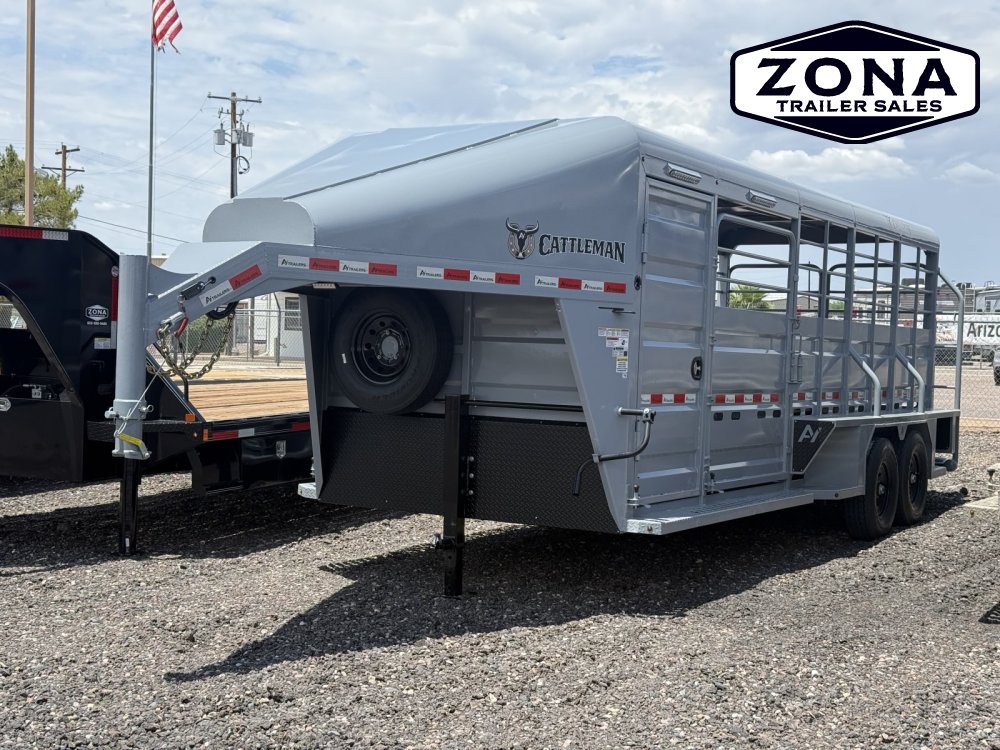
Cattleman trailers from Ascend Industries are built for livestock and stock-combo buyers who need practical hauling capacity, flexible configurations, and options for different herd sizes and uses.
If you're comparing Cattleman trailers, the most important factors are trailer length, livestock capacity, stock vs. stock-combo layout, flooring, axle configuration, and the way you plan to use the trailer day to day.
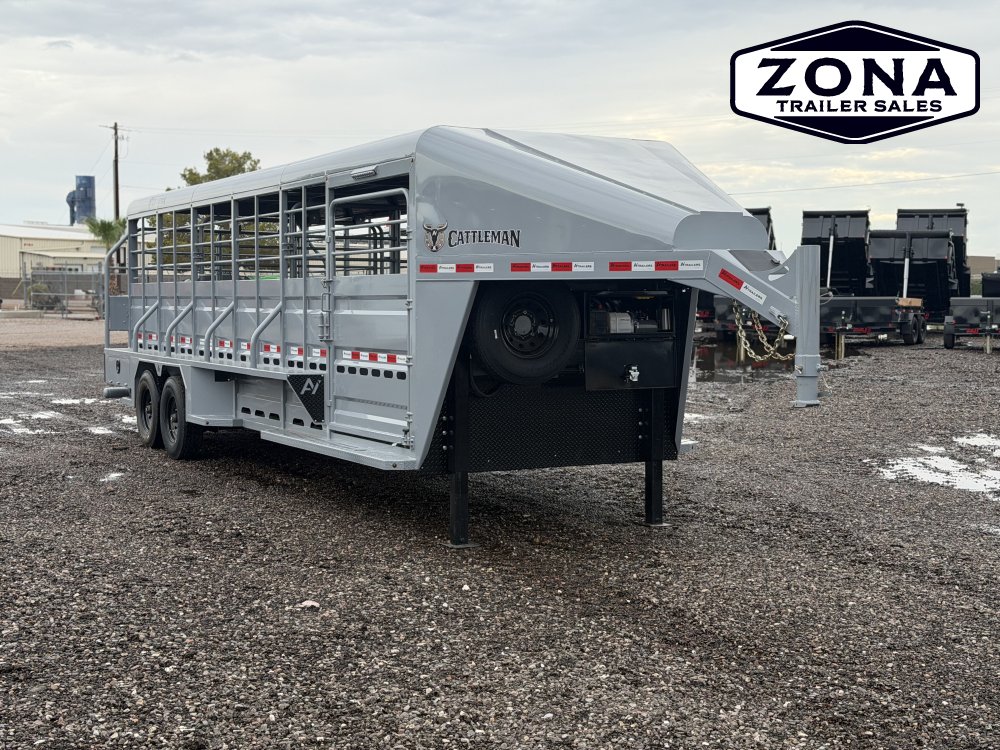
Compare current Cattleman inventory by length, stock configuration, tack setup, and hauling needs to find the right fit.
Browse Cattleman TrailersWhat Are Cattleman Trailers?
Cattleman trailers are part of the Ascend Industries lineup and are designed around livestock and stock-combo hauling.
You can also review the official Cattleman trailer lineup from Ascend Industries for manufacturer information on the brand.
Depending on the model and configuration, buyers may be comparing different trailer lengths, stock areas, tack space, top configurations, flooring, and axle setups.
That makes the right Cattleman trailer less about choosing one standard model and more about matching the trailer to the animals, equipment, and type of hauling you do most often.
Stock Trailer vs. Stock-Combo Trailer
One of the first decisions is whether you need a traditional stock trailer or a stock-combo configuration.
A stock trailer is focused primarily on livestock space, while a stock-combo trailer adds areas that can be used for tack, equipment, storage, or other hauling needs depending on the configuration.
If you need that added flexibility, compare current stock-combo trailers alongside Cattleman inventory.
Common Cattleman Trailer Sizes
Cattleman trailers are available in multiple lengths, and trailer length can have a major effect on livestock capacity, maneuverability, and how much room you have for equipment or tack.
| Trailer Length | What Buyers Should Consider |
|---|---|
| 20 ft | A more compact option for buyers who do not need maximum livestock space. |
| 24 ft | A versatile middle ground for livestock hauling and everyday ranch use. |
| 28 ft | Adds more livestock space while remaining manageable for many regular hauling situations. |
| 32 ft | Provides additional room for larger loads or buyers hauling more livestock. |
| 36 ft | Best suited to buyers who need substantial hauling capacity and have the tow vehicle and space to handle a larger trailer. |
The exact number of animals a trailer can carry depends on animal size, weight, trailer configuration, and applicable weight limits, so trailer length alone should not be used to determine capacity.
Cattleman Stock-Combo Configurations
Stock-combo trailers are useful for buyers who need livestock space but also want dedicated room for tack, gear, or equipment.
Depending on the individual trailer, Cattleman stock-combo configurations may include features such as swing-out tack areas and different divider or storage arrangements.
The best setup depends on whether your priority is maximum livestock room, easier equipment organization, or a balance of both.
Flooring and Interior Setup
Flooring is one of the most important details to compare in any livestock trailer because it affects traction, durability, cleaning, and everyday use.
Some current Cattleman configurations include rubber plank flooring, but equipment varies by model and trailer.
Before buying, inspect the exact floor system, condition, drainage, and how easily the trailer can be cleaned after use.
Half-Top vs. Full-Top Configurations
Another difference between livestock trailers can be the amount of enclosure around the stock area.
Half-top and full-top configurations can change airflow, protection, visibility, and how the trailer works for different livestock or hauling conditions.
There is no single configuration that is right for every buyer. Consider your livestock, climate, travel distances, and how you plan to use the trailer before choosing between them.
Axles and Weight Capacity
Axle configuration is another important part of comparing Cattleman trailers, especially as trailer length and expected payload increase.
Some current models are equipped with 8,000-pound torsion axles, but axle ratings and equipment vary by trailer.
Always compare the exact GVWR, axle ratings, empty trailer weight, and expected payload of the unit you are considering rather than assuming all Cattleman trailers share the same specifications.
How Cattleman Compares With Other Stock Trailer Options
Buyers looking at Cattleman trailers may also be comparing other livestock and stock-combo options available through Zona Trailer Sales.
The right choice depends on trailer size, construction, floor system, tack configuration, livestock needs, and the specific equipment included on each trailer.
What to Compare Before Buying a Cattleman Trailer
Before choosing a specific trailer, compare the features that will affect how you use it every day.
- Trailer length
- Stock vs. stock-combo configuration
- GVWR and axle ratings
- Flooring system
- Divider and gate configuration
- Half-top vs. full-top design
- Tack and equipment storage
- Trailer weight
- Tow-vehicle requirements
For a broader look at how these trailer types differ, read our Stock, Livestock & Stock-Combo Trailer Buyer's Guide.
Who Is a Cattleman Trailer a Good Fit For?
A Cattleman trailer may be a strong fit for ranchers, livestock owners, and buyers who need a dedicated stock or stock-combo setup with multiple sizes and configurations to choose from.
It may be especially worth considering if you:
- Regularly haul livestock
- Need more than one trailer length to choose from
- Want a stock-combo setup with tack or equipment space
- Need to compare half-top and full-top configurations
- Want to choose equipment based on your specific hauling needs
Cattleman Trailer FAQ
Who makes Cattleman trailers?
Cattleman trailers are part of the Ascend Industries trailer lineup.
What sizes do Cattleman trailers come in?
Current Cattleman inventory includes multiple lengths such as 20-foot, 24-foot, 28-foot, 32-foot, and 36-foot configurations. Availability changes as inventory is sold and replaced.
What is the difference between a stock trailer and a stock-combo trailer?
A stock trailer is primarily designed around livestock space. A stock-combo trailer combines livestock capacity with additional space or configurations for tack, equipment, or storage.
Do Cattleman trailers have rubber flooring?
Some current Cattleman configurations include rubber plank flooring. Equipment varies by trailer, so verify the specifications of the exact unit you are considering.
Where can I see Cattleman trailers for sale?
You can compare current models, lengths, configurations, and availability on the Zona Trailer Sales Cattleman inventory page.
Compare Current Cattleman Trailers
Choosing the right livestock trailer comes down to matching trailer length, stock configuration, weight capacity, flooring, and storage to the way you actually haul.
Compare Zona Trailer Sales' current Cattleman inventory to see available lengths and configurations.
Browse Cattleman Trailers