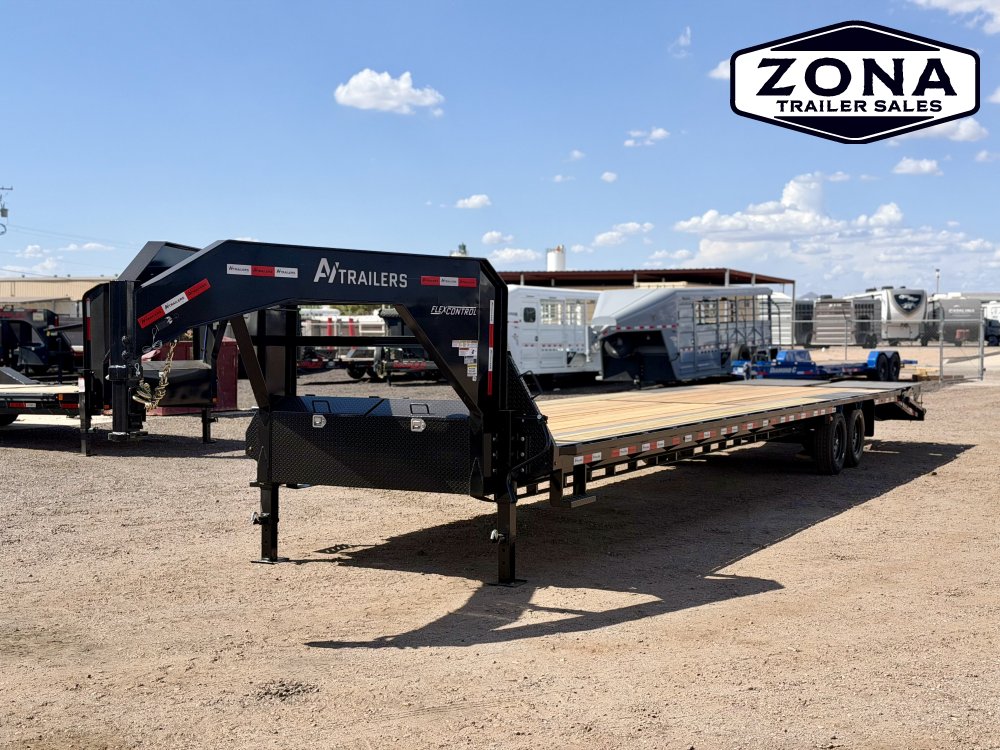
A hot shot trailer is built around usable deck space, payload and loading flexibility. But choosing the right one takes more than deciding how long you want the trailer to be.
Buyers should compare deck length, GVWR, axle setup, loading system, truck requirements and how the trailer will actually be used. For some buyers, keeping the truck-and-trailer combination within non-CDL limits is also an important part of the decision.
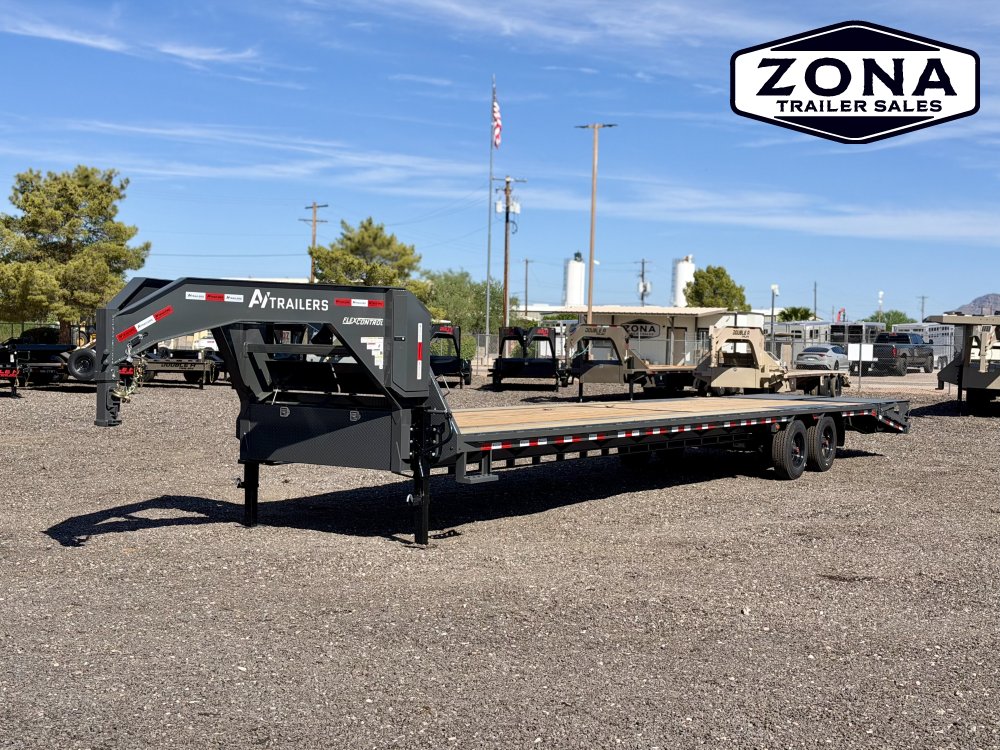
Compare current hot shot and hotshot trailer configurations by length, GVWR, axle setup and loading system.
Browse Hot Shot TrailersWhat Is a Hot Shot Trailer?
A hot shot trailer is generally a heavy-duty trailer used to move vehicles, equipment, freight and other loads with a pickup or medium-duty truck rather than a full-size tractor-trailer.
Most hot shot setups use a gooseneck trailer because the hitch position over the truck's rear axle provides a stable platform for longer trailers and heavier loads.
You may see the term written as both hot shot trailer and hotshot trailer. Buyers are generally referring to the same type of hauling setup.
The category can include several trailer styles. Deckover flatbeds are common because their decks extend over the wheels, creating a wide loading surface without wheel wells interrupting the usable deck.
What Sizes Do Hot Shot Trailers Come In?
There is no single standard hot shot trailer size.
Current Zona inventory includes hot shot-capable configurations ranging from shorter equipment-oriented trailers to 40-foot goosenecks designed around maximum usable deck space.
| Trailer Length | Why Buyers Consider It | What to Compare |
|---|---|---|
| 20-26 ft | More compact equipment and freight hauling | Payload, ramps, axle ratings and usable deck length |
| 30-32 ft | More deck space while remaining shorter than the largest hot shot configurations | GVWR, turning clearance, loading system and truck capacity |
| 35-40 ft | Long freight, multiple vehicles or loads that benefit from maximum deck space | Overall weight, payload, maneuverability and licensing requirements |
Longer does not automatically mean better. The right length depends on what you haul and whether the additional deck space is worth the added trailer weight and maneuvering requirements.
Hot Shot Trailer Length: Deck Length vs. Overall Length
Pay attention to how trailer length is described.
A listing such as 35+5 generally describes a trailer with 35 feet of main deck plus another 5 feet of usable rear deck or dovetail area, creating approximately 40 feet of total loading surface.
Zona currently carries 35+5 hot shot-ready Ascend configurations along with shorter Double A and Rice gooseneck trailers.
When comparing trailers, verify whether the advertised measurement refers to:
- Main flat deck length
- Dovetail or rear loading area
- Total usable deck
- Overall trailer length including the gooseneck
Those measurements affect what will physically fit on the trailer and how much room you will have to position the load correctly.
GVWR Matters More Than Trailer Length
Two hot shot trailers of similar length can have very different hauling capabilities.
GVWR, or Gross Vehicle Weight Rating, is the maximum rated weight of the trailer when loaded. That includes the trailer itself and everything carried on it.
Current Zona hot shot inventory shows how much these ratings can vary. Examples include:
| Current Configuration Example | Published GVWR |
|---|---|
| 26 ft Double A | 15,500 lbs |
| 20+5 Rice Gooseneck | 23,990 lbs |
| 25+5 Rice Gooseneck | 23,990 lbs |
| 30 ft Double A Gooseneck | 25,000 lbs |
| Heavy-duty Double A configuration | Up to 50,000 lbs |
These examples show why length alone is not enough. A buyer choosing between two 30-foot trailers should still compare trailer weight, GVWR, axles, tires, hitch equipment and available payload.
What Does Non-CDL Mean for a Hot Shot Trailer?
The phrase non-CDL hot shot trailer can be misleading because CDL requirements are not determined by the trailer alone.
Under federal CDL standards, a Class A CDL generally applies to a combination rated or weighing 26,001 pounds or more when the towed unit is rated or weighs more than 10,000 pounds.
That means the truck and trailer have to be considered together.
- Truck GVWR
- Trailer GVWR
- Gross Combination Weight Rating
- Actual loaded weights
- How the truck and trailer are being used
- Any applicable state or federal requirements
Federal guidance also states that a combination with a GCWR below 26,001 pounds does not require a CDL solely because the trailer is rated above 10,000 pounds, although other circumstances can still create CDL requirements.
So if you are specifically shopping for a non-CDL gooseneck trailer, do not choose based only on a trailer listing that says "non-CDL." Verify the ratings of both the truck and trailer and the rules that apply to your operation.
For current federal CDL classifications, review the FMCSA commercial driver's license guidance.
Why Axle Ratings Matter on a Hotshot Trailer
Axles are another major difference between trailers that may look similar from a distance.
Current Zona inventory includes configurations with 8K, 10K, 12K and heavier axle packages depending on the trailer.
Axle choice affects:
- Trailer GVWR
- Potential payload
- Tire and wheel requirements
- Maintenance and service requirements
- The type of work the trailer is suited for
Do not assume that more axles or heavier axles automatically mean you can load the trailer to the sum of the axle ratings. The trailer's published GVWR remains the number to follow.
Mega Ramps vs. Hydraulic Dovetail
Loading setup can be just as important as length or GVWR, especially if your hot shot trailer will regularly carry vehicles or equipment.
Mega Ramps
Mega ramps create a wide loading surface at the rear of the trailer and can work well for vehicles and equipment that need to be driven onto the deck.
They are straightforward and do not depend on a hydraulic system to create the loading angle.
Hydraulic Dovetail
A hydraulic dovetail lowers the rear section of the trailer to create a loading surface without manually deploying traditional ramps.
This can be useful for operators who load and unload equipment frequently and want a faster transition between hauling and loading.
Zona's current hot shot inventory includes both mega-ramp and hydraulic-dovetail configurations, so buyers can compare the two approaches directly.
Deckover vs. Equipment Trailer for Hot Shot Use
A deckover trailer places the deck above the wheels, providing a wide, uninterrupted loading surface.
That makes deckovers especially useful for wide freight, vehicles, pallets and equipment that would otherwise have to fit between fenders.
You can compare current deckover trailers if deck width is one of your main priorities.
For equipment-focused hauling where overall trailer length is less important, an equipment trailer may be a better fit.
What Should You Look for in a Hot Shot Trailer?
Start with the work the trailer needs to perform rather than starting with the biggest trailer available.
| Question | Why It Matters |
|---|---|
| What will you haul? | Freight, vehicles and equipment create different deck, payload and loading requirements. |
| How much deck length do you need? | Extra length adds flexibility but also adds trailer weight and affects maneuverability. |
| What is your required payload? | GVWR alone does not tell you payload because the trailer's own weight must be considered. |
| What truck will tow it? | The truck's towing, payload, axle and hitch ratings must work with the loaded trailer. |
| Do you need a non-CDL combination? | Truck and trailer ratings need to be selected together if licensing thresholds matter. |
| How will you load it? | Mega ramps, hydraulic dovetails and tilt systems fit different loading routines. |
Can You Finance a Hot Shot Trailer?
Financing can be useful when a hot shot trailer is part of a new business, fleet expansion or equipment upgrade.
Because these trailers vary significantly in price, size and GVWR, financing needs can also differ from one configuration to another.
Zona Trailer Sales offers trailer financing options for qualified buyers. Approval, rates, terms and down-payment requirements depend on the buyer, trailer and lender.
Hot Shot Trailer FAQs
What is a hot shot trailer?
A hot shot trailer is a heavy-duty trailer commonly paired with a pickup or medium-duty truck to haul freight, vehicles or equipment. Gooseneck deckover trailers are common because they provide substantial deck space and hauling capacity.
Is hotshot trailer one word or two?
Both "hot shot trailer" and "hotshot trailer" are commonly used. They generally refer to the same type of trailer and hauling setup.
What size hot shot trailer should I buy?
Choose based on your required deck space, payload, tow vehicle, loading method and typical cargo. Current Zona inventory ranges from shorter equipment-oriented goosenecks to 40-foot hot shot-ready configurations.
What is a 35+5 hot shot trailer?
A 35+5 configuration generally combines approximately 35 feet of main deck with another 5 feet of usable rear deck or dovetail area for roughly 40 feet of loading surface. Verify the measurements on the individual trailer before buying.
What is a non-CDL hot shot trailer?
There is not one universal trailer specification that makes a hot shot setup non-CDL. CDL requirements depend on the truck-and-trailer combination, weight ratings, actual weights and how the vehicle is being used. Verify the complete combination before buying around a licensing threshold.
Are most hot shot trailers goosenecks?
Goosenecks are common for hot shot hauling because they are well suited to longer, heavier trailers. The correct hitch and trailer configuration still depends on the truck and intended load.
Compare Hot Shot Trailers at Zona
Compare current hot shot trailers by deck length, GVWR, axle setup, ramps, hydraulic dovetail and other features that affect how the trailer works for your loads.
Browse Hot Shot Trailers Explore FinancingTrailer specifications, weight ratings, towing requirements and licensing requirements vary by truck, trailer, load, jurisdiction and type of operation. Verify the specifications of the individual trailer and tow vehicle and check applicable state and federal requirements before towing.